Dean Village
Edinburgh, United Kingdom
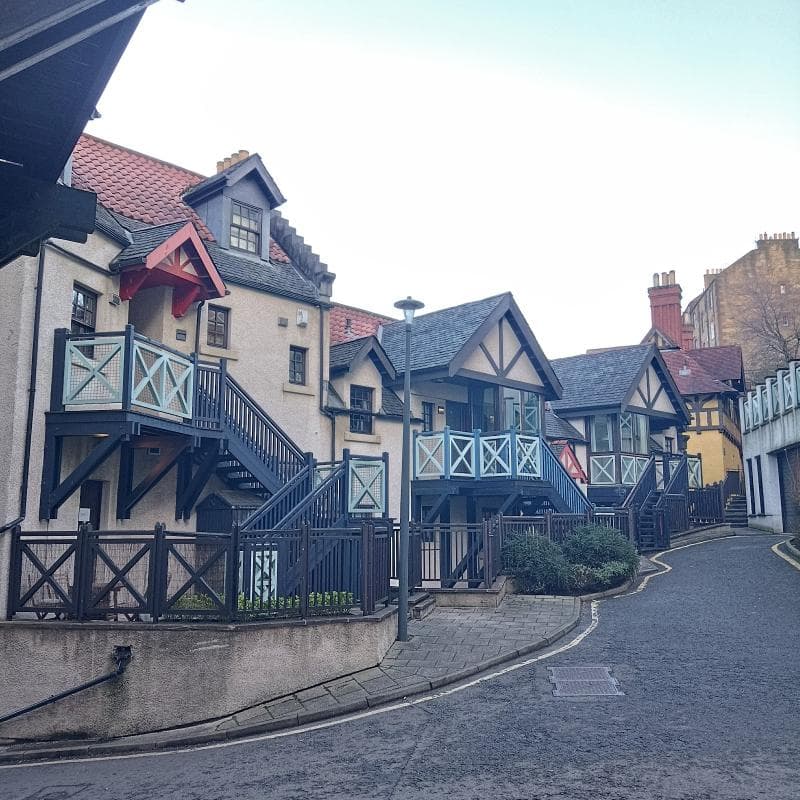
Discover Dean Village, a tranquil and historic milling community nestled in a deep valley of Edinburgh, United Kingdom, renowned for its picturesque charm.
Overview
Tucked away in a tranquil valley just a short stroll northwest of Edinburgh's bustling city centre, Dean Village offers a picturesque escape into a bygone era. Its name, derived from 'dene,' meaning 'deep valley,' perfectly describes its setting alongside the gentle flow of the Water of Leith. Once a bustling industrial hub, this charming former milling village has transformed into a serene residential area, captivating visitors with its unique historical architecture, cobbled streets, and riverside serenity. Dean Village is a testament to Edinburgh's rich past, offering a peaceful contrast to the urban energy surrounding it, and forming a part of the city's UNESCO World Heritage Site.
History & Cultural Background
The origins of Dean Village stretch back to the 12th century, when it was established as a milling community, initially known as the 'Water of Leith Village.' For over 800 years, the village thrived as a successful grain milling area, utilizing the powerful currents of the Water of Leith to drive its numerous mills. Historical records indicate the presence of as many as eleven working mills at one point, playing a crucial role in providing flour for Edinburgh. The village was closely tied to the Baxter (baker) incorporation for centuries, with mill stones and carved plaques commemorating its historic industry still visible today.
However, with the advent of new technologies and the decline of traditional milling, Dean Village experienced a period of decay and neglect, particularly in the 19th and 20th centuries. It was once even known as one of the city's slums. A significant revitalization effort began in the mid-1970s, transforming the area into the highly desirable residential enclave it is today. This transformation highlights Edinburgh's ability to adapt and preserve its cultural heritage, with Dean Village's unique character being meticulously restored.
What Makes It Special
Dean Village's distinct charm lies in its harmonious blend of preserved history and natural beauty. The most striking feature is its architecture, with many charming stone buildings dating back several centuries, creating an almost storybook atmosphere. The iconic Well Court, a magnificent red sandstone complex built in the 1880s, stands out with its clock tower and impressive turrets, originally housing mill workers and now serving as a prominent symbol of the village.
The Water of Leith, winding its way through the village, is fundamental to its appeal, offering picturesque riverside views and a tranquil soundtrack to any visit. The Water of Leith Walkway meanders through the village, connecting it to other green spaces in Edinburgh. Overhead, the majestic Dean Bridge, designed by Thomas Telford and constructed in the 1830s, spans the deep gorge, providing stunning panoramic views of the village below and connecting it to Edinburgh's New Town.
Stories, Fun Facts & Local Details
The very name 'Dean' hints at the village's geography, meaning 'deep valley,' a perfect description of its setting by the Water of Leith. Its history as a milling powerhouse is etched into its fabric; visitors can still spot old mill stones and carved stone plaques depicting baked bread and pies, silent tributes to the 'Baxters' (bakers) who once dominated the industry here.
A short walk from the village leads to St. Bernard's Well, a curious Roman temple-like structure built in 1789 by Alexander Nasmyth. This architectural gem houses a statue of Hygieia, the Greek goddess of health, and was constructed over a natural spring whose waters were believed by locals to possess magical healing powers, capable of curing ailments from arthritis to blindness. Walking through Dean Village's cobbled paths, especially those like Bells Brae, feels like stepping into another time, making it a favorite spot for photographers seeking atmospheric streetscapes and unique architectural details.
Visitor Perspective
Visiting Dean Village is less about specific attractions and more about immersing oneself in its atmosphere. It's a place for leisurely strolls along the Water of Leith Walkway, taking in the picturesque views of historic buildings nestled by the river. The core area is compact, and while highlights can be seen in a short time, many visitors find themselves lingering, enjoying the peace and quiet away from the city's main tourist trails.
It's important to remember that Dean Village is primarily a residential area. Visitors are encouraged to be respectful of the peace and privacy of its residents, staying on sidewalks, avoiding private property, and keeping noise levels low. There are generally no public restrooms or restaurants directly within the village, though some small cafes might offer takeaway nearby. The best way to experience Dean Village is on foot, allowing you to discover its hidden corners, admire the architecture, and appreciate its tranquil charm as a truly unique gem in the heart of Edinburgh.
Coordinates: -3.217, 55.9512
View on Google Maps💬 How Travelers Describe This Place
Based on community votes
Must See
853Unique
639Interesting
569Photogenic
128Beautiful
93
Traveler Stories
Discover memorable experiences shared by travelers who have visited this place.
No traveler stories yet.
Be the first traveler to share what made this place memorable.
Things to see at Dean Village



Tour
By
Spot
Discover amazing places around the world. Your journey starts here.
Explore
© 2026 TourBySpot. All rights reserved.