Water Of Leith Walkway
Edinburgh, United Kingdom
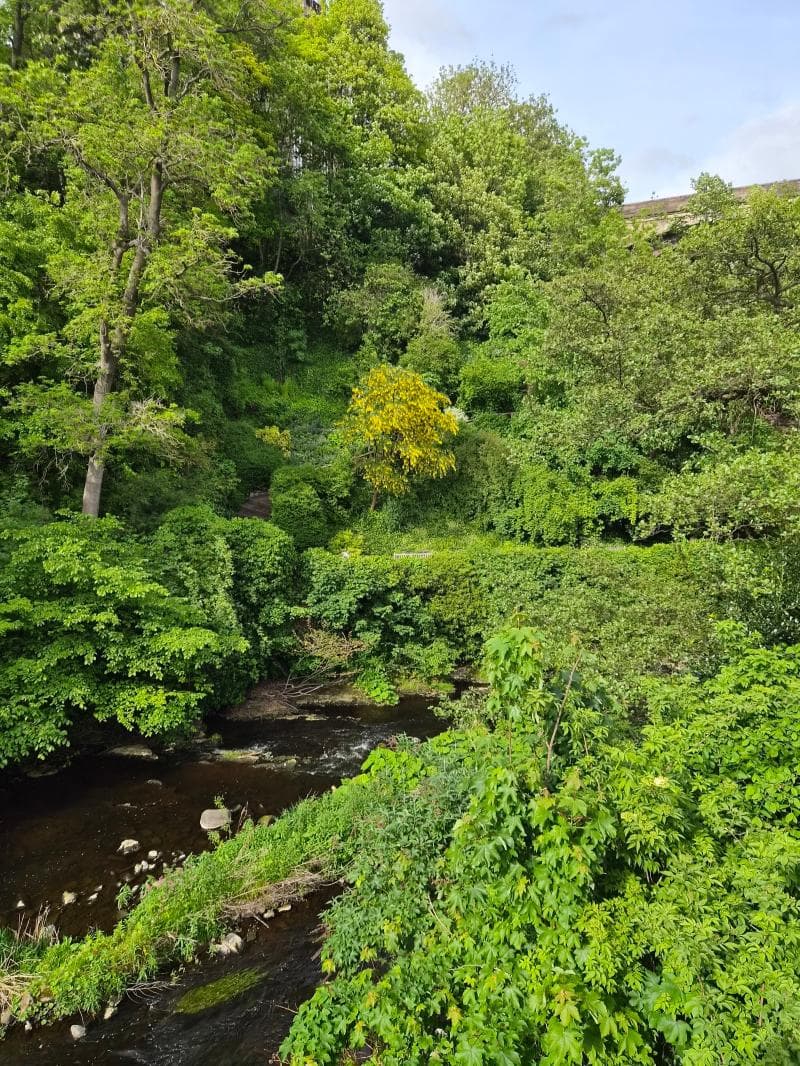
Explore the tranquil Water of Leith Walkway in Dean Village, Edinburgh, UK. Discover history, wildlife, and unique art installations like Gormley's '6 TIMES'.
Overview
Nestled within the picturesque Dean Village, a historical gem in Edinburgh, United Kingdom, lies a tranquil escape known as the Water of Leith Walkway. This public footpath and cycleway offers a serene journey along the Water of Leith, Edinburgh's main river, flowing from the Pentland Hills to the Firth of Forth at Leith. While the river itself spans 22 miles (35 km), the dedicated walkway covers approximately 12.75 to 13 miles (19.6 km), providing a continuous, traffic-free route that feels miles away from the city's bustling streets. It's an urban haven, designated as an Urban Wildlife Site, where visitors can immerse themselves in nature, history, and art. The section through Dean Village is particularly enchanting, offering stunning views of historic architecture and the soothing sounds of the flowing water.
History & Cultural Background
The Water of Leith has played a pivotal role in Edinburgh's development for centuries. Dean Village, originally known as the 'Water of Leith Village,' traces its origins as a milling community back to the 12th century. The river's power was harnessed by over 70 mills at its height, grinding grain and producing paper, fabric, and beer during the Industrial Revolution (roughly 1760 to 1840). This made the area a vital economic hub for Edinburgh. Mill stones and carved plaques depicting baked goods within Dean Village serve as enduring tributes to this industrious past, particularly its strong ties to the 'Baxter' (baker) incorporation.
The vision for a public path along the river emerged as early as 1949, with construction commencing in 1973. The walkway was developed in stages, with a section near Dean Village completed in 1977. The entire Water of Leith Walkway was finally completed in 2002, thanks to Millennium Project funding. Since 1988, the Water of Leith Conservation Trust, Scotland's first river charity, has been dedicated to conserving and enhancing the river's environment, heritage, and wildlife, promoting education and recreation.
What Makes It Special
What truly sets the Water of Leith Walkway apart is its unique blend of urban accessibility and natural wilderness. It's a sanctuary where the modern city fades, replaced by dappled sunlight filtering through ancient trees and the gentle rush of water. The walkway is celebrated for its abundant wildlife, including brown trout, heron, kingfisher, and even elusive otters, making it a living classroom for nature enthusiasts. The path is also home to significant artistic installations, most notably Antony Gormley's '6 TIMES' – a series of six life-sized cast iron figures of the artist himself. Four of these contemplative sculptures are dramatically placed within the river, acting as silent observers and gauges of the water's flow. Another striking feature is the Colinton Tunnel, an old Victorian railway tunnel transformed into Scotland's largest art mural, depicting scenes from Robert Louis Stevenson's poem 'From a Railway Carriage' and celebrating local history.
Stories, Fun Facts & Local Details
Along the walkway, visitors can discover the historic St. Bernard's Well, an ornate 18th-century structure built over a natural spring. Legend has it that the spring water, discovered in 1760, possessed healing properties, drawing people from far and wide seeking its benefits. The well, styled as a Greek-inspired temple, features a statue of Hygeia, the Greek goddess of health. The very name 'Dean' in Dean Village comes from the Old English word 'dene,' meaning 'deep valley,' perfectly describing its secluded, ravine-like setting. The distinctive architecture of Dean Village, with its colourful Victorian Gothic buildings and quaint old mills, provides a stunning backdrop to the river. The Gormley sculptures, with their weathering iron, develop a haunting quality that deepens their connection to the natural environment over time.
Visitor Perspective
The Water of Leith Walkway offers a uniquely peaceful experience for anyone looking to slow down and connect with Edinburgh's hidden natural side. Whether you embark on a short stroll through Dean Village or challenge yourself to walk or cycle a longer section, the path is well-signposted and provides numerous entry and exit points, allowing for walks of any length. The Water of Leith Visitor Centre serves as an invaluable resource, offering maps, an interactive exhibition on the river's heritage and wildlife, and a cafe. The path surfaces vary, including tarmac, compressed grit, and earth, making it suitable for pedestrians and cyclists, and partly accessible for wheelchairs. It's a journey that reveals Edinburgh's industrial past, celebrates its natural beauty, and showcases contemporary art, all woven into a single, memorable riverside adventure.
Coordinates: -3.217, 55.9512
View on Google Maps💬 How Travelers Describe This Place
Based on community votes
Beautiful
476Unique
465Interesting
276Must See
128Photogenic
126
Traveler Stories
Discover memorable experiences shared by travelers who have visited this place.
No traveler stories yet.
Be the first traveler to share what made this place memorable.

Tour
By
Spot
Discover amazing places around the world. Your journey starts here.
Explore
© 2026 TourBySpot. All rights reserved.