Well Court
Edinburgh, United Kingdom
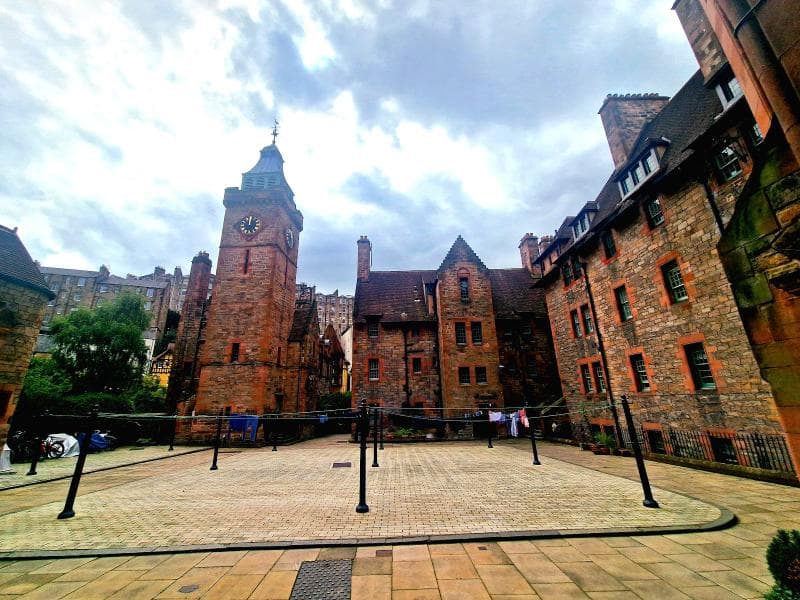
Explore Well Court, a historic Arts and Crafts gem in Edinburgh's picturesque Dean Village. Discover its unique history as model social housing.
Overview
Tucked away within the enchanting Dean Village, just a short stroll from Edinburgh's bustling city centre, lies the architectural marvel known as Well Court. This distinctive building complex stands as a testament to thoughtful urban planning and exquisite design from the late 19th century. It offers a tranquil escape, inviting visitors to step into a serene oasis that feels far removed from the city's vibrant energy. Well Court is not merely a collection of buildings; it is a picturesque landmark, celebrated for its unique character and significant contribution to Edinburgh's rich architectural tapestry.
As a key feature of the historic Dean Village, Well Court draws those seeking beauty, history, and a moment of quiet contemplation amidst ornate stonework and a peaceful courtyard. Its intimate, enclosed nature distinguishes it, setting it apart as a quiet retreat.
History & Cultural Background
The story of Well Court begins in the 1880s, a period when Edinburgh's population was expanding, and social housing initiatives were gaining importance. Commissioned between 1883 and 1886 by Sir John Findlay, then owner of 'The Scotsman' newspaper, Well Court was a visionary project aimed at providing improved accommodation for local workers. Sir John Findlay's home overlooked Dean Village, and he recognised the dire need for development in an area where the large mills, which had provided employment for centuries, were moving out.
The task of designing this model housing scheme fell to the renowned Scottish architect, Sydney Mitchell. His creation was intended to replace dilapidated tenements and offer well-designed flats, fostering a sense of community. Dean Village itself has a long history, founded as a milling community in the 12th century along the Water of Leith, and its name 'dene' signifies a 'deep valley'.
What Makes It Special
Well Court is a rare and celebrated example of the Arts and Crafts architectural style in Edinburgh. Its design is described as a 'picturesque, beautifully composed jumble of crowstepped gables and turrets,' making it visually striking. The building features distinctive red sandstone dressings, ornate stonework, intricate details, and carvings, all contributing to its unique charm.
A prominent feature is its large central courtyard, which was integral to the original design, providing residents with a peaceful communal space. The complex also includes Woodbarn Hall and a clock tower, which adds to its distinctive skyline. Well Court's significance is recognised through its status as a Category A listed building and its inclusion within Edinburgh's UNESCO World Heritage Site.
The building has undergone significant restoration efforts, notably in the 1990s when it was converted into luxury apartments while preserving many original features. A further major restoration in 2007, supported by Edinburgh World Heritage, meticulously used traditional materials, from sandstone to roof tiles, ensuring its historic integrity was maintained.
Stories, Fun Facts & Local Details
When Well Court was first built, it offered homes of two and three rooms at affordable rents. However, these accommodations came with certain expectations. Tenants were required to commit to 'acceptable behaviour' and even attend church services held in the communal hall on Sundays. This aspect highlights the philanthropic, yet paternalistic, approach to social housing during that era, aiming to 'improve' the working class. An interesting detail is the weathercock and clock faces, which were re-gilded during the 2007 restoration, shining brightly once more above the picturesque village.
The intimacy and enclosed nature of Well Court contribute to its appeal, creating a serene environment that truly feels like stepping back in time. It stands as a beautiful representation of a community-focused vision from the past, where the well-being of the inhabitants was considered alongside architectural beauty.
Visitor Perspective
Visiting Well Court offers a unique experience, allowing one to appreciate Edinburgh's architectural heritage and soak in a profound sense of tranquility. It's important for visitors to remember that Well Court remains a residential area, so respectful conduct, such as keeping voices low and staying on public pathways, is essential to preserve its peaceful atmosphere for residents. Many recommend visiting early in the day to fully appreciate the quiet courtyard and intricate details without crowds.
The surrounding Dean Village itself is a treasure trove of picturesque lanes and historic buildings, perfect for a leisurely stroll. Combining a visit to Well Court with a walk along the Water of Leith Walkway provides a comprehensive experience of this charming area, offering scenic riverside views and a deeper connection to the village's past. Well Court stands as a true gem, inviting thoughtful exploration and providing a lasting impression of Edinburgh's hidden beauty.
Coordinates: -3.217689, 55.952099
View on Google Maps💬 How Travelers Describe This Place
Based on community votes
Unique
748Photogenic
304Must See
85Beautiful
73Interesting
35
Traveler Stories
Discover memorable experiences shared by travelers who have visited this place.
No traveler stories yet.
Be the first traveler to share what made this place memorable.

Tour
By
Spot
Discover amazing places around the world. Your journey starts here.
Explore
© 2026 TourBySpot. All rights reserved.