Dean Bridge
Edinburgh, United Kingdom
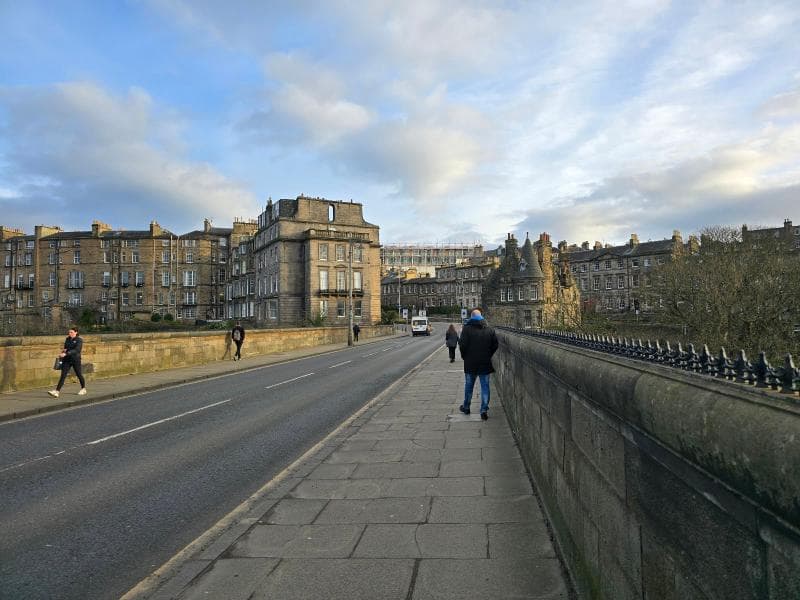
Explore Edinburgh's historic Dean Bridge, a magnificent 19th-century structure by Thomas Telford over the Water of Leith. Discover its history and views.
Overview
Nestled within the picturesque Dean Village in Edinburgh, United Kingdom, the Dean Bridge stands as a monumental testament to 19th-century engineering and a vital link in the city's infrastructure. This impressive stone arch bridge gracefully spans the deep gorge carved by the Water of Leith, connecting Edinburgh's bustling West End with its tranquil northwestern suburbs. More than just a thoroughfare, the Dean Bridge offers a striking visual contrast between its grand scale and the quaint, village-like atmosphere below. Its towering arches provide breathtaking views of the lush valley, making it a beloved spot for both residents and visitors seeking a moment of peace away from the urban clamour. To truly appreciate its grandeur, many choose to walk the Water of Leith Walkway, which winds directly beneath the bridge, offering a unique perspective of its design and the surrounding natural beauty.
History & Cultural Background
The Dean Bridge was conceived in the late 1820s, primarily driven by the vision of John Learmonth, a former Edinburgh Lord Provost and landowner. Learmonth sought a more convenient and impressive connection over the Water of Leith gorge to facilitate the development of his lands north of Edinburgh's New Town. Before its construction, crossing the ravine was less direct, often involving a ford or a simpler single-arch bridge. The task of designing this significant structure fell to the renowned civil engineer Thomas Telford, celebrated for his innovative bridges and canals across Britain. Construction began in 1829 and was completed by 1831 or 1832, marking one of Telford's final major projects at the age of seventy-three. The original design for three arches had to be modified to four due to challenging ground conditions on the south bank, demonstrating the adaptive ingenuity of its builders. The bridge's completion ushered in an era of expansion for Edinburgh but also dramatically changed the character of Dean Village, a long-standing milling community. The new, elevated road effectively bypassed the village, contributing to a period of economic decline for the traditional mill operations that had thrived along the Water of Leith for centuries.
What Makes It Special
The Dean Bridge's distinction lies not only in its scale but also in its clever architectural and engineering features. It stretches 447 feet (136 meters) long and stands an impressive 106 feet (32 meters) above the riverbed, supported by four majestic arches, each spanning 90 feet (27 meters). A particularly unique aspect of Telford's design is the use of hollow piers. This innovative choice reduced the overall weight and cost of the structure, while also allowing for internal inspection and maintenance, a forward-thinking detail for its time. Another striking visual element is the 'double arch' effect, where the main arches carrying the roadway are complemented by shallower, secondary arches that support the pedestrian footpaths. This design imparts a deceptive lightness to the bridge, especially when viewed from below. The bridge carries the busy A90 road, making it a critical modern artery, yet its enduring classical elegance allows it to blend seamlessly into Edinburgh's historic landscape. As a Category A listed building, it is recognized for its outstanding architectural and historic importance.
Stories, Fun Facts & Local Details
Beyond its impressive engineering, the Dean Bridge carries a rich tapestry of local stories. For a period in its history, the bridge unfortunately gained the grim nickname 'Bridge of Sighs' due to a number of suicides. In response, its parapets were significantly raised in 1912 to deter further incidents, a poignant detail reflecting social concerns of the era. Today, the area beneath the bridge, particularly along the Water of Leith Walkway, is a haven for those seeking tranquility and natural beauty. The village itself, once an industrial hub with as many as eleven working mills, transformed into a quiet residential area, largely thanks to restoration efforts in the 20th century. Visitors can still spot historical remnants like old millstones and admire the unique architecture of Well Court, a picturesque 19th-century building in Dean Village. The contrast between the grand bridge and the charming, fairytale-like village with its cobbled lanes and preserved stone cottages creates a truly unique atmosphere, often described as a peaceful escape just minutes from the city centre.
Visitor Perspective
For the curious traveler, encountering the Dean Bridge offers a memorable experience. From the bridge itself, pedestrians are treated to expansive panoramic views of the deep, wooded gorge and the Water of Leith flowing below. While the view from above is impressive, many find that the true magic unfolds by venturing down into Dean Village. Walking along the Water of Leith Walkway provides a spectacular vantage point to appreciate the bridge's towering arches and detailed construction. It's a place where the sounds of birds and the gentle flow of the river create a serene ambiance, providing a stark yet welcome contrast to the usual city bustle. The area is exceptionally photogenic, with the bridge framed by lush greenery, especially vibrant in autumn. Dean Village, with its preserved historic buildings and quiet charm, feels like stepping into a different era. It is a perfect spot for a leisurely stroll, offering a unique blend of architectural marvel and natural tranquility, making it a must-visit for anyone wishing to discover Edinburgh's hidden gems and historical depth.
Coordinates: -3.21434, 55.95308
View on Google Maps💬 How Travelers Describe This Place
Based on community votes
Unique
894Interesting
862Photogenic
443Beautiful
304Must See
35
Traveler Stories
Discover memorable experiences shared by travelers who have visited this place.
No traveler stories yet.
Be the first traveler to share what made this place memorable.

Tour
By
Spot
Discover amazing places around the world. Your journey starts here.
Explore
© 2026 TourBySpot. All rights reserved.