St Bernard’s Well
Edinburgh, United Kingdom
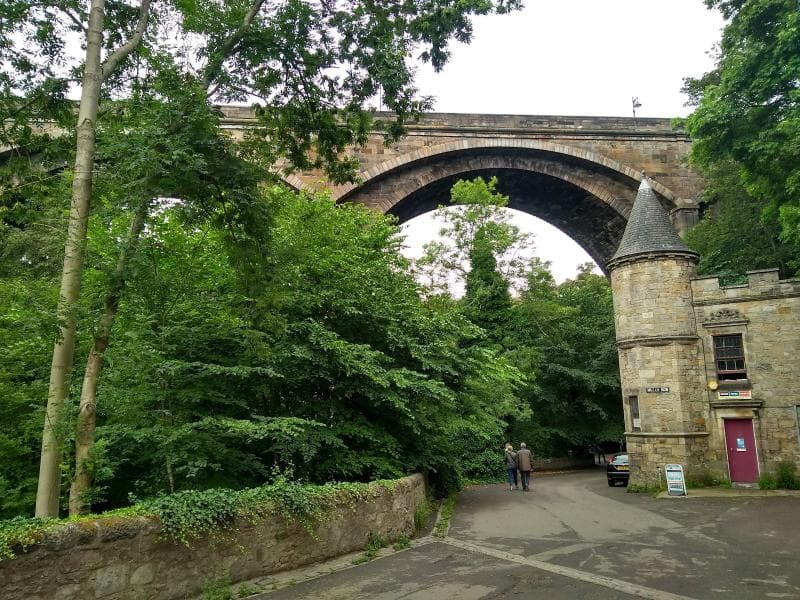
Discover St Bernard's Well, a beautiful neoclassical temple housing a historic mineral spring, nestled in Dean Village, Edinburgh, United Kingdom.
Overview
Nestled beside the tranquil Water of Leith, just a short stroll from Edinburgh's picturesque Dean Village, lies St Bernard's Well, an architectural marvel that often surprises first-time visitors. This unique structure, designed in the style of a classical temple, enshrines a natural spring once famed for its healing waters. It stands as a captivating blend of historical curiosity, artistic grandeur, and natural beauty, offering a peaceful respite along the scenic Water of Leith Walkway. Its unexpected presence in a wooded valley adds to its allure, making it feel like a secret discovery for those who wander upon it.
History & Cultural Background
The story of St Bernard's Well began in 1760 when a group of schoolboys discovered a bubbling spring near the Water of Leith while fishing. Local lore, however, extends its origins further back, naming it after St Bernard of Clairvaux, a 12th-century monk believed to have resided in a nearby cave and attributed healing powers to the spring.
By the late 18th century, Edinburgh was swept up in the burgeoning 'spa culture' trend. The spring's mineral-rich water, though often described as tasting like 'the washings of foul gun barrels,' was believed to cure a wide array of ailments, from digestive issues and arthritis to, optimistically, even blindness. This belief drew many to 'take the waters' at the site. In 1789, Lord Gardenstone, a Scottish judge and influential abolitionist, purchased the well. He commissioned the renowned Scottish landscape painter Alexander Nasmyth to design the impressive temple that stands today. Nasmyth drew inspiration from ancient Roman architecture, specifically the Temple of Vesta in Tivoli, Italy, creating a neoclassical rotunda to house the spring. The original structure was built in 1789, replacing a simpler well house from 1760. Over a century later, in 1885, wealthy publisher William Nelson purchased the well and undertook a lavish refurbishment, gifting it to the people of Edinburgh in 1888. The well was eventually closed in the 1940s after the water was found to contain arsenic and other impurities.
What Makes It Special
What truly sets St Bernard's Well apart is its striking neoclassical architecture juxtaposed with its natural, riverside setting. The structure is a circular, Roman-style temple adorned with ten sturdy Doric columns, supporting a domed roof crowned with a golden pineapple – a historical symbol of hospitality. Inside, gazing serenely over the spring, stands a statue of Hygeia, the Greek goddess of health, holding a cup with a snake, classic symbols of medicine. Above the entrance, the Latin inscription 'Bibendo Valeris' serves as a timeless reminder of its original purpose, translating to 'by drinking, you will be well.' This elegant 'Temple of Health,' as it was sometimes called, perfectly embodies the ideals of the Scottish Enlightenment, showcasing a reverence for classical art and a belief in scientific, albeit sometimes misguided, pursuits of well-being.
Stories, Fun Facts & Local Details
- Eccentric Patron: Lord Gardenstone, the well's commissioner, was known for his eccentricities, including reportedly sharing his bed with piglets. More significantly, he was a staunch anti-slavery campaigner, playing a central role in a landmark case in 1778 that led to the freedom of a slave named Joseph Knight and paved the way for the abolition of slavery in Scotland.
- Literary Connection: St Bernard's Well earned a mention in Mary Shelley's gothic masterpiece, 'Frankenstein'. In Chapter 19, Victor Frankenstein himself notes 'Arthur's Seat, St Bernard's Well, and the Pentland Hills...' among Edinburgh's sights, finding cheerfulness and admiration in them.
- Sporting Legacy: The well's distinctive Doric rotunda even inspired the badge of the now-defunct St Bernard's Football Club, which famously won the Scottish Cup in 1895.
- Modern Restoration: The well received a significant restoration in 2012 as part of the Twelve Monuments Project, led by Edinburgh World Heritage, ensuring its preservation for future generations.
Visitor Perspective
Visiting St Bernard's Well offers a tranquil and reflective experience. It is easily accessible along the scenic Water of Leith Walkway, providing a picturesque route between Dean Village and Stockbridge. The exterior is visible at all times, allowing travelers to admire its unique architecture and serene riverside setting. While the temple's interior and the spring itself are usually closed to the public, they are occasionally opened on select days, such as during the Edinburgh Art Festival or 'Doors Open Days,' offering a rare opportunity to peek inside and appreciate its mosaic ceiling and inner pump room. Many visitors describe it as a 'stunning hidden gem' and a peaceful escape, making it a highly recommended stop for those exploring Edinburgh beyond the main tourist trails.
Coordinates: -3.211524, 55.955282
View on Google Maps💬 How Travelers Describe This Place
Based on community votes
Must See
853Unique
639Interesting
569Photogenic
128Beautiful
93
Traveler Stories
Discover memorable experiences shared by travelers who have visited this place.
No traveler stories yet.
Be the first traveler to share what made this place memorable.

Tour
By
Spot
Discover amazing places around the world. Your journey starts here.
Explore
© 2026 TourBySpot. All rights reserved.