Colosseum
Rome, Italy
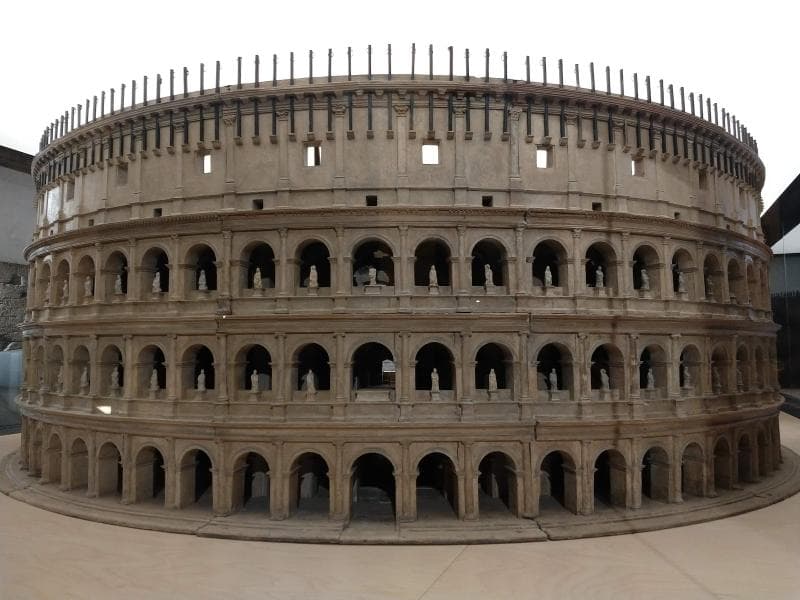
Explore the Colosseum in Rome, Italy – the largest ancient amphitheater. Discover its rich history, architectural marvels, and gladiatorial stories.
Overview
The Colosseum, originally known as the Flavian Amphitheatre, stands as an enduring symbol of ancient Rome's power and architectural prowess in the heart of Rome, Italy. It is the largest ancient amphitheatre ever built and remains the largest standing amphitheatre in the world. Constructed from travertine limestone, tuff, and brick-faced Roman concrete, this elliptical marvel could host an estimated 50,000 to 80,000 spectators, with an average audience of about 65,000 people. Its monumental scale, measuring approximately 189 meters long, 156 meters wide, and over 48 meters high, still captivates visitors today, offering a tangible link to a bygone era.
History & Cultural Background
Construction of the Colosseum began around 72 AD under Emperor Vespasian and was largely completed by 80 AD under his son and successor, Titus. Further modifications were made during the reign of Domitian, solidifying the Flavian dynasty's legacy. The site chosen for its construction was symbolically significant; it replaced an artificial lake that was part of Emperor Nero's opulent Domus Aurea palace complex, thus returning public land to the Roman people. The construction was partly funded by plunder from Titus's sack of Jerusalem in 70 AD and executed by enslaved Jewish people from Judaea. Initially, it was called the Flavian Amphitheatre, named after the Flavian emperors. The more common name, 'Colosseum,' emerged later in the Middle Ages, believed to be derived from the colossal bronze statue of Emperor Nero (the Colossus of Nero) that once stood nearby.
What Makes It Special
What makes the Colosseum truly special is its innovative engineering and design, which allowed for such a massive freestanding structure. Unlike earlier amphitheatres built into hillsides for support, the Colosseum utilized a complex system of barrel vaults and groin vaults to achieve its impressive height and capacity. Its exterior features three levels of arcades, each adorned with columns in the Doric, Ionic, and Corinthian orders, a design that profoundly influenced later Renaissance architecture. An ingenious retractable awning, known as a 'velarium,' was manipulated by hundreds of Roman sailors to shield spectators from the sun. Beneath the arena floor lay the 'hypogeum,' a labyrinth of underground passages, rooms, and elaborate machinery, including lifts and ramps, used to bring gladiators, wild animals, and scenery up to the arena. This sophisticated 'backstage' area was integral to the spectacles presented.
Stories, Fun Facts & Local Details
The Colosseum was the vibrant heart of Roman entertainment, hosting spectacles such as gladiatorial contests, wild animal hunts ('venationes'), and even mock naval battles ('naumachiae') when the arena was flooded. It's estimated that over 500,000 people and more than a million wild animals lost their lives during events held here. The inaugural games, held by Emperor Titus, reportedly lasted 100 days and saw thousands of animals killed. Two grand archways were notable: the 'Porta Libitinaria' (Door of Death), through which deceased gladiators and animals were removed, and the 'Porta Triumphalis' (Door of Victory). While popular belief often suggests gladiators always fought to the death, their extensive training and cost often meant that fights concluded when one combatant was too injured to continue, or with the emperor's mercy. Before extensive restoration efforts, the ruins were home to over 400 species of plants, thriving in a unique microclimate and from seeds brought in with exotic animals for the games.
Visitor Perspective
Visiting the Colosseum is an awe-inspiring journey through time, a must-see for any traveler to Rome. It is consistently one of Italy's most popular attractions, drawing millions annually. To make the most of your experience, it's highly recommended to book tickets in advance, especially during peak season, as entry is time-slotted. Lines for those without pre-booked tickets can be substantial. Many tickets also include access to the adjacent Roman Forum and Palatine Hill, offering a comprehensive ancient Roman experience. The best times to visit are typically early mornings or late afternoons to avoid the largest crowds. While the ground floor is largely accessible, and an elevator reaches the second tier, some underground areas and upper tiers may have restricted access. Be prepared for security checks, and remember to bring identification, as tickets are often issued in the holder's name.
Coordinates: 12.4922, 41.8902
View on Google Maps💬 How Travelers Describe This Place
Based on community votes
Interesting
953Beautiful
695Photogenic
658Must See
396Unique
22
Traveler Stories
Discover memorable experiences shared by travelers who have visited this place.
No traveler stories yet.
Be the first traveler to share what made this place memorable.
Things to see at Colosseum



Tour
By
Spot
Discover amazing places around the world. Your journey starts here.
Explore
© 2026 TourBySpot. All rights reserved.