Roman Forum Entrance
Rome, Italy
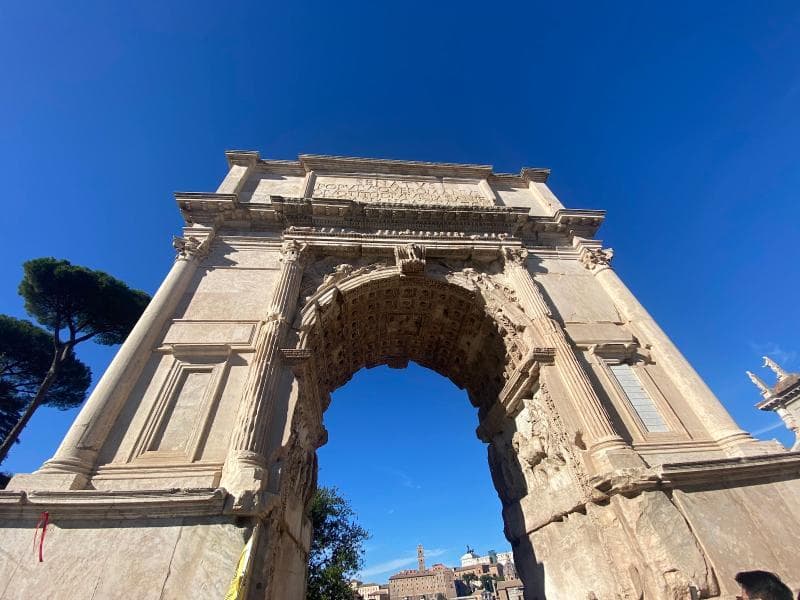
Explore the Roman Forum in Rome, Italy, the ancient heart of the city. Discover its rich history, iconic ruins, and captivating stories.
Overview
Stepping through the Roman Forum Entrance is akin to crossing a threshold into the very heart of ancient Rome. Nestled in a valley between the Capitoline and Palatine Hills, this sprawling archaeological site, known to the Romans as the Forum Romanum, was once the vibrant epicenter of public life. It served as a bustling marketplace, a political arena, a sacred space for religious ceremonies, and the venue for countless civic and commercial activities. Today, the Roman Forum forms an integral part of the Colosseum Archaeological Park, inviting curious travelers to walk amidst the evocative ruins and imagine the grandeur of an empire that shaped Western civilization.
History & Cultural Background
The story of the Roman Forum began in the 7th century BCE, long before the iconic structures visible today. This area was initially a marshy, uninhabitable valley, but a groundbreaking engineering feat, the construction of the Cloaca Maxima—one of the world's earliest sewage systems—successfully drained the land. This transformation paved the way for the Forum's development, which evolved gradually over centuries rather than being a pre-planned urban design. For over a millennium, it remained the focal point of Roman society, a place where senators debated, citizens gathered for elections, and triumphant armies paraded. As Rome expanded, subsequent emperors built their own Imperial Fora nearby, yet the original Roman Forum steadfastly retained its profound significance as the city's central hub.
However, with the decline and eventual fall of the Roman Empire, the Forum fell into disuse and neglect. By the Middle Ages, much of its glorious architecture lay buried under debris, and the area was ironically dubbed the 'Campo Vaccino' or 'cow field'. Many of its precious stones and materials were repurposed for new constructions across Rome. It wasn't until the 18th and 19th centuries that dedicated archaeological excavations began to unearth and reveal the Forum's hidden layers, painstakingly bringing its ancient splendor back into the light.
What Makes It Special
What truly sets the Roman Forum apart is its profound ability to connect visitors directly to the past. Walking its ancient pathways means literally treading in the footsteps of emperors, senators, vestal virgins, and everyday Romans. The site is an open-air museum filled with architectural marvels that stand as testaments to Roman ingenuity and power. You'll encounter the towering Arch of Septimius Severus, commemorating military victories, and the enduring columns of the Temple of Saturn, which once housed the state treasury. The Basilica of Maxentius, though partially ruined, still conveys its immense scale and advanced engineering, serving as a colossal public hall. The Forum's historical authenticity is further highlighted by the Via Sacra, Rome's oldest and most significant road, which winds its way through the ruins, having witnessed countless historical events.
Unlike some archaeological sites, much of the Roman Forum has been excavated down to its original ground level, offering a unique, multi-layered perspective on Roman urban planning and daily life. It provides an unparalleled window into the political, religious, and economic fabric of one of the greatest empires in history.
Stories, Fun Facts & Local Details
The stones of the Roman Forum whisper countless tales. According to legend, the marshy valley became suitable for settlement only after the Cloaca Maxima was built, transforming it from a swamp to the heart of a burgeoning city, famously linked to the myth of Romulus and Remus. The Temple of Saturn, with its prominent surviving columns, is not just a former temple; it was also the aerarium, the state treasury of ancient Rome. A captivating legend suggests that the god Saturn himself hid a treasure of a golden age beneath its foundations.
One of the most intriguing aspects is the House of the Vestal Virgins and the circular Temple of Vesta. These revered priestesses were responsible for maintaining Rome's sacred flame, an eternal fire believed to guarantee the city's prosperity and safety. Their devotion was paramount, and their lives were dedicated to this vital religious duty. Another fascinating detail is the rumored burial site of Romulus, marked by the mysterious Lapis Niger, a black marble slab whose archaic Latin inscriptions remain partly undeciphered. The Forum also served as the stage for Marc Antony's famous funeral oration for Julius Caesar, a pivotal moment in Roman history. Even today, archaeologists continue to uncover new secrets, reminding us that the Forum's story is still being written.
Visitor Perspective
For any traveler, experiencing the Roman Forum is an unforgettable journey. Conveniently located adjacent to the Colosseum and Palatine Hill, access to the Forum is typically included in a single combined ticket, making it easy to explore these iconic sites together. To make the most of your visit, it's highly recommended to book your tickets online in advance to bypass potentially long queues, especially during peak seasons.
To truly appreciate the Forum without the intense Roman sun and crowds, consider visiting early in the morning or later in the afternoon. Given the extensive and uneven terrain of ancient cobblestones and gravel paths, comfortable walking shoes are essential. There is limited shade, so bringing water, a hat, and sunscreen is advisable. Plan to dedicate at least two to three hours to explore the Roman Forum and Palatine Hill adequately. While self-guided exploration is possible, many visitors find that a guided tour significantly enhances the experience, as an expert can bring the intricate ruins to life with their historical narratives, helping you decipher the monumental fragments of this extraordinary ancient city.
Coordinates: 12.48532, 41.89265
View on Google Maps💬 How Travelers Describe This Place
Based on community votes
Unique
953Must See
695Interesting
658Photogenic
69Beautiful
22
Traveler Stories
Discover memorable experiences shared by travelers who have visited this place.
No traveler stories yet.
Be the first traveler to share what made this place memorable.

Tour
By
Spot
Discover amazing places around the world. Your journey starts here.
Explore
© 2026 TourBySpot. All rights reserved.