Palatine Hill Access
Rome, Italy
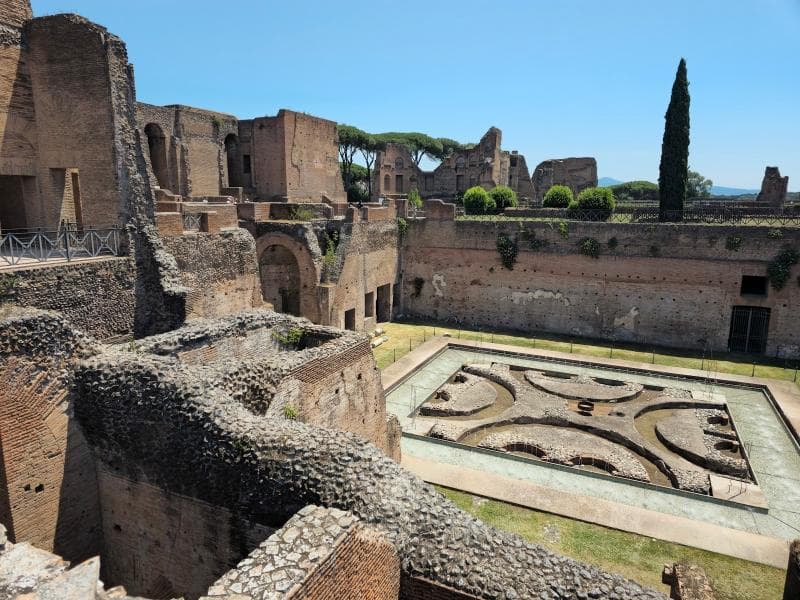
Explore Palatine Hill in Rome, Italy, the legendary birthplace of the city. Discover ancient imperial palaces, stunning views, and fascinating Roman history.
Overview
Perched majestically above the Roman Forum and overlooking the sprawling Circus Maximus, Palatine Hill Access grants entry to one of Rome's most ancient and historically significant sites. As the centermost of Rome's seven hills, the Palatine is not merely a geographical feature but the very cradle of the Eternal City, forming a crucial part of the larger Colosseum Archaeological Park in Rome, Italy. It's an expansive open-air museum where layers of history, from Iron Age settlements to opulent imperial palaces, unfold before the visitor's eyes. A visit here offers breathtaking panoramic views that encompass the Roman Forum, the Colosseum, and the Circus Maximus, providing a profound sense of connection to Rome's storied past.
History & Cultural Background
The origins of Rome are inextricably linked to Palatine Hill. According to Roman mythology, it was on this hill that the twin brothers Romulus and Remus, founders of Rome, were discovered and nurtured by a she-wolf in the Lupercal cave. Romulus subsequently chose the Palatine as the site to found the city of Rome in 753 BC. Archaeological evidence supports early habitation on the hill dating back to the 10th century BC, with remains of Iron Age huts confirming its status as one of the oldest continuously inhabited parts of the city. By the Republican period, the Palatine became a prestigious residential area, home to Rome's elite and aristocracy, who constructed lavish homes. This trend escalated with the advent of the Empire; Emperor Augustus, who was born on the hill, chose it as his imperial residence, initiating a transformation that saw successive emperors like Tiberius and Domitian expand it into a sprawling complex of palaces. The very word 'palace' derives from 'Palatium', the Latin name for the Palatine Hill, a testament to its long-standing association with imperial power and grandeur.
What Makes It Special
Palatine Hill is unique for its unparalleled concentration of historical significance and archaeological treasures. It stands as 'the first nucleus of the Roman Empire', offering a tangible journey through Rome's evolution. Visitors can explore the evocative ruins of the imperial palaces, including the Domus Augustana, the private residence of Emperor Augustus, and the Domus Flavia, the public wing of Domitian's vast palace complex. These structures, though partially preserved, still convey the architectural grandeur and opulent lifestyles of Roman emperors, with intricate mosaics and frescoes. The Farnese Gardens, created during the Renaissance, add another layer of beauty, being among Europe's first private botanical gardens and offering serene terraces and fountains. The Palatine Museum houses numerous artifacts found during excavations on the hill, providing deeper insights into its rich past. Above all, the panoramic vistas from the Palatine are truly unforgettable, offering postcard-perfect views of Rome's most iconic landmarks, including the Colosseum, the Roman Forum, and the Circus Maximus.
Stories, Fun Facts & Local Details
Beyond its grand history, the Palatine is rich with captivating stories and legends. The foundational myth of Romulus and Remus and the Lupercal cave remains a powerful narrative, deeply embedded in Roman identity. Another ancient Roman myth tells of Cacus, a fire-breathing monster who lived near the Palatine and terrorized the area until he was vanquished by Hercules. The hill also witnessed dramatic historical events, such as the assassination of the infamous Emperor Caligula in the cryptoporticus, a secretive passage beneath the palaces. For those interested in local natural details, the Palatine was also significant for 'augury', the ancient Roman practice of interpreting omens from observing the behavior of birds, making its expansive parkland a treat for birdwatchers even today.
Visitor Perspective
Access to Palatine Hill is typically included as part of a combined ticket with the Roman Forum and the Colosseum, forming a single archaeological circuit. This integrated access allows for a comprehensive exploration of ancient Rome's most iconic sites. While the Colosseum often requires timed entry, visitors can generally access the Roman Forum and Palatine Hill on the same day, sometimes even before or after their Colosseum visit. It is advisable to book tickets in advance, especially for specific time slots, to avoid long queues. The Palatine Hill covers a large area with varying terrains, so comfortable walking shoes are essential. Allow a couple of hours to explore the highlights and soak in the atmosphere. With its rich history, mythological connections, and stunning views, the Palatine Hill offers an immersive experience, allowing curious travelers to truly walk in the footsteps of emperors and experience the heart of ancient Rome.
Coordinates: 12.48746607167667, 41.890903293762165
View on Google Maps💬 How Travelers Describe This Place
Based on community votes
Unique
995Photogenic
839Beautiful
603Must See
581Interesting
388
Traveler Stories
Discover memorable experiences shared by travelers who have visited this place.
No traveler stories yet.
Be the first traveler to share what made this place memorable.

Tour
By
Spot
Discover amazing places around the world. Your journey starts here.
Explore
© 2026 TourBySpot. All rights reserved.