Third Tier
Rome, Italy
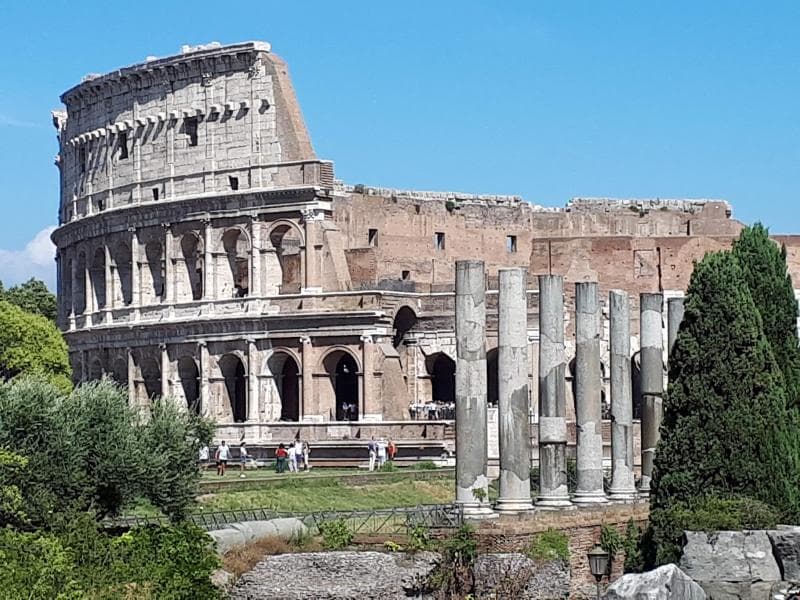
Explore the Colosseum's Third Tier in Rome, Italy, offering stunning panoramic views and a unique perspective on ancient Roman society and architecture.
Overview
Perched high above the iconic arena, the Third Tier of the Colosseum in Rome, Italy, offers a truly unique perspective on one of the world's most magnificent ancient structures. Also known as the 'Belvedere' or 'third order', this elevated section, often newly accessible after meticulous restoration, allows visitors to gaze upon the entire amphitheater and beyond. From here, the intricate design of the Colosseum unfolds, revealing its colossal scale and architectural genius. Crucially, the Third Tier provides an expansive panoramic view of Rome's historic heart, encompassing landmarks like the Roman Forum, Palatine Hill, and the Arch of Titus, connecting the past with the present cityscape. Access to this exclusive area is typically managed through specialized tours, emphasizing its preserved nature and historical significance.
History & Cultural Background
The Colosseum, originally known as the Flavian Amphitheatre, was an ambitious project initiated by Emperor Vespasian around 70-72 AD and completed by his son Titus in 80 AD, with further additions by Domitian. Its construction marked a period of architectural innovation and a desire to entertain the Roman populace on an unprecedented scale. Seating within the Colosseum was a strict reflection of Roman society's rigid social hierarchy. The lowest levels, closest to the action, were reserved for the Emperor, Vestal Virgins, senators, and other elite citizens. As one ascended through the tiers, the social standing of the spectators decreased. The Third Tier, or 'Belvedere', housed ordinary Roman citizens, women, and foreigners. These spectators, while further from the spectacle of gladiatorial contests and animal hunts, still enjoyed the grandeur and shared experience of the games. The immense capacity, estimated between 50,000 and 80,000 people, underscored the importance of public entertainment in Roman life.
What Makes It Special
What sets the Third Tier apart is the unparalleled architectural and urban context it provides. From this height, visitors gain a profound sense of the Colosseum's engineering marvel, observing its elliptical shape, the surviving arches, and the sheer volume of the structure. The vantage point allows for an appreciation of how seamlessly the amphitheater integrated into the ancient urban fabric of Rome, and how its design facilitated the rapid movement of tens of thousands of spectators. The recent restoration efforts have revealed preserved historical details, including inscriptions and traces of the original white plaster, offering a tangible connection to the past. It's a place where you don't just see the Colosseum, but you truly comprehend its monumental scale and its relationship to the surrounding ancient wonders.
Stories, Fun Facts & Local Details
The construction of the Colosseum itself is a remarkable feat, completed in a mere 8 to 10 years by an estimated tens of thousands of laborers, many of whom were slaves. The entire edifice, made of concrete, stone, and brick, utilized materials like travertine limestone quarried from Tivoli. Interestingly, admission to the spectacles was often free, funded by emperors who sought to gain public favor, sometimes even distributing free food. The original name, the Flavian Amphitheatre, was later overshadowed by 'Colosseum', likely due to its proximity to the colossal statue of Nero. The strict seating arrangements meant that while the Third Tier offered a panoramic view, those in these seats were deemed less important in society than the senators or knights below. The system of 80 entrances and exits was so efficient that the Colosseum could reportedly be filled and emptied in under ten minutes.
Visitor Perspective
For the curious traveler, visiting the Third Tier offers an immersive experience beyond the standard Colosseum tour. Because of ongoing preservation efforts and safety concerns regarding the fragility of these higher levels, access is typically limited. Standard tickets usually only permit entry to the first and second levels. To reach the Third Tier, visitors generally need to book specific 'Full Experience Attic' tickets or guided tours, which often include access to other restricted areas like the underground (hypogeum) and the arena floor. This controlled access ensures a more intimate viewing experience with fewer crowds, allowing for better photography and contemplation. Guides often accompany these tours, enriching the visit with historical narratives and details that bring the ancient structure to life, making the ascent to the Third Tier a truly memorable part of any journey to Rome.
Coordinates: 12.4922, 41.8902
View on Google Maps💬 How Travelers Describe This Place
Based on community votes
Interesting
953Beautiful
695Photogenic
658Must See
396Unique
22
Traveler Stories
Discover memorable experiences shared by travelers who have visited this place.
No traveler stories yet.
Be the first traveler to share what made this place memorable.

Tour
By
Spot
Discover amazing places around the world. Your journey starts here.
Explore
© 2026 TourBySpot. All rights reserved.