Checkpoint Charlie
Berlin, Germany
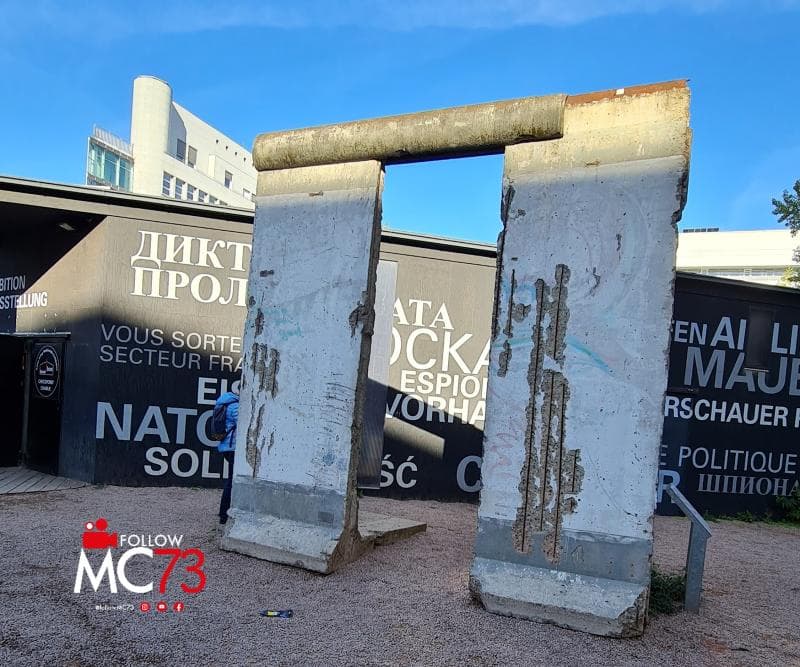
Explore Checkpoint Charlie in Berlin, Germany, a historic Cold War crossing point and potent symbol of division. Discover its compelling history and stories.
Overview
Checkpoint Charlie, located in Berlin, Germany, stands as one of the most poignant and recognizable symbols of the Cold War era. It was the best-known crossing point between East and West Berlin during the city's painful division from 1961 to 1989. Situated at the junction of Friedrichstraße and Zimmerstraße, this former military checkpoint was primarily designated for Allied military personnel, diplomats, and foreign tourists. Today, while the original guardhouse resides in the Allied Museum, a replica stands on site, flanked by sandbags and American flags, serving as a powerful reminder of a time when the world held its breath over an ideological divide.
Visiting Checkpoint Charlie offers a tangible connection to the past, prompting reflection on the global tensions and human stories of separation and daring escapes. It remains a crucial historical site, attracting millions of visitors annually who seek to understand the complexities of divided Germany and the broader Cold War narrative.
History & Cultural Background
The history of Checkpoint Charlie is intrinsically linked to the post-World War II division of Germany and Berlin. After 1945, Berlin was split into four sectors administered by the Allied powers – the United States, Great Britain, France, and the Soviet Union. As East Germans increasingly fled to the West, particularly skilled workers and professionals, the East German government, supported by the Soviet Union, erected the Berlin Wall on August 13, 1961, effectively sealing off East Berlin.
Checkpoint Charlie became one of three main Allied checkpoints, following Checkpoint Alpha (at Helmstedt) and Checkpoint Bravo (at Dreilinden), named using the NATO phonetic alphabet. Its purpose was to regulate movement between the American sector of West Berlin and the Soviet sector of East Berlin. Unlike other crossing points, it was specifically for Allied military, diplomats, and non-German foreigners.
The checkpoint was a flashpoint for Cold War tensions, most notably during the October 1961 tank standoff, where American and Soviet tanks faced each other at close range for 16 tense hours, threatening to ignite a larger conflict. It was also the site of numerous escape attempts from East Germany, some successful, many tragic. One of the most infamous incidents was the death of Peter Fechter in 1962, a young East Berliner shot by border guards while attempting to cross, who was left to bleed to death in the 'death strip', a shocking event witnessed by the world.
After the fall of the Berlin Wall in November 1989, Checkpoint Charlie lost its function and was formally dismantled on June 22, 1990, symbolizing the end of an era. The original guard booth was relocated to the Allied Museum in Berlin-Zehlendorf.
What Makes It Special
Checkpoint Charlie's enduring appeal lies in its powerful symbolism. It was not merely a border post but a tangible line between two opposing ideologies, democracy and communism, during a critical period in world history. It represents the profound division of a city and a nation, and the personal sacrifices made in the pursuit of freedom.
The site's notoriety was amplified by its frequent appearance in Cold War spy thrillers and films, cementing its image as a place of intrigue and danger. This cultural footprint, combined with its dramatic history, makes it a uniquely compelling destination. Even without its original structures, the replica and the surrounding informational exhibits effectively transport visitors to a time of heightened tension and human drama.
Stories, Fun Facts & Local Details
The name 'Checkpoint Charlie' itself is a piece of historical trivia, originating from the NATO phonetic alphabet, where 'Charlie' stands for the letter 'C', designating it as the third Allied crossing point.
The stories of escape attempts are particularly captivating and demonstrate incredible human ingenuity and bravery. The nearby Mauermuseum (Wall Museum) documents these audacious efforts, showcasing various makeshift devices used by East Germans to reach freedom. These included homemade hot-air balloons, modified cars with hidden compartments, self-built mini-submarines, and even a zipline.
While the actual checkpoint is no longer operational, visitors can still see a recreation of the border station, complete with a guard booth, sandbags, and the iconic 'You are leaving the American Sector' sign. An open-air exhibition further along Zimmerstraße provides detailed accounts of those who attempted to cross the wall, highlighting both successes and failures.
Visitor Perspective
For many visitors, standing at Checkpoint Charlie evokes a profound sense of history and a solemn understanding of the Cold War's impact. The area today is bustling, a stark contrast to the grim, heavily fortified border it once was. Informational panels around the site provide context, allowing visitors to visualize the intense atmosphere that once permeated this street.
The experience is enhanced by a visit to the Mauermuseum - Museum Haus am Checkpoint Charlie, situated just steps away. This museum offers a comprehensive look at the Berlin Wall's history, focusing on the countless escape attempts and the personal stories of those affected by the division. Checkpoint Charlie is easily accessible via Berlin's excellent public transport system, with the U-Bahn station Kochstraße/Checkpoint Charlie just a minute's walk away.
Coordinates: 13.3904, 52.5074
View on Google Maps💬 How Travelers Describe This Place
Based on community votes
Photogenic
980Unique
712Must See
482Interesting
288Beautiful
62
Traveler Stories
Discover memorable experiences shared by travelers who have visited this place.
No traveler stories yet.
Be the first traveler to share what made this place memorable.
Things to see at Checkpoint Charlie



Tour
By
Spot
Discover amazing places around the world. Your journey starts here.
Explore
© 2026 TourBySpot. All rights reserved.