Mauermuseum
Berlin, Germany
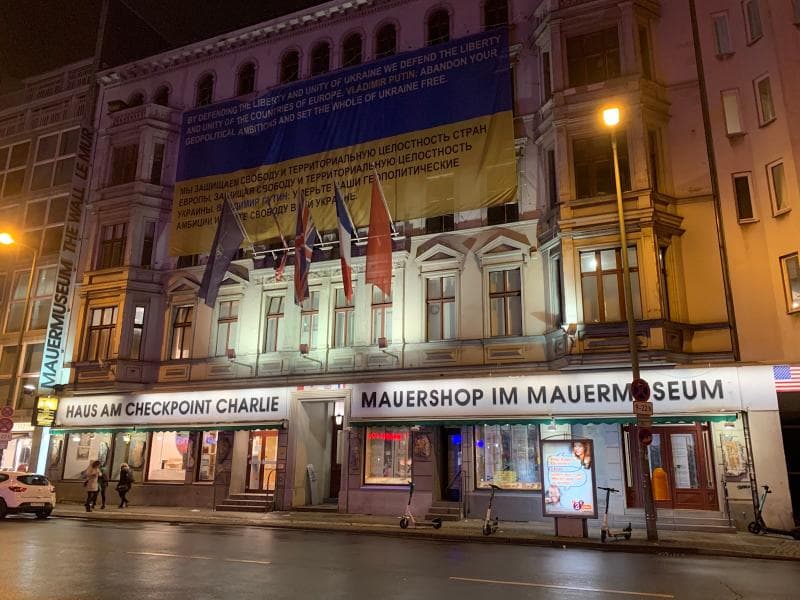
Explore Mauermuseum (Wall Museum) at Checkpoint Charlie in Berlin, Germany, chronicling daring escapes and the fight for freedom during the Cold War.
Overview
Nestled beside the historic remnants of Checkpoint Charlie in Berlin, Germany, the Mauermuseum, also known as the Wall Museum – Museum Haus am Checkpoint Charlie, stands as a poignant testament to human resilience and the desire for freedom. It is not merely a collection of artifacts, but a vibrant chronicle of life, division, and daring escapes during the Cold War. The museum’s core mission is to document the ingenious and often perilous attempts made by East Germans to cross the Berlin Wall and reach West Berlin, preserving their stories for future generations.
Located at the very site that once served as the most prominent border crossing between East and West Berlin for foreigners and Allied personnel, the Mauermuseum offers an immersive journey into a pivotal period of 20th-century history. It provides a comprehensive overview of the Berlin Wall's construction, its devastating impact on families and the city, and the enduring spirit of those who challenged its existence.
History & Cultural Background
The Mauermuseum's origins are deeply intertwined with the history of the Berlin Wall itself. Founded by human rights activist Dr. Rainer Hildebrandt shortly after the Wall's construction in August 1961, the museum first opened its doors on October 19, 1962, initially in a modest 2.5-room apartment. Hildebrandt's vision was to be 'as close to injustice as possible,' using the museum as a protest against the Wall and a place to support those seeking freedom.
By June 1963, the museum relocated to a building immediately adjacent to Checkpoint Charlie, becoming an 'oasis of freedom' right before the border. This strategic location allowed escape accomplices to observe movements at the crossing and provided a sanctuary for refugees. Over the years, the museum evolved into a focal point for escapees, helpers, journalists, and protesters, actively documenting and supporting escape plans. It also broadened its scope to include the global non-violent struggle for human rights, featuring exhibits on figures like Gandhi and Walesa.
The museum's very existence was an act of defiance, highlighting the human cost of the division and celebrating the courage of those who sought to overcome it. Its continuous efforts contributed to keeping the dream of a united Berlin alive and played a part in the historical events leading to the Wall's fall.
What Makes It Special
What truly sets the Mauermuseum apart is its unparalleled focus on the inventive and often extraordinary methods people devised to escape from East Germany. The museum vividly illustrates how ordinary individuals, driven by an unyielding desire for freedom, transformed everyday objects into tools for liberation.
Exhibits showcase an astonishing array of escape apparatus, from modified cars with hidden compartments and mini-submarines used to cross the Baltic Sea, to self-made hot-air balloons that carried entire families to safety, and even zip lines and chairlifts. These tangible artifacts, often accompanied by photographs and personal documents, offer a powerful and deeply personal insight into the ingenuity and bravery involved in these daring attempts. The museum's dedication to documenting these specific stories of successful escapes, alongside those that tragically failed, creates a deeply moving and educational experience.
Stories, Fun Facts & Local Details
The stories within the Mauermuseum are rich with human drama. Imagine a concealed luggage compartment in a VW car, barely large enough for one person, successfully transporting a refugee. Or the narrative of three youths, all under 20, who meticulously dug a tunnel between Christmas and New Year's 1971/72 from an electrical company facility near the border.
Perhaps one of the most compelling exhibits is the handmade hot-air balloon, famously used to transport two families safely to the West – a testament to human innovation under duress. The museum also extensively documents numerous escape tunnels, including one in October 1964 from which 57 people escaped. These displays are not abstract historical facts; they are concrete examples of individual courage.
The museum's initial location in Hildebrandt's apartment highlights its grassroots origins, growing from a simple act of documentation into a major institution. It was a place where escape plans were not only chronicled but also sometimes drafted. Even the faithful reconstruction of the first Allied control barracks at Checkpoint Charlie was built by the Mauermuseum as a memorial to the Western Allies' role in maintaining a free Berlin.
Visitor Perspective
A visit to the Mauermuseum is a profound and thought-provoking experience. Visitors are guided through a comprehensive narrative of the Berlin Wall's history, the injustices of the SED regime, and the tireless fight for human rights. The exhibition, spanning over 2,000 square meters across three floors, uses original photographs, films, and artifacts to create an immersive environment.
The museum is open daily, typically from 10:00 a.m. to 8:00 p.m., offering ample time for exploration. Audio guides are available in multiple languages, including German, English, French, Italian, Spanish, Russian, Chinese, and Polish, enhancing the experience for international visitors. Group tours and tailored individual guided tours can also be arranged, providing deeper insights into the exhibits and historical context. The intensity of the stories and the sheer volume of information make it a compelling, albeit sometimes emotionally draining, journey through a critical chapter of modern history.
Coordinates: 13.39038, 52.50743
View on Google Maps💬 How Travelers Describe This Place
Based on community votes
Photogenic
922Interesting
665Unique
645Beautiful
244Must See
80
Traveler Stories
Discover memorable experiences shared by travelers who have visited this place.
No traveler stories yet.
Be the first traveler to share what made this place memorable.

Tour
By
Spot
Discover amazing places around the world. Your journey starts here.
Explore
© 2026 TourBySpot. All rights reserved.