Casa Milà
Barcelona, Spain
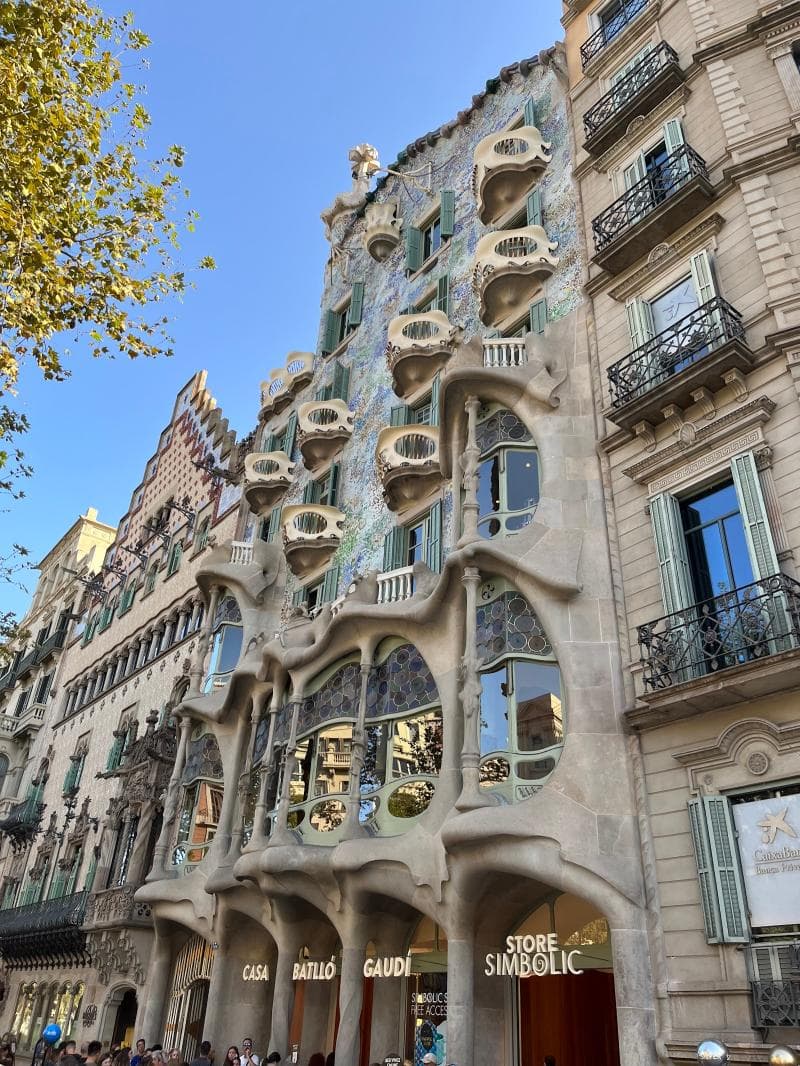
Explore Casa Milà (La Pedrera) in Barcelona, Spain, Gaudí's iconic modernist masterpiece, a UNESCO World Heritage Site with unique architecture.
Overview
Nestled in the heart of Barcelona, Spain, Casa Milà stands as a breathtaking testament to the boundless imagination of Antoni Gaudí, one of the most celebrated architects of Catalan Modernism. Popularly known as 'La Pedrera', which translates to 'the stone quarry', this iconic building derives its nickname from its striking, unconventional rough-hewn stone facade. Completed between 1906 and 1912, Casa Milà was Gaudí's final private residential commission before he dedicated his remaining years to the monumental Sagrada Família. Its unique design, characterized by undulating forms and a profound connection to nature, broke away from the rigid architectural norms of its era, marking it as a true masterpiece. Recognized globally for its architectural significance, Casa Milà was designated a UNESCO World Heritage Site in 1984, inviting millions of visitors annually to explore its innovative spaces and delve into Gaudí's visionary world.
History & Cultural Background
The story of Casa Milà begins in 1906 when the wealthy industrialist Pere Milà and his wife, Roser Segimon, commissioned Antoni Gaudí to design their new residence on Barcelona's fashionable Passeig de Gràcia. From its inception, the building was intended to be both a grand family home and an apartment block for rent. However, its construction was far from smooth. When completed in 1912, Casa Milà stirred considerable controversy and became the subject of much public debate and even ridicule due to its radically unconventional appearance. Locals, accustomed to more traditional styles, mockingly dubbed it 'La Pedrera' because its facade resembled an open quarry. Gaudí himself faced numerous disagreements with the Milà family, and even the city council, over the design and exceeding building codes, at one point almost abandoning the project. Despite the initial skepticism, Casa Milà's architectural uniqueness and historical value gained recognition over time. It was declared a National Historical-Artistic Monument in 1969, and in 1984, it achieved the prestigious status of a UNESCO World Heritage Site as part of 'Works of Antoni Gaudí'. Today, the building is managed by the Fundació Catalunya La Pedrera, which has transformed it into a vibrant cultural center and museum, preserving Gaudí's legacy and offering insights into his creative genius.
What Makes It Special
Casa Milà is an architectural marvel that continually captivates visitors with its groundbreaking design and innovative spirit. Its most striking feature is arguably its complete absence of straight lines; Gaudí consciously designed the entire structure, both inside and out, with fluid, organic forms inspired by the natural world. This organic approach extends to the revolutionary self-supporting stone facade, which is independent of the internal structure, allowing for unprecedented flexibility in the interior layout. Gaudí employed innovative structural techniques like the catenary arch, a parabolic form found in nature, to distribute weight evenly and enhance stability. Furthermore, Casa Milà holds the distinction of being the first building in Barcelona to utilize reinforced concrete, a pioneering choice that enabled Gaudí to realize his complex, curved forms. The building also boasts an ingenious natural ventilation system, designed to eliminate the need for artificial air conditioning. Perhaps its most iconic element is the rooftop, a fantastical landscape adorned with sculptural chimneys and ventilation towers that resemble helmeted warriors, affectionately known as 'espanta-bruixes' or 'witch-scarers' by locals. Two vast interior courtyards, one circular and one oval, act as lungs for the building, drawing natural light and fresh air into all nine stories.
Stories, Fun Facts & Local Details
Beyond its architectural grandeur, Casa Milà is rich with intriguing stories and delightful details. When the Milà family moved into their unconventional home, Roser Segimon, Pere Milà's wife, reportedly expressed frustration over the lack of straight walls, making it impossible to place her grand piano. Gaudí, with his characteristic wit, is said to have suggested she learn to play the violin instead. A devout Catholic, Gaudí originally intended to incorporate more explicit religious symbolism into the building, including a large sculpture of the Virgin Mary on the facade. However, local opposition and socio-political tensions led to a reduction in these elements. The intricate, twisting wrought-iron balconies, often likened to seaweed, were crafted by Josep Maria Jujol, a close collaborator of Gaudí's. A popular, though unconfirmed, legend suggests that filmmaker George Lucas might have drawn inspiration from Casa Milà's distinctive chimney stacks for the helmets of his 'Star Wars' stormtroopers or even Darth Vader. The building's attic, once a laundry space, now houses the 'Espai Gaudí', a comprehensive exhibition dedicated to the architect's life, work, and his profound inspiration from nature, showcasing models and audiovisuals that illuminate his unique architectural philosophy.
Visitor Perspective
For any traveler to Barcelona, a visit to Casa Milà offers an immersive journey into Antoni Gaudí's genius. The experience typically includes access to a meticulously recreated apartment that transports visitors back to the early 20th century, offering a glimpse into the opulent lifestyle of the Catalan bourgeoisie. Exploring the apartment reveals Gaudí's holistic design approach, even down to the furniture. Beyond this, visitors can wander through the expansive attic, home to the Espai Gaudí exhibition, and ascend to the legendary rooftop terrace. From here, the sculptural chimneys provide a surreal backdrop against panoramic views of Barcelona, including distant glimpses of Gaudí's other masterpiece, the Sagrada Família. Self-guided tours come with an audio guide, enriching the experience with detailed explanations and historical context. For those seeking a unique perspective, special night experiences, complete with audiovisual shows on the rooftop, and early morning tours before public opening hours are available. Casa Milà is conveniently located on Passeig de Gràcia and is easily accessible by metro (Diagonal station on L3 and L5 lines) or various bus routes, making it a central point of interest in Barcelona. To ensure a smooth visit and avoid long queues, it is highly recommended to purchase tickets online in advance. Visitors should allocate approximately 90 minutes to two hours to fully appreciate the building's many facets. It's also wise to check the weather, as the iconic rooftop may be closed during periods of rain for safety reasons.
Coordinates: 2.1619, 41.3954
View on Google Maps💬 How Travelers Describe This Place
Based on community votes
Beautiful
683Unique
642Photogenic
597Interesting
300Must See
88
Traveler Stories
Discover memorable experiences shared by travelers who have visited this place.
No traveler stories yet.
Be the first traveler to share what made this place memorable.
Things to see at Casa Milà



Tour
By
Spot
Discover amazing places around the world. Your journey starts here.
Explore
© 2026 TourBySpot. All rights reserved.