Apartment Museum
Barcelona, Spain
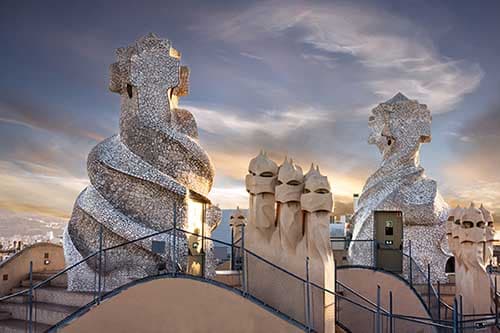
Explore the Apartment Museum inside Casa Milà in Barcelona, Spain, for an immersive journey into early 20th-century modernist living and Gaudí's genius.
Overview
Stepping into the Apartment Museum within Casa Milà, affectionately known as La Pedrera, is like traveling back in time to Barcelona's early 20th century. Located inside Antoni Gaudí’s iconic modernist masterpiece in the heart of Barcelona, Spain, this recreated period apartment offers a unique glimpse into the daily life of a bourgeois family during the nascent years of Catalan Modernisme. It is one of the most compelling features of Casa Milà, a building so groundbreaking that it earned the nickname 'the stone quarry' for its unconventional, undulating facade. As a UNESCO World Heritage Site, Casa Milà stands as a testament to Gaudí's genius, and the Apartment Museum provides an intimate scale perspective of his integrated architectural vision, extending beyond the structural elements to the living spaces themselves.
The Apartment Museum, often referred to as 'El Pis de la Pedrera' or the 'period apartment', showcases an authentic representation of a residence from the first third of the 20th century, complete with period furnishings, decorative arts, and household objects. It allows visitors to experience firsthand how a wealthy family would have inhabited Gaudí's organically designed interiors, highlighting his innovative approach to space, light, and functionality even in domestic settings. This curated space is an essential part of understanding the full scope of Gaudí's residential architecture and offers a rich cultural context to one of Barcelona's most celebrated landmarks.
History & Cultural Background
Casa Milà, built between 1906 and 1912, was Antoni Gaudí's last civil architectural work before he dedicated his final years to the Sagrada Família. It was commissioned by the wealthy industrialist Pere Milà and his wife Roser Segimon, who intended to occupy the main floor while renting out the other apartments. At the time of its construction, Casa Milà sparked controversy among Barcelona residents due to its radical, avant-garde design, which broke away from conventional architectural styles. Its rough-hewn stone exterior and wavy forms led to its famous moniker, La Pedrera.
Gaudí's design for Casa Milà was revolutionary, featuring a self-supporting stone facade that allowed for flexible interior layouts with no load-bearing walls, and a free-plan floor structure. This meant that internal walls could be moved or removed without compromising the building's stability, an unprecedented innovation for its time. The Apartment Museum meticulously reconstructs a dwelling from this period, illustrating how these architectural freedoms translated into practical, elegant living spaces. It reflects the burgeoning Modernisme movement, which sought to integrate art, craft, and nature into everyday life, offering a snapshot of Barcelona's cultural and social aspirations during an era of significant change.
What Makes It Special
What sets the Apartment Museum apart is its immersive authenticity. It is not merely a collection of historical objects but a carefully recreated environment designed to transport visitors directly into the past. Every detail, from the furniture and textiles to the domestic appliances and artwork, has been meticulously chosen to reflect the lifestyle and aesthetic sensibilities of a prosperous family in early 20th-century Barcelona.
Beyond the visual appeal, the apartment showcases how Gaudí's architectural principles influenced even the most intimate aspects of home life. The curved walls, innovative natural ventilation systems, and abundant natural light that permeate the apartment demonstrate Gaudí's holistic approach to design. He considered not just the structure, but how inhabitants would interact with their environment, creating spaces that were both aesthetically pleasing and remarkably functional. The apartment provides a tactile connection to the past, allowing visitors to imagine the sounds, smells, and routines of daily life within Gaudí's organic masterpiece.
Stories, Fun Facts & Local Details
One fascinating aspect of Casa Milà's design, vividly illustrated in the Apartment Museum, is Gaudí's commitment to eliminating straight lines and right angles. He believed that straight lines were unnatural and sought inspiration from organic forms found in nature. This philosophy is evident throughout the apartment, where walls gently curve and rooms flow into one another, creating a sense of continuous movement and fluidity.
The original residents of Casa Milà would have experienced a home where even the furniture was often custom-designed by Gaudí or his collaborators to fit the unique, curvilinear spaces. While the main floor was reserved for the Milà couple, other floors were designed for rent, making the building a fully functional residential complex. The flexibility of the interior partitions meant that tenants could, within limits, adapt their living spaces to their needs, a testament to Gaudí's forward-thinking approach to adaptable urban living. It's a reminder that beneath its monumental facade, La Pedrera was, and in parts still is, a living building.
Visitor Perspective
Visiting the Apartment Museum is an enriching experience that complements the grand architectural tour of Casa Milà. While the rooftop terrace, with its whimsical chimneys and panoramic views, and the Espai Gaudí in the attic, detailing Gaudí's work, are spectacular, the apartment offers a human-scale narrative. It provides a relatable context, allowing visitors to connect with the past on a personal level and appreciate the livability of Gaudí's innovative designs.
As you wander through the meticulously arranged rooms, you can almost hear the echoes of conversations and daily activities from over a century ago. This intimate exploration helps visitors understand not only the artistic and architectural significance of Casa Milà but also its profound impact on urban residential design. It’s an opportunity to truly step inside a living piece of history, appreciating Gaudí’s genius from the perspective of those who called his extraordinary creation home. To fully absorb the details, plan to spend a portion of your overall Casa Milà visit immersing yourself in this unique historical residence.
Coordinates: 2.157, 41.3905
View on Google Maps💬 How Travelers Describe This Place
Based on community votes
Photogenic
800Beautiful
658Unique
589Must See
374Interesting
90
Traveler Stories
Discover memorable experiences shared by travelers who have visited this place.
No traveler stories yet.
Be the first traveler to share what made this place memorable.

Tour
By
Spot
Discover amazing places around the world. Your journey starts here.
Explore
© 2026 TourBySpot. All rights reserved.