Espai Gaudí Exhibition
Barcelona, Spain
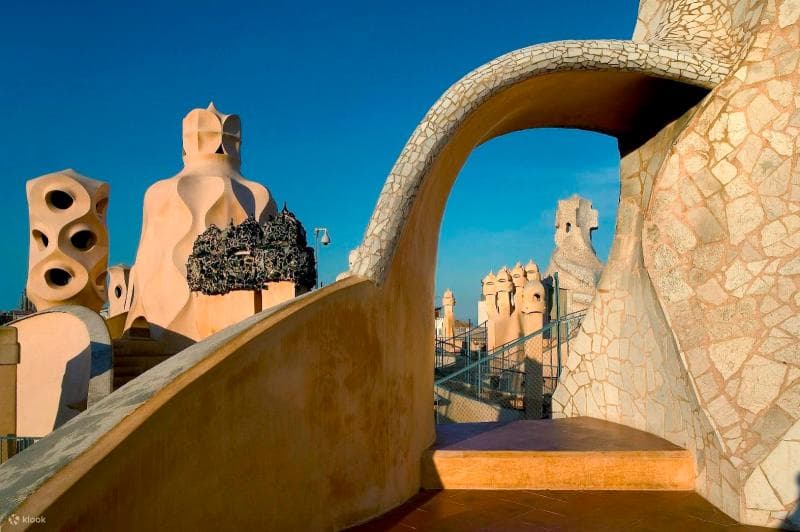
Explore Espai Gaudí Exhibition within Casa Milà in Barcelona, Spain. Delve into Antoni Gaudí's innovative mind and nature-inspired architecture.
Overview
Nestled within the architectural marvel of Casa Milà, also affectionately known as La Pedrera, the Espai Gaudí Exhibition offers an immersive journey into the mind of Catalonia's most celebrated architect, Antoni Gaudí. This unique exhibition, situated in the building's distinctive attic, serves as a comprehensive interpretative center dedicated to understanding Gaudí's innovative architectural theories and his profound connection to nature. It is a vital component of any visit to Casa Milà, a UNESCO World Heritage Site in the vibrant heart of Barcelona, Spain.
As you explore the Espai Gaudí, you'll uncover the secrets behind Gaudí's revolutionary designs, which transcended the architectural norms of his time. The exhibition utilizes models, audiovisual presentations, and informative displays to illuminate his creative process and the inspirations drawn from the natural world that shaped his iconic works. It is more than just a museum; it is an intimate encounter with the genius who sculpted Barcelona's skyline.
History & Cultural Background
Casa Milà, constructed between 1906 and 1912, stands as Antoni Gaudí's final civil project before he dedicated his remaining years to the Sagrada Família. Commissioned by Pere Milà and Roser Segimon, it was intended as a grand residential building, challenging conventional aesthetics from its very inception.
At the turn of the 20th century, Barcelona was experiencing the flourishing of Catalan Modernisme, an artistic and cultural movement seeking to revive Catalan identity. Gaudí, as its foremost exponent, imbued his works with this spirit, blending Neo-Gothic, Oriental, and Art Nouveau influences with his deep personal passions for architecture, nature, and religion.
The building, controversially nicknamed 'La Pedrera' or 'the stone quarry' by locals due to its rugged, undulating façade, initially faced public ridicule. However, its innovative design, featuring a self-supporting stone façade and an absence of load-bearing walls, was revolutionary, anticipating modern architecture by decades. Over time, this initial skepticism gave way to widespread admiration, culminating in its recognition as a UNESCO World Heritage Site in 1984.
The Espai Gaudí Exhibition itself was established in the building's attic, a space characterized by 270 parabolic arches. This area, originally housing laundry rooms and storage, was transformed into a permanent exhibition dedicated to Gaudí's life and work, allowing visitors to delve deeper into his architectural philosophy within one of his own creations.
What Makes It Special
The Espai Gaudí Exhibition is special because it is not merely a collection of artifacts, but a narrative experience set within the very fabric of Gaudí's architecture. Located in Casa Milà's attic, often referred to as the 'Whale Attic' due to its striking series of brick parabolic arches, the space itself is a testament to Gaudí's structural ingenuity. These arches, resembling a whale's skeleton, demonstrate his innovative use of geometry to create strong yet elegant forms. The exhibition showcases Gaudí's complete oeuvre, explaining his distinctive design language that seamlessly integrates functionality with aesthetics.
Visitors gain insights into his unique methods, such as his use of models and gravity chains to refine forms, and his pioneering application of materials like 'trencadís' – mosaics made from broken ceramic pieces. It reveals how Gaudí transcended traditional styles, developing a unique approach that drew heavily from nature's organic shapes, light, and geometry. This makes the Espai Gaudí an unparalleled place to understand the creative mind behind Barcelona's most iconic buildings.
Stories, Fun Facts & Local Details
Antoni Gaudí's work, including Casa Milà, is a rich tapestry of stories and fascinating details. It is said that Gaudí approached his buildings like a landscape artist, always seeking to harmonize his structures with their natural surroundings. The undulating façade of Casa Milà, with its flowing lines and wrought-iron balconies that evoke seaweed, is a prime example of this organic inspiration.
A fun fact is that the controversial design of Casa Milà caused a stir during its construction, with some locals comparing it to a stone quarry, giving it its famous nickname, 'La Pedrera'. Despite initial criticism, its visionary design and structural innovations, such as its internal courtyards for light and ventilation, were far ahead of their time. The rooftop, often called the 'Warrior Rooftop', is adorned with sculptural chimneys that resemble helmeted figures, which locals whimsically nicknamed 'espanta-bruixes' or 'witch-scarers'. From this very rooftop, Gaudí intended to create a space from which one could glimpse his most important work, the Sagrada Familia. These whimsical elements are a testament to Gaudí's playful yet profound engagement with his craft and the city.
Visitor Perspective
Visiting the Espai Gaudí Exhibition offers a crucial context for appreciating Casa Milà and Gaudí's wider architectural legacy. Typically included as part of the general admission to Casa Milà, the exhibition is usually self-guided, often complemented by an audio guide available in multiple languages. It is recommended to dedicate about one to two hours for the entire Casa Milà visit, including the Espai Gaudí, the recreated tenant's apartment, and the iconic rooftop. The path through the exhibition in the attic, with its rhythmic catenary arches, provides a physical and intellectual immersion into Gaudí's world, explaining how his vision translated into tangible forms.
The exhibits offer a deeper understanding of the organic and geometric principles Gaudí employed, showing how his observations of nature directly influenced the structure and aesthetics of his buildings. For a curious traveler, this exhibition transforms the building from a mere spectacle into a profound educational experience, revealing the intricate details and visionary thinking that define Gaudí's genius. It's an opportunity to connect with the Catalan Modernisme movement and appreciate how Gaudí's work continues to shape Barcelona's identity and inspire generations.
Coordinates: 2.157, 41.3905
View on Google Maps💬 How Travelers Describe This Place
Based on community votes
Photogenic
755Must See
728Beautiful
481Unique
183Interesting
28
Traveler Stories
Discover memorable experiences shared by travelers who have visited this place.
No traveler stories yet.
Be the first traveler to share what made this place memorable.

Tour
By
Spot
Discover amazing places around the world. Your journey starts here.
Explore
© 2026 TourBySpot. All rights reserved.