Rooftop Chimneys
Barcelona, Spain
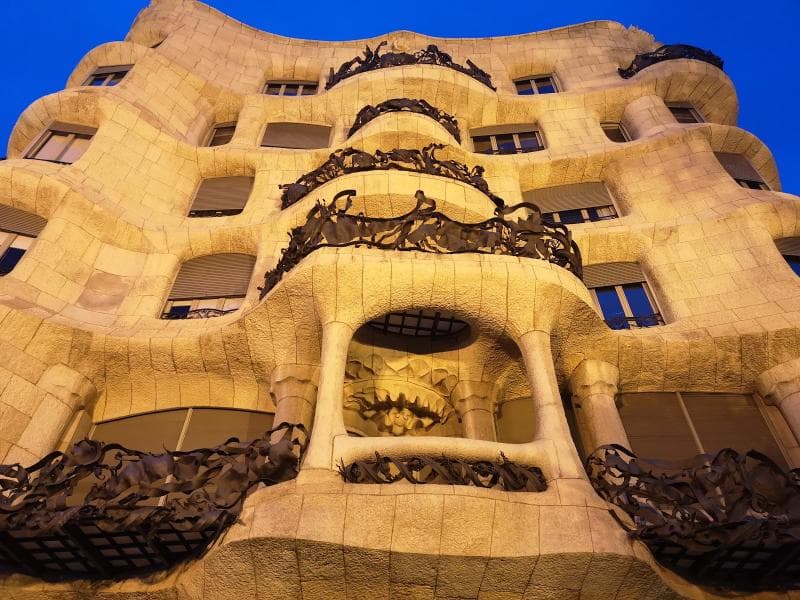
Explore the surreal Rooftop Chimneys of Casa Milà in Barcelona, Spain. Discover Antoni Gaudí's sculptural masterpieces and panoramic city views.
Overview
Perched atop Antoni Gaudí's iconic Casa Milà in Barcelona, Spain, the 'Rooftop Chimneys' offer more than just functional ventilation; they are a breathtaking sculptural landscape, famously nicknamed the 'Garden of Warriors' or 'Witch-Scarers'. This surreal open-air museum invites visitors to wander among whimsical, helmeted figures that stand guard over the city. A visit to this rooftop is a journey into Gaudí's imaginative mind, where architectural necessity transforms into captivating art, providing unparalleled panoramic views of Barcelona's skyline.
History & Cultural Background
Casa Milà, popularly known as La Pedrera ('The Quarry') due to its undulating stone façade, was Antoni Gaudí's last civil work, constructed between 1906 and 1912. Commissioned by Pere Milà and his wife Roser Segimon, the building was revolutionary and initially controversial, even mocked by locals and the press for its unconventional appearance. Gaudí, a pioneer of Catalan Modernisme, infused the entire structure with organic forms inspired by nature, rejecting straight lines and traditional architectural conventions. The rooftop chimneys are a prime example of this philosophy, seamlessly blending functionality with artistic expression. Rather than concealing these necessary elements, Gaudí sculpted them into striking forms that have since become emblematic of his unique style. The building's innovative design, including its spectacular roof terrace, earned it UNESCO World Heritage status in 1984.
What Makes It Special
What truly sets the Rooftop Chimneys apart is their extraordinary sculptural quality and dual purpose. There are 29 chimneys on the roof, arranged in groups or standing alone. Gaudí sculpted these smoke outlets into spiral, twisting shapes, not only to improve smoke flow but also to create an otherworldly aesthetic. Many of these structures resemble abstract warriors or sentinels wearing medieval helmets, inspiring their famous nicknames. Beyond their striking appearance, some chimneys are adorned with fragments of cava bottles, ceramic, and recycled stone, showcasing Gaudí's innovative use of the 'trencadís' mosaic technique, which also served as a waterproofing layer. The design also incorporates ventilation towers and skylights, all integrated with an artistic touch, ensuring that every functional element contributes to the building's overall sculptural harmony.
Stories, Fun Facts & Local Details
- The 'Garden of Warriors': The poet Pere Gimferrer famously dubbed the rooftop 'the garden of warriors' because the chimneys appeared to be protecting the skylights, capturing the imaginative essence of the space.
- Witch-Scarers: The Catalans affectionately nicknamed these helmeted figures 'espanta-bruixes' (witch-scarers), highlighting the whimsical and protective aura they exude.
- Unfinished Vision: Due to financial disagreements with the Milà family, Gaudí was unable to complete certain decorative and protective elements of the rooftop as he initially envisioned. Many chimneys were intended to be covered more extensively with trencadís mosaics.
- Hollywood Inspiration: It is widely rumored that the distinctive forms of the Casa Milà chimneys inspired the helmets of the Imperial Stormtroopers in the 'Star Wars' films, though this remains an unconfirmed but popular anecdote.
- Recycling Pioneer: Gaudí's use of broken ceramic, stone, and even glass from empty cava bottles demonstrates an early form of recycling, turning discarded materials into integral parts of his decorative scheme.
Visitor Perspective
Walking along the serpentine pathways of the Casa Milà rooftop is an experience that transports visitors to a dreamlike realm. The uneven surfaces and fluid lines guide you through a unique architectural landscape, where every turn reveals a new sculptural marvel. From this elevated vantage point, visitors are rewarded with breathtaking 360-degree views of Barcelona, including iconic landmarks like the Sagrada Família, the bustling Passeig de Gràcia, and the distant Mediterranean Sea. It's an opportunity to truly appreciate Gaudí's genius for integrating art, nature, and functionality. Below the rooftop, the Espai Gaudí exhibition in the attic, with its striking catenary arches, provides deeper insights into the architect's methods and inspiration, acting as a perfect complement to the rooftop experience. Comfortable footwear is recommended to fully enjoy exploring this extraordinary space.
Coordinates: 2.157, 41.3905
View on Google Maps💬 How Travelers Describe This Place
Based on community votes
Unique
623Photogenic
545Interesting
343Beautiful
302Must See
88
Traveler Stories
Discover memorable experiences shared by travelers who have visited this place.
No traveler stories yet.
Be the first traveler to share what made this place memorable.

Tour
By
Spot
Discover amazing places around the world. Your journey starts here.
Explore
© 2026 TourBySpot. All rights reserved.