Bunk'Art 1
Tirana, Albania
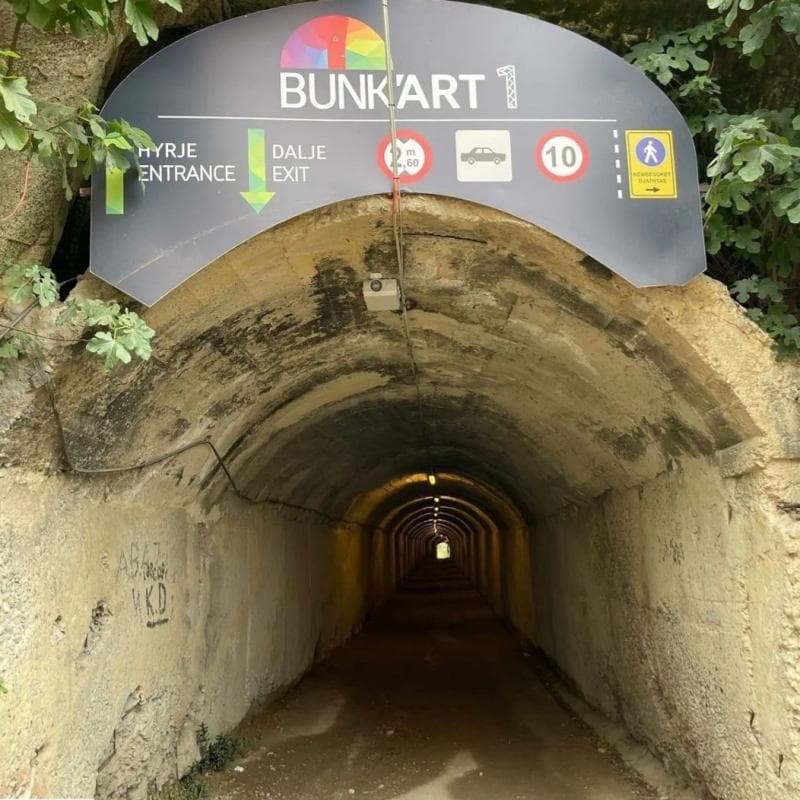
Explore Bunk'Art 1 in Tirana, Albania – a massive anti-nuclear bunker turned museum. Uncover Albania's communist past and Cold War history.
Overview
Deep within the hills on the outskirts of Tirana, Albania, lies Bunk'Art 1, a colossal anti-nuclear bunker that has been transformed into one of the country's most compelling museums. Originally constructed in the 1970s as a top-secret hideout for Albania's communist dictator, Enver Hoxha, and his inner circle, this five-story underground complex was designed to withstand a nuclear attack. Today, Bunk'Art 1 serves as a unique historical and art exhibition space, offering visitors an immersive journey through Albania's tumultuous 20th-century history, from World War I through the end of the communist regime.
With over one hundred rooms, including an enormous assembly hall and preserved personal quarters, the museum meticulously details the political and military history of Albania, the daily lives of its citizens under the regime, and the pervasive paranoia that characterized the Cold War era. It provides a powerful and often unsettling glimpse into a past that was shrouded in secrecy for decades.
History & Cultural Background
Bunk'Art 1 is a direct product of Albania's isolationist communist regime, led by Enver Hoxha. Construction began in 1972 and was completed in 1978, at a time when Albania had severed ties with much of the world, including its former allies, fueled by Hoxha's deep-seated fear of foreign invasion. This paranoia led to an unprecedented 'bunkerization' program across the country, resulting in the construction of an estimated 170,000 to 200,000 bunkers, intended to protect every family and official.
The specific bunker that now houses Bunk'Art 1 was the most elaborate of these structures, designed as a command center and shelter for the highest echelons of the state and military. Its existence was a state secret until after the fall of communism in the early 1990s. The transformation into a museum, first temporarily in 2014 and then permanently in 2016, represents Albania's effort to confront and interpret its complex past, turning a symbol of fear into a space for education and reflection.
What Makes It Special
What truly sets Bunk'Art 1 apart is its ability to transport visitors directly into the Cold War period. Passing through its original, heavy blast doors and navigating the labyrinthine concrete corridors, one experiences the chilling atmosphere of what was once a highly secretive military installation. The sheer scale of the bunker, with its five levels and over one hundred rooms, is impressive, revealing the immense resources poured into Hoxha's defensive obsession.
The museum combines historical exhibits, featuring original documents, photographs, and military equipment, with thought-provoking contemporary art installations. This blend creates a multi-layered narrative, offering both factual historical context and an emotional interpretation of life under the communist regime. Exhibits cover everything from the technical workings of the bunker to the propaganda machine that shaped Albanian society and the everyday struggles of ordinary people.
Stories, Fun Facts & Local Details
One of the most intriguing aspects of Bunk'Art 1 is the preserved apartment intended for Enver Hoxha himself, offering a tangible connection to the dictator's vision of an underground refuge. The immense assembly hall, once conceived for high-level government meetings, now occasionally hosts cultural events, giving the space a new, public purpose. Interestingly, despite its elaborate construction, the bunker was never actually used for its intended purpose of sheltering the leadership during an attack.
The widespread 'bunkerization' of Albania was a massive undertaking, with construction posing significant risks, leading to numerous work accidents among the soldiers involved. A practical detail for visitors is that the bunker maintains a consistent, cool temperature of around 16°C (61°F) year-round, making a light jacket a recommended item, even in summer. This constant coolness adds to the authentic, subterranean experience.
Visitor Perspective
A visit to Bunk'Art 1 is widely regarded as a profound and essential experience for anyone seeking to understand modern Albanian history. Travelers often describe it as chilling, thought-provoking, and even unsettling, leaving them with a deeper appreciation for the challenges faced by the Albanian people. Due to its extensive exhibits and the sheer size of the complex, visitors should plan for at least 1.5 to 2 hours to fully explore everything.
Located a bit outside the city center, Bunk'Art 1 is easily accessible by bus or taxi from Tirana. Many find the journey worthwhile, preferring its comprehensive historical scope and immersive atmosphere over Bunk'Art 2, which is smaller and more focused on the secret police. The museum's combination of historical narrative and artistic expression provides a unique and memorable educational experience. While deeply historical, it also serves as a poignant reminder of resilience and the transition from a closed society to an open one.
Coordinates: 19.8612073, 41.3531404
View on Google Maps💬 How Travelers Describe This Place
Based on community votes
Photogenic
915Beautiful
211Interesting
123Unique
74Must See
20
Traveler Stories
Discover memorable experiences shared by travelers who have visited this place.
No traveler stories yet.
Be the first traveler to share what made this place memorable.
Things to see at Bunk'Art 1



Tour
By
Spot
Discover amazing places around the world. Your journey starts here.
Explore
© 2026 TourBySpot. All rights reserved.