Military Rooms
Tirana, Albania
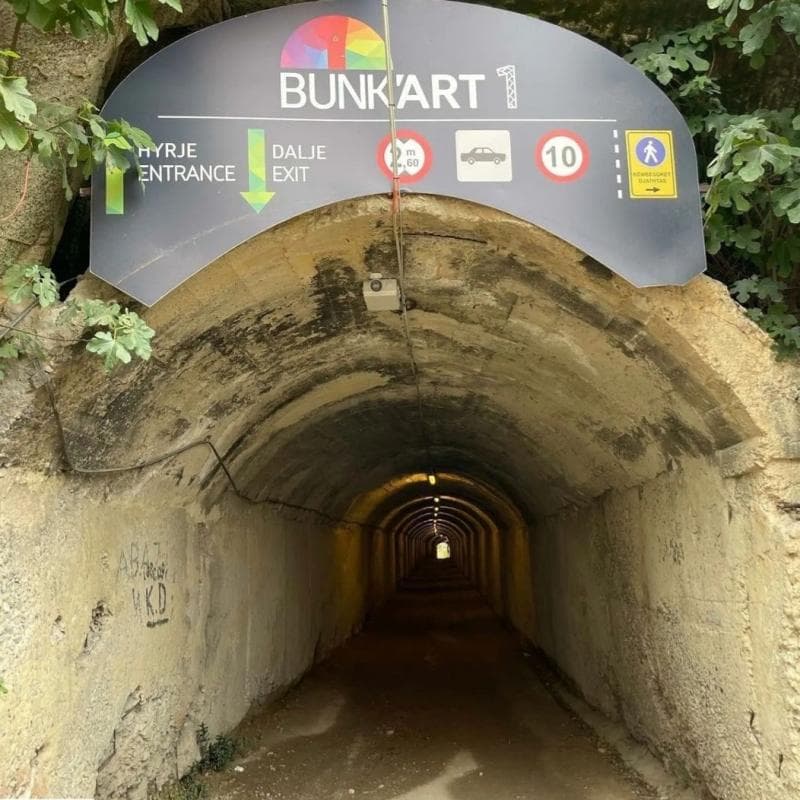
Discover Bunk'Art 1's 'Military Rooms' in Tirana, Albania. Explore authentic Cold War command centers and officer quarters, revealing Albania's secretive communist history.
Overview
The 'Military Rooms' within Bunk'Art 1 in Tirana, Albania, offer a profound journey into the country's secretive Cold War past. This sub-spot forms a crucial part of the sprawling, five-level anti-nuclear bunker, originally built between 1972 and 1978 for Albania's political and military elite. Today, these preserved military sections serve as a striking testament to the extreme paranoia and defensive strategies of Enver Hoxha's communist regime. Visitors can explore a series of authentic spaces designed to house and protect high-ranking officials and their staff, providing a unique window into a period when Albania was one of the world's most isolated nations.
History & Cultural Background
Bunk'Art 1 itself is a colossal underground complex, one of hundreds of thousands of bunkers constructed across Albania during the communist era, though on a far grander scale. Its primary purpose was to function as a command center and secure shelter for dictator Enver Hoxha, Prime Minister Mehmet Shehu, and other key government and military leaders in the event of a nuclear attack or foreign invasion. The construction was shrouded in secrecy, reflecting the regime's deep-seated fear and isolationist policies. For decades after its completion, the bunker remained a hidden state secret, only revealing its existence to the public long after the fall of communism. In a remarkable transformation, the once formidable military stronghold was refurbished and opened as a museum and art center in 2014-2016, offering a powerful educational experience about Albania's modern history from 1939 to the end of communism.
What Makes It Special
The 'Military Rooms' stand out for their authenticity and the tangible sense of history they convey. Here, visitors encounter original furniture, communication equipment, and the stark, functional design of a true Cold War command center. Exhibits include the military liaison room, telecommunications room, and officer's quarters, all set up as if ready for immediate use. A standard officer's room, complete with authentic uniforms and military gear, offers a glimpse into the daily life of those tasked with national defense. The chief of staff's shelter, intended for wartime meetings and living, features a gathering area, waiting room, and living quarters. These spaces vividly illustrate the meticulous planning and extensive resources dedicated to Albania's perceived military readiness.
Stories, Fun Facts & Local Details
Among the most compelling details are the personal suites designed for Enver Hoxha and Mehmet Shehu. Hoxha's suite was the largest and most 'luxurious' part of the bunker, comprising an anteroom for his secretary, an office, a bedroom, and a bathroom. Despite its elaborate design, sources suggest Hoxha never actually used his bedroom, though he did participate in military drills inside the bunker. The tragic fate of Mehmet Shehu, found dead in 1981, adds another layer of intrigue, with many suspecting his death was ordered by Hoxha despite an official suicide ruling. Another fascinating area is the Inter-communication Museum, which displays original communication devices used by the Albanian army, highlighting the bunker's vital role in maintaining wartime communication channels. It is often noted that the bunker maintains a consistently cool temperature, around 16°C, regardless of the outside weather, making a light jacket a sensible item for visitors.
Visitor Perspective
Stepping into the 'Military Rooms' is an undeniably immersive experience. The long, concrete corridors and heavy blast doors immediately transport visitors back to the Cold War era, evoking a sense of solemnity and reflection. The eerie silence underground amplifies the impact of the historical displays, allowing for a deep connection with the past. Beyond merely observing artifacts, visitors walk through the very spaces where critical decisions would have been made, offering a profound understanding of the paranoia, isolation, and resilience that defined Albania under communism. It's a powerful, sobering, and utterly unique journey that brings the country's turbulent military history vividly to life.
Coordinates: 19.860733, 41.351686
View on Google Maps💬 How Travelers Describe This Place
Based on community votes
Unique
639Interesting
526Must See
421Beautiful
366Photogenic
181
Traveler Stories
Discover memorable experiences shared by travelers who have visited this place.
No traveler stories yet.
Be the first traveler to share what made this place memorable.

Tour
By
Spot
Discover amazing places around the world. Your journey starts here.
Explore
© 2026 TourBySpot. All rights reserved.