Assembly Hall
Tirana, Albania
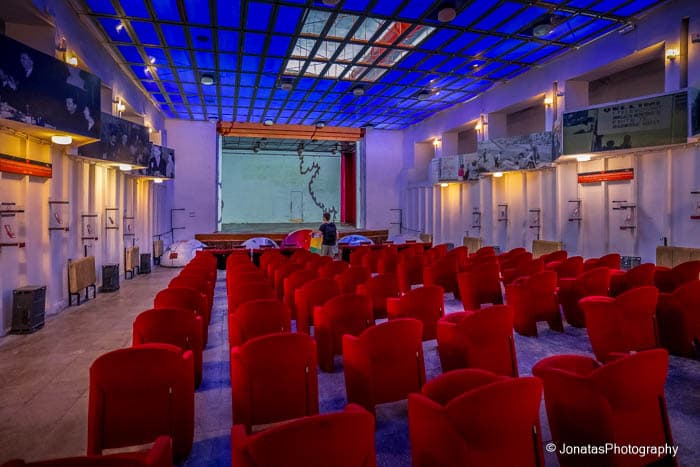
Explore the Assembly Hall within Bunk'Art 1 in Tirana, Albania – a former top-secret command center now a powerful museum and art space.
Overview
Deep within the eastern hills on the outskirts of Tirana, Albania, lies Bunk'Art 1, a massive anti-nuclear bunker transformed into a captivating museum and art center. Among its 106 rooms and five subterranean levels, the 'Assembly Hall' stands as a poignant centerpiece. This formidable chamber, once designed for the highest echelons of Albania's communist government, now serves as a space for historical reflection and artistic expression, offering visitors a profound glimpse into a secretive past.
Bunk'Art 1, the larger of Tirana's two bunker museums, opened permanently in 2016, repurposing a structure that remained a closely guarded secret for decades. The 'Assembly Hall' is a significant feature within this sprawling complex, providing a stark reminder of the Cold War era and Albania's period of extreme isolation under Enver Hoxha's regime.
History & Cultural Background
The 'Assembly Hall' is integral to Bunk'Art 1, a colossal bunker built between 1972 and 1978 under the direct orders of dictator Enver Hoxha and then-Prime Minister Mehmet Shehu. This subterranean fortress, codenamed 'Objekti Shtylla,' was conceived as an ultimate sanctuary for Albania's top political and military leadership in the terrifying event of a nuclear attack or other catastrophic war scenario.
During the communist era, Albania lived in constant fear of invasion, leading Hoxha to construct hundreds of thousands of bunkers across the country. The 'Assembly Hall' was envisioned as the command center for critical government meetings and strategic planning operations during wartime, symbolizing the regime's intense paranoia and isolationist policies. Though Hoxha participated in military drills within the bunker, he never actually used his private quarters, and the facility remained a secret from the public until long after the fall of communism.
What Makes It Special
What makes the 'Assembly Hall' particularly special is its monumental scale and its original, chilling purpose. This gigantic hall, reportedly designed with 200 seats, was intended for the highest-level government meetings, including those of the Political Bureau, in a scenario where the outside world had collapsed.
Today, this imposing space has been reimagined. It hosts video museum exhibitions and serves as a center for art and historical learning, offering a unique juxtaposition of its solemn past and its vibrant present as a cultural venue. The transition from a secret, fortified government meeting room to a public space for art and history underscores Albania's journey from a totalitarian past to an open future.
Stories, Fun Facts & Local Details
The entire Bunk'Art 1 complex, including the 'Assembly Hall', embodies a profound story of a nation consumed by the fear of external aggression. Imagine the weight of decisions that were once intended to be made within these thick concrete walls, under the deep earth of Albania. The bunker itself is a five-floor 'palace' underground, with its walls being one meter thick, internally lined with bricks, and covered by up to 100 meters of earth.
One can almost hear the echoes of planned strategy sessions in the 'Assembly Hall' as high-ranking officials prepared for a war that, thankfully, never came. The bunker was a testament to a regime that had completely sealed itself off from the outside world, creating a 'microcosmos of what happened during the Cold War in Albania.'
Visitor Perspective
For a curious traveler, stepping into the 'Assembly Hall' within Bunk'Art 1 is an immersive journey into Albania's turbulent 20th-century history. The sheer size and preserved atmosphere of the hall evoke a strong sense of its former gravity, allowing visitors to ponder the immense paranoia that gripped the nation for decades.
The experience is both educational and emotionally resonant, helping visitors understand the deep impact of the communist regime's isolationist policies and the Cold War on Albanian society. It is a powerful space for reflection, encouraging contemplation on the human cost of totalitarian rule and the transformation of a once-secret hideout into a beacon of historical awareness and artistic expression.
Coordinates: 19.8807, 41.3508
View on Google Maps💬 How Travelers Describe This Place
Based on community votes
Must See
545Unique
211Photogenic
123Interesting
74Beautiful
20
Traveler Stories
Discover memorable experiences shared by travelers who have visited this place.
No traveler stories yet.
Be the first traveler to share what made this place memorable.

Tour
By
Spot
Discover amazing places around the world. Your journey starts here.
Explore
© 2026 TourBySpot. All rights reserved.