Buddha Park
Vientiane, Laos
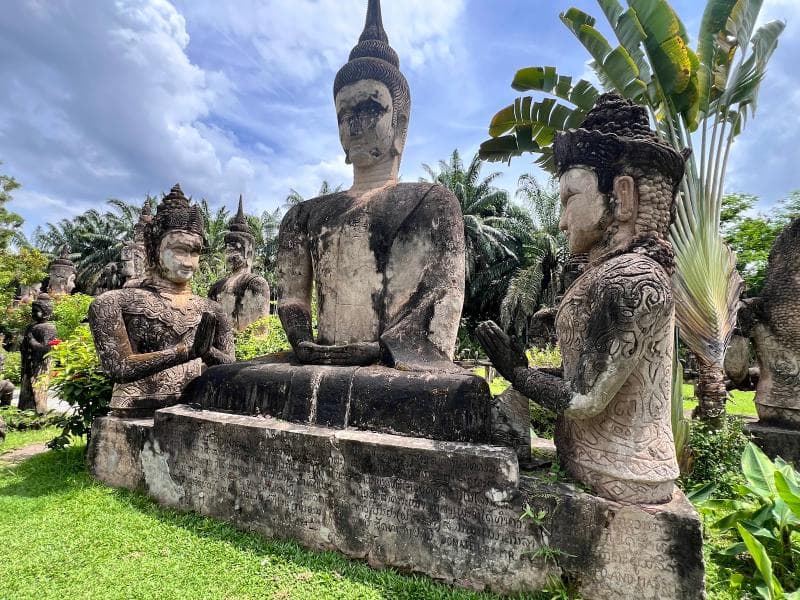
Discover Buddha Park in Vientiane, Laos, a unique sculpture garden blending Buddhist and Hindu mythologies. Explore over 200 concrete statues, including a giant reclining Buddha and a 'Hell, Earth, and Heaven' monument. A must-see cultural gem.
Overview
Tucked away along the banks of the Mekong River, just 25 kilometers southeast of Vientiane, Laos, lies the enchanting Buddha Park, officially known as Xieng Khuan. This open-air sculpture garden is a truly unique destination, captivating visitors with its intriguing collection of over 200 religious statues. While not a traditional temple, its profound spiritual imagery has led many to refer to it informally as Wat Xieng Khuan, meaning 'Spirit City'. The park's landscape is dotted with grand, often bizarre, figures crafted from reinforced concrete, giving them an ancient, weathered appearance despite their relatively modern creation. Recently, Buddha Park has been recognized for its cultural significance, being listed as the first local national heritage site in Hatsaifong District.
History & Cultural Background
Buddha Park was founded in 1958 by a visionary priest-shaman and artist named Luang Pu Bunleua Sulilat (also known as Bounleua Soulilat). His unique spiritual perspective was shaped by studies in both Buddhism and Hinduism, and he sought to meld these two great belief systems into a tangible artistic expression. It's said that his sculptural ideas, which form the heart of the park, were inspired by dreams and the divine feelings he encountered in his daily spiritual practice. After the political changes in Laos following the 1975 revolution, Luang Pu Bunleua Sulilat fled across the Mekong River to Thailand. There, he continued his artistic endeavors, creating another remarkable sculpture park called Sala Keoku in Nong Khai, which shares a similar spiritual vision. The park in Vientiane stands as a testament to his syncretic philosophy, offering a tangible bridge between diverse religious narratives.
What Makes It Special
What truly sets Buddha Park apart is its extraordinary fusion of Buddhist and Hindu iconography. Unlike conventional religious sites that typically focus on a single faith, Xieng Khuan presents a harmonious, albeit sometimes surreal, tableau of deities and mythological creatures from both traditions. Visitors will encounter towering statues of Buddhist figures in various postures alongside Hindu gods such as Shiva, Vishnu, and Indra, the king of gods often depicted riding his three-headed elephant, Airavata. Celestial beings, multi-headed serpents (Nagas), demons, and animals also populate the landscape, each contributing to a rich narrative of karma, rebirth, and enlightenment. One of the most prominent features is a colossal reclining Buddha, stretching approximately 40 meters (131 feet) in length, exuding a sense of profound tranquility. Another iconic structure is the enormous pumpkin-shaped monument, which is much more than just a statue. Visitors can enter this structure through the gaping mouth of a demon, then ascend through three distinct levels symbolizing Hell, Earth, and Heaven. Reaching the summit offers breathtaking panoramic views of the entire park, a truly immersive experience that traces the journey of spiritual existence.
Stories, Fun Facts & Local Details
The very name Xieng Khuan, meaning 'Spirit City' or 'City of Ghosts', hints at the ethereal and otherworldly atmosphere that permeates the park. Luang Pu Bunleua Sulilat's personal journey adds another layer of intrigue; one tale recounts his childhood encounter with a Hindu rishi after falling into a cave, an event said to have profoundly influenced his artistic and spiritual path. While the statues themselves are relatively new, crafted primarily in the late 1950s and early 1960s, their weathered appearance makes them seem centuries old, a testament to the artist's intention and the materials used. Each sculpture, from the serene to the fiercely expressive, tells a story, depicting elements of Lao legends and traditions, and reflecting a spectrum of human emotions. In 2017, the park underwent significant renovations, improving walkways and facilities to enhance the visitor experience, demonstrating its ongoing importance as a cultural landmark. Its official recognition as a local national heritage site further underscores its value to the cultural landscape of Laos.
Visitor Perspective
For those planning a visit to Buddha Park, allocating one to two hours is generally recommended to fully appreciate its scale and intricate details. The Vientiane climate can be warm, so it's advisable to bring water, sunscreen, and a hat to ensure a comfortable exploration. While there isn't a strict dress code enforced at the entrance, dressing respectfully, with shoulders and knees covered, is a thoughtful gesture of cultural sensitivity. A highlight for many is the ascent inside the pumpkin-shaped 'Hell, Earth, and Heaven' monument, which culminates in unparalleled panoramic views of the park. Due to the lack of explanatory signage for individual sculptures, hiring a local guide can significantly enrich the experience by providing deeper insights into the complex symbolism and narratives embedded within each artwork. The park is typically open daily from 8 AM to 5 PM or 6 PM, with an entrance fee for visitors. Accessing the park from Vientiane city center is straightforward, with local bus number 14 offering an economical option from Talat Sao market, or visitors can opt for a tuk-tuk or taxi for more direct transport. Facilities include a riverside café and various stalls offering refreshments and local snacks, providing a pleasant spot to relax after wandering among the statues.
Coordinates: 102.765397, 17.91229
View on Google Maps💬 How Travelers Describe This Place
Based on community votes
Beautiful
896Interesting
550Must See
95Photogenic
56Unique
28
Traveler Stories
Discover memorable experiences shared by travelers who have visited this place.
No traveler stories yet.
Be the first traveler to share what made this place memorable.
Things to see at Buddha Park



Tour
By
Spot
Discover amazing places around the world. Your journey starts here.
Explore
© 2026 TourBySpot. All rights reserved.