Giant Pumpkin Structure
Vientiane, Laos
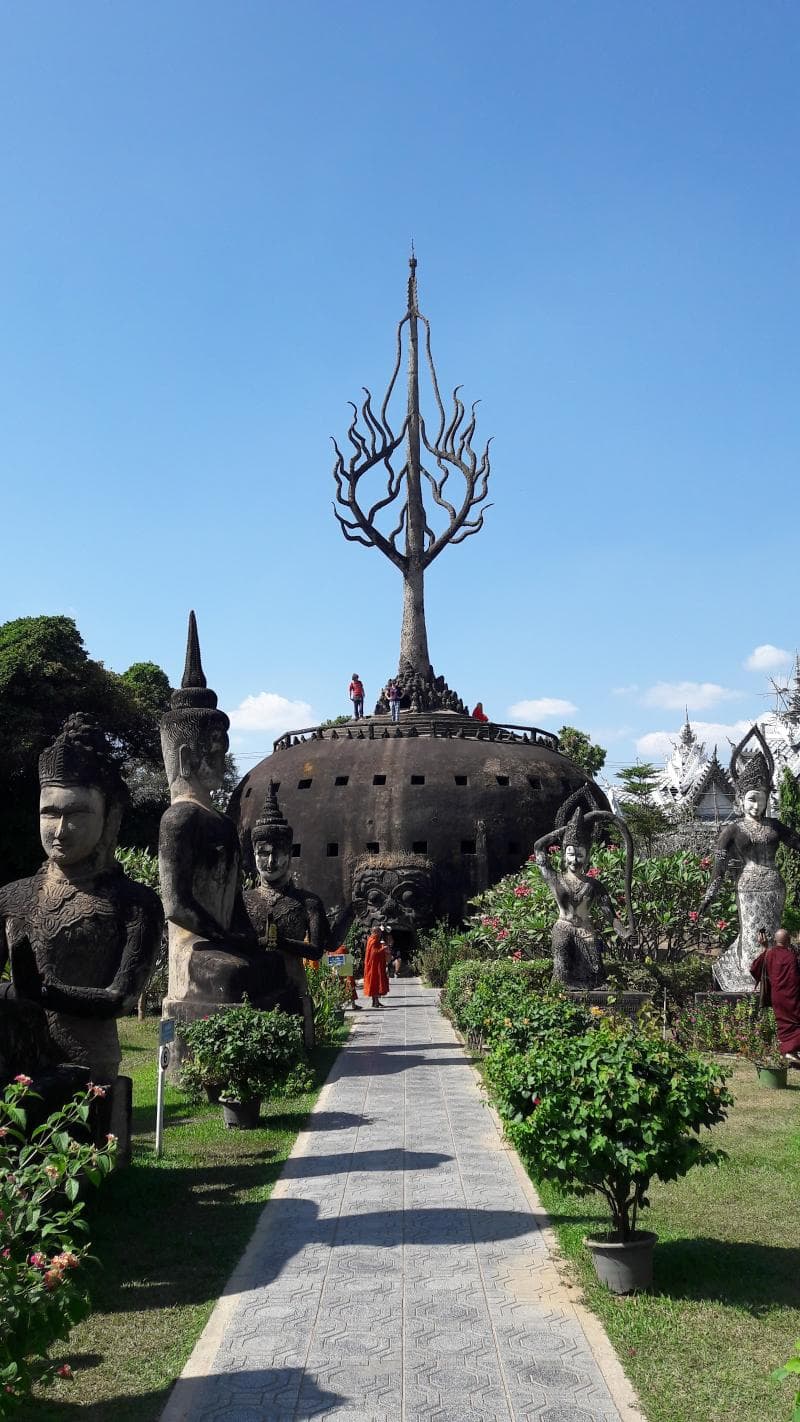
Explore the Giant Pumpkin Structure in Buddha Park, Vientiane, Laos, a unique monument symbolizing Hell, Earth, and Heaven with panoramic views.
Overview
Deep within Buddha Park, or Xieng Khuan as it's known locally, in Vientiane, Laos, stands a truly remarkable and enigmatic creation: the Giant Pumpkin Structure. This large, dome-like monument, often described as pumpkin-shaped, is not merely a sculpture but an interactive, multi-tiered spiritual journey built from reinforced concrete. It serves as a powerful artistic expression of Buddhist and Hindu cosmology, inviting visitors to physically ascend through different realms of existence.
Standing prominently amidst hundreds of other fascinating statues, the Giant Pumpkin Structure immediately captures attention with its unusual form and symbolic entrance. It is a centerpiece of the park, offering both profound cultural insight and a unique visitor experience, culminating in panoramic views of the surrounding 'spirit city'.
History & Cultural Background
The entire Buddha Park, including the Giant Pumpkin Structure, was conceived and built starting in 1958 by Luang Pu Bunleua Sulilat. Sulilat was a spiritual leader, often referred to as a priest-shaman or mystic, who developed a unique syncretic philosophy that integrated both Buddhist and Hindu beliefs. His vision for the park was to create a tangible representation of these intertwined spiritual traditions, featuring over 200 statues depicting deities, mythological creatures, humans, and demons from both pantheons.
Despite the ancient and weathered appearance of the sculptures, they are relatively modern, crafted from reinforced concrete by a team of unskilled workers under Sulilat's direct supervision. Sulilat's artistic and philosophical perspective was deeply influenced by a Hindu rishi (sage) he studied under in Vietnam. Following the political changes in Laos in 1975, Luang Pu Bunleua Sulilat fled to Thailand, where he established a similar, larger park called Sala Keoku across the Mekong River.
What Makes It Special
The Giant Pumpkin Structure is undeniably one of Buddha Park's most distinctive features. Its allure lies in its interactive nature and profound symbolism. Rather than being a static sculpture, it's an architectural metaphor for the cycle of existence, or samsara.
Visitors embark on a symbolic journey by entering through a three-meter-tall opening designed as the gaping mouth of a demon's head. Inside, the structure is divided into three distinct levels, each representing a different realm: the lowest level symbolizes Hell, the middle represents Earth, and the uppermost level signifies Heaven. This ascent allows for a physical and metaphorical exploration of these spiritual planes, a rare experience offered by few other monuments globally. The visual artistry within each level, depicting corresponding scenes and figures, makes the climb a uniquely immersive experience.
Stories, Fun Facts & Local Details
The journey through the Giant Pumpkin Structure is designed to be deeply experiential. As visitors step through the demon's mouth, they are immediately immersed in the 'Hell' level, populated with various sculptures depicting scenes of suffering and karmic retribution. Navigating narrow staircases, one ascends to the 'Earth' level, which typically features more mundane or humanistic representations. The final climb leads to the 'Heaven' level at the very top.
From the summit of the Giant Pumpkin, a spectacular reward awaits: a panoramic vantage point offering breathtaking views over the entire Buddha Park, with its myriad of concrete deities and creatures, and the serene Mekong River in the distance. This elevated perspective allows one to grasp the full scale and imaginative scope of Luang Pu Bunleua Sulilat's creation. The structure is a popular spot for photography, capturing both its quirky design and the expansive vistas it provides.
Visitor Perspective
For the curious traveler, exploring the Giant Pumpkin Structure is often highlighted as one of the most memorable aspects of a visit to Buddha Park. The act of entering the demon's mouth and climbing through the symbolic levels creates a sense of adventure and introspection. While the staircases can be tight and the interior dimly lit, the reward of reaching the top is well worth the effort.
It's an experience that encourages reflection on the spiritual themes of existence, karma, and enlightenment, all within a fantastical and somewhat bizarre setting. The structure embodies the unique blend of spirituality and artistic expression that defines Buddha Park, making it a compelling destination for those seeking cultural immersion and a truly distinct travel memory in Vientiane, Laos.
Coordinates: 102.765397, 17.91229
View on Google Maps💬 How Travelers Describe This Place
Based on community votes
Beautiful
965Photogenic
743Unique
629Must See
184Interesting
176
Traveler Stories
Discover memorable experiences shared by travelers who have visited this place.
No traveler stories yet.
Be the first traveler to share what made this place memorable.

Tour
By
Spot
Discover amazing places around the world. Your journey starts here.
Explore
© 2026 TourBySpot. All rights reserved.