Reclining Buddha
Vientiane, Laos
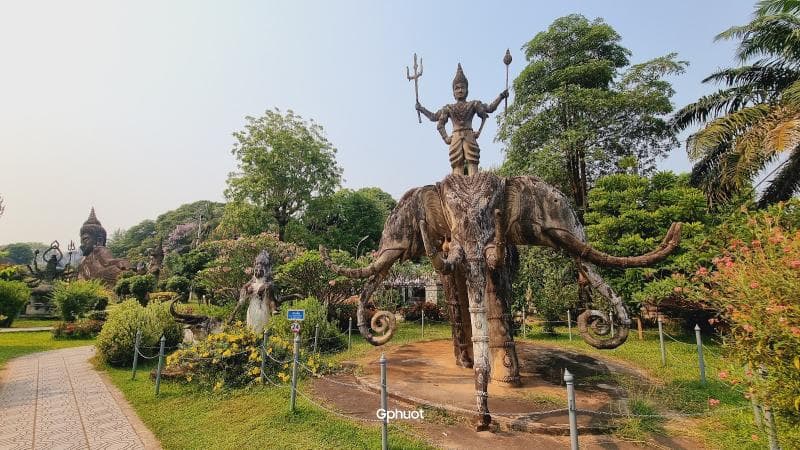
Discover the colossal Reclining Buddha at Buddha Park (Xieng Khuan) in Vientiane, Laos. Explore hundreds of unique Buddhist and Hindu concrete sculptures in this spiritual outdoor gallery created by Luang Pu Bunleua Sulilat.
Overview
Nestled along the Mekong River, approximately 25 kilometers southeast of Vientiane, Laos, lies the captivating Buddha Park, known locally as Xieng Khuan. This extraordinary sculpture park is a testament to artistic vision and spiritual syncretism, housing over 200 statues that blend Buddhist and Hindu iconography. Unlike a traditional temple, Buddha Park is an open-air gallery offering a unique exploration of religious mythology and folklore. Its most prominent feature, and a must-see for any visitor, is the immense Reclining Buddha, a monumental work that stretches an impressive 40 meters (131 feet) in length.
Established in 1958, the park's allure stems from its creator's distinctive perspective, making it a truly one-of-a-kind destination in Southeast Asia. The concrete sculptures, while relatively modern, are crafted to appear ancient and weather-worn, creating an otherworldly atmosphere that invites contemplation and discovery.
History & Cultural Background
The genesis of Buddha Park can be attributed to Luang Pu Bunleua Sulilat, a priest-shaman, mystic, and sculptor with a profound vision. Born in Thailand, Sulilat reportedly studied under a Hindu rishi (sage) in Vietnam after a childhood incident where he fell into a cave. This mentorship deeply influenced his philosophy, leading him to integrate the distinct teachings and pantheons of Hinduism and Buddhism into a unified artistic expression.
In 1958, Sulilat embarked on creating Xieng Khuan, meaning 'Spirit City,' as his first major project to physically manifest this integrated worldview. Although he lacked formal artistic training, he guided hundreds of untrained individuals in casting the more than 200 sculptures using reinforced concrete. This collaborative, outsider artistry imbued the park with its distinctive charm and cryptic symbolism. The park reflects a rich tapestry of gods, goddesses, mythical creatures, and human figures drawn from both religious traditions.
Following the political changes in Laos during the 1975 revolution, Luang Pu Bunleua Sulilat fled to Thailand. There, he established a second, even larger sculpture park named Sala Keoku in Nong Khai, further cementing his legacy as a unique religious artist. Today, Buddha Park is operated by the Lao government as a public park and tourist attraction, preserving Sulilat's extraordinary spiritual landscape.
What Makes It Special
The magic of Buddha Park lies in its audacious blend of two major world religions, presented through an array of bizarre and captivating sculptures. It is not just a collection of statues; it is a physical representation of an entire cosmology. The Reclining Buddha stands out as a masterpiece, its tranquil posture inviting visitors to reflect on the nature of existence and nirvana.
Beyond the colossal Reclining Buddha, another focal point is the peculiar pumpkin-shaped structure. This three-story monument symbolizes the three levels of existence: Hell, Earth, and Heaven. Visitors can enter through an opening resembling a demon's mouth and ascend through the different levels, each adorned with sculptures depicting the corresponding realm. Reaching the top offers a panoramic view of the entire park, providing a 'god's perspective' of Sulilat's creation.
The sheer volume and diversity of over 200 sculptures, ranging from slender Buddhas to multi-armed Hindu deities like Shiva and Vishnu, alongside mythical beasts and human figures, create a surreal and imaginative landscape. The reinforced concrete, while a modern material, has weathered over time, giving the sculptures an aged, ancient appearance that enhances their mystical aura.
Stories, Fun Facts & Local Details
Luang Pu Bunleua Sulilat's life is as intriguing as his creations. Local lore suggests he encountered a hermit named Keoku after falling into a cave as a child, a story that grounds his spiritual journey and explains the name of his second park, Sala Keoku. His followers even believed him to be part man, part snake, contributing to the mystical narrative surrounding his work.
The Reclining Buddha, a common motif in Buddhist art, typically represents the Buddha at the moment of his passing into parinirvana, or complete nirvana, after death. This serene pose symbolizes peace and detachment from worldly suffering. Visitors can often find small offerings of flowers placed by devotees, adding a touch of local reverence to the artistic display.
The park's unofficial name, Xieng Khuan or 'Spirit City,' perfectly encapsulates its essence as a realm where spiritual entities and human interpretations coalesce. There are no detailed plaques explaining each sculpture, encouraging visitors to engage their own imagination and interpretation, making each viewing a personal journey.
Visitor Perspective
A visit to Buddha Park offers a deeply immersive and often surprising experience. Wandering through the sprawling grounds allows for quiet contemplation among the statues, each telling a silent story. The park is easily accessible from Vientiane, making it an ideal half-day excursion.
The opportunity to climb inside the 'pumpkin' structure is a highlight, providing not only an interactive element but also breathtaking views of the entire park, framed by the tranquil Mekong River. While some areas, like the interior of the pumpkin, can be steep and narrow, the reward is a unique perspective of Sulilat's grand design. The peaceful ambiance, despite the park's popularity, makes it a perfect spot for photography and quiet reflection, allowing travelers to connect with the artistic and spiritual depth of this remarkable site.
Coordinates: 102.765397, 17.91229
View on Google Maps💬 How Travelers Describe This Place
Based on community votes
Unique
585Must See
550Interesting
546Photogenic
92Beautiful
56
Traveler Stories
Discover memorable experiences shared by travelers who have visited this place.
No traveler stories yet.
Be the first traveler to share what made this place memorable.

Tour
By
Spot
Discover amazing places around the world. Your journey starts here.
Explore
© 2026 TourBySpot. All rights reserved.