Shiva Sculptures
Vientiane, Laos
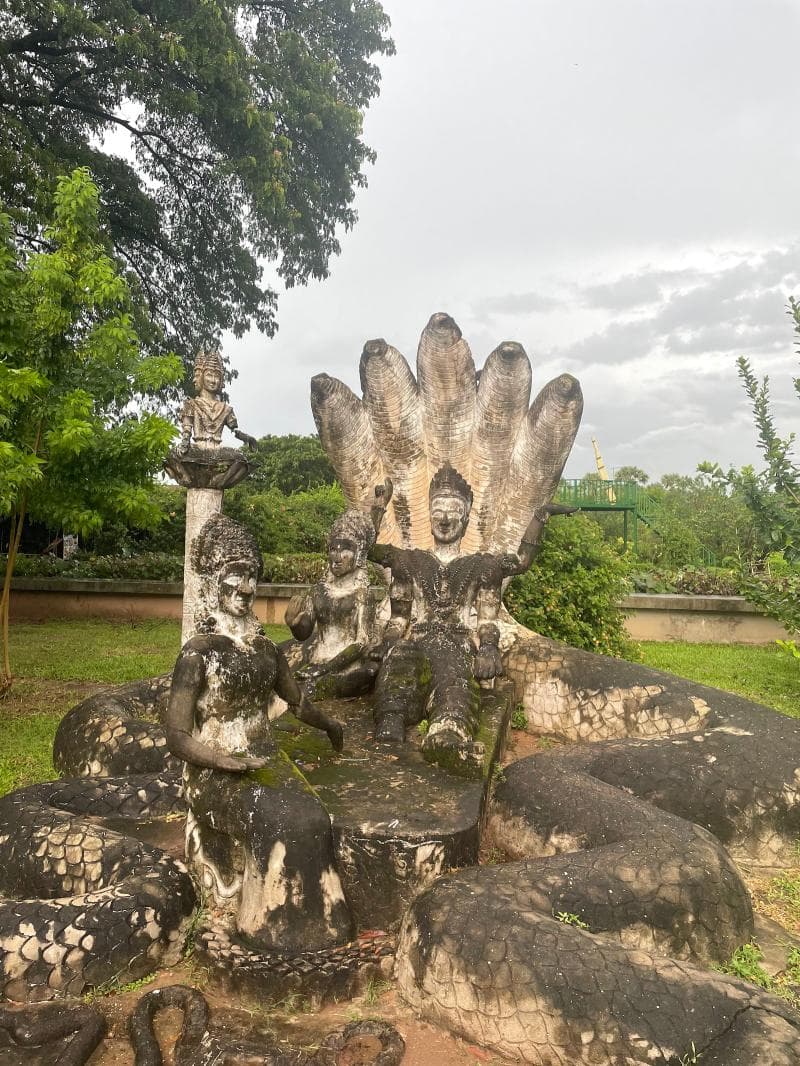
Discover the unique Shiva sculptures at Buddha Park (Xieng Khuan) in Vientiane, Laos. Explore a blend of Hindu and Buddhist artistry in this surreal sculpture garden.
Overview
Nestled along the tranquil banks of the Mekong River, approximately 25 kilometers southeast of Vientiane, Laos, lies Buddha Park, officially known as Xieng Khuan. This remarkable open-air sculpture park is a captivating destination, housing over 200 statues that intricately blend Buddhist and Hindu iconography. While the weathered appearance of its sculptures might suggest ancient origins, Buddha Park is surprisingly modern, having been established in 1958. Today, it operates as a popular tourist attraction and public park under the socialist government of Laos.
The park offers a unique visual spectacle, with its diverse collection of figures ranging from serene Buddhas to powerful Hindu deities, mythical creatures, and representations of humans and animals. These seemingly ancient artworks are, in fact, crafted from reinforced concrete, a testament to the founder's vision and the craftsmanship of those who brought it to life.
History & Cultural Background
Buddha Park is the brainchild of Luang Pu Bunleua Sulilat, a visionary priest-shaman who commenced its creation in 1958. Sulilat's unique spiritual philosophy was a synthesis of both Hinduism and Buddhism, deeply influenced by his studies under a Hindu rishi in Vietnam. This syncretic approach is vividly reflected in the park's diverse array of sculptures, which harmoniously depict figures from both traditions, a rarity in a predominantly Buddhist country like Laos.
The name 'Xieng Khuan' translates to 'Spirit City,' a fitting title for a place imbued with such profound spiritual energy and artistic expression. Interestingly, the numerous statues were cast by unskilled local workers, guided by Sulilat's specific instructions, highlighting his role not just as a spiritual leader but also as a guiding artistic force. Following the revolution in 1975, Luang Pu Bunleua Sulilat fled from Laos to Thailand, where he subsequently created another significant sculpture park called Sala Keoku, just across the Mekong River.
What Makes It Special
The primary allure of Buddha Park lies in its astonishing and unconventional fusion of Buddhist and Hindu iconography, presenting a spiritual landscape unlike any other. Visitors encounter a captivating pantheon that includes multiple representations of the Buddha, alongside powerful Hindu deities such as Shiva, Vishnu, and Arjuna. These figures are not confined to a single religious narrative but coexist, demonstrating Sulilat's inclusive spiritual vision.
Among the park's most distinctive features is the giant, pumpkin-shaped monument. This impressive structure is designed to represent the three levels of existence: Hell, Earth, and Heaven. Visitors can literally step through the gaping mouth of a demon to enter this sculpture, ascending through its inner levels to reach a vantage point at the top. Another centerpiece is the enormous reclining Buddha statue, stretching approximately 40 meters in length, symbolizing the Buddha's entry into Nirvana.
Despite their ancient appearance, all the statues are remarkably crafted from reinforced concrete. This choice of material and the intricate details give them a timeless quality, making them seem much older than their actual 1958 origin.
Stories, Fun Facts & Local Details
Luang Pu Bunleua Sulilat's life story itself adds a layer of mystique to the park. Tales suggest his spiritual journey included a pivotal encounter with a hermit (rishi) after falling into a cave as a child, which profoundly shaped his unique Buddhist-Hindu perspective. This personal narrative underscores the deeply individual and spiritual impulse behind Xieng Khuan's creation, making it more than just a collection of religious art but a reflection of one man's spiritual odyssey.
The park is filled with a sense of playful creativity. The detailed portrayal of Shiva, often depicted with multiple arms and symbolic weaponry, stands out amongst the many statues, showcasing the richness of Hindu mythology within this Lao setting. The weathering of the concrete sculptures over the decades has, ironically, enhanced their allure, lending them an even more ancient and mystical atmosphere, as if they have always been part of the landscape. This natural aging process contributes to the park's surreal charm and photogenic qualities.
For many, the climb through the 'pumpkin' representing Hell, Earth, and Heaven is a symbolic journey, offering a moment of reflection on the cycles of existence. Emerging at the top, visitors are rewarded with a panoramic vista of the entire park, metaphorically viewing the 'world' from a divine perspective.
Visitor Perspective
Visiting Buddha Park is an immersive experience that invites contemplation and wonder. Its location, roughly 25 kilometers southeast of Vientiane, offers a pleasant half-day excursion from the capital. The open-air setting along the Mekong River provides a tranquil environment for leisurely strolls, allowing ample opportunity to admire the intricate details of each sculpture.
Many visitors consider climbing the 'giant pumpkin' to be a highlight. The ascent to its summit not only provides a unique experience of navigating its themed levels but also rewards climbers with sweeping panoramic views across the entire sculpture garden and the surrounding landscape. For photographers, the best times to visit are typically the early morning or late afternoon, when the light is softer, and the temperatures are cooler, enhancing the statues' textures and mystical ambiance.
While there isn't a strict dress code, it's always advisable to dress modestly when visiting cultural and religious sites in Laos, as a sign of respect for local customs and traditions. Buddha Park truly stands as a unique blend of spiritual devotion and artistic expression, leaving a lasting impression on all who wander its 'Spirit City'.
Coordinates: 102.765397, 17.91229
View on Google Maps💬 How Travelers Describe This Place
Based on community votes
Unique
748Photogenic
304Must See
85Beautiful
73Interesting
35
Traveler Stories
Discover memorable experiences shared by travelers who have visited this place.
No traveler stories yet.
Be the first traveler to share what made this place memorable.

Tour
By
Spot
Discover amazing places around the world. Your journey starts here.
Explore
© 2026 TourBySpot. All rights reserved.