Garden Paths
Vientiane, Laos
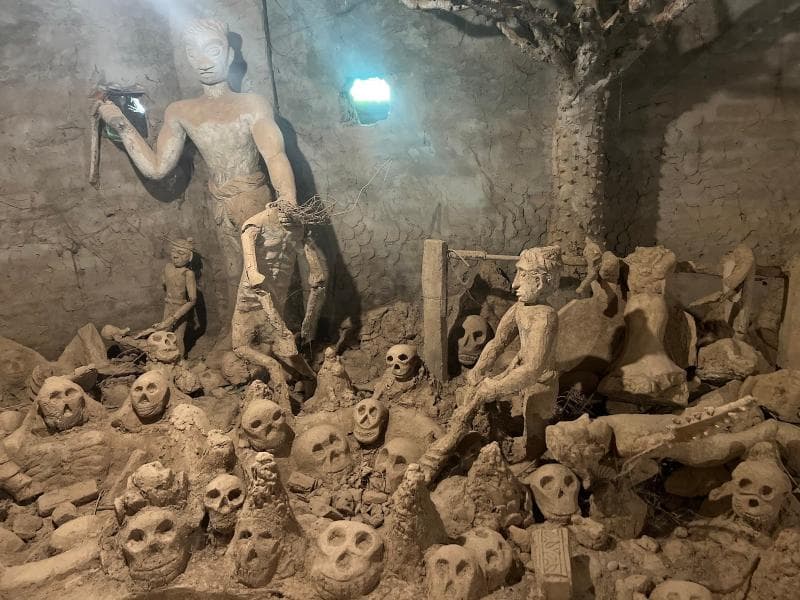
Explore the mystical Buddha Park (Xieng Khuan) in Vientiane, Laos, where garden paths lead to over 200 unique Buddhist and Hindu sculptures.
Overview
Stepping into Buddha Park, known locally as Xieng Khuan or 'Spirit City,' in Vientiane, Laos, is like entering a dreamscape where ancient myths coalesce with artistic vision. While there isn't a distinct area officially named 'Garden Paths,' the entire park is an expansive, open-air sculpture garden designed for exploration along its wide, concrete pathways. Situated approximately 25 kilometers southeast of Vientiane, alongside the serene Mekong River, this spiritual oasis invites curious travelers to wander among its more than 200 intricate statues, each telling a piece of a larger, interwoven story of Buddhist and Hindu cosmology. It is a place that defies simple categorization, serving as both a cultural landmark and a profound artistic statement, meticulously crafted from reinforced concrete to appear timeless and weathered.
History & Cultural Background
The origins of Buddha Park are as captivating as the sculptures themselves. It was founded in 1958 by Luang Pu Bunleua Sulilat, a priest-shaman whose unique spiritual journey led him to synthesize the philosophies of Hinduism and Buddhism. Sulilat's profound perspective was reportedly shaped by a Hindu rishi (sage) he studied under in Vietnam, with one popular tale suggesting he met the rishi after falling into a cave as a child. This dual religious influence is evident throughout the park, where deities and symbols from both traditions coexist harmoniously. After the 1975 revolution in Laos, Bunleua Sulilat fled across the Mekong River to Thailand, where he went on to create a second, similar sculpture park called Sala Keoku. The statues in Buddha Park, despite their ancient appearance, are relatively modern creations, skillfully fashioned from reinforced concrete to convey a sense of enduring spiritual heritage.
What Makes It Special
What truly sets Buddha Park apart is its extraordinary collection of over 200 concrete sculptures, each a testament to Bunleua Sulilat's visionary artistry. As you follow the pathways through the park, you encounter an array of figures: serene Buddhas, multi-limbed Hindu gods like Shiva and Vishnu, mythical creatures, and intricate depictions of human and demonic forms. One of the most iconic features is the colossal Reclining Buddha, stretching approximately 40 meters, which symbolizes the Buddha's entry into Nirvana. Another highlight that draws visitors is the massive 'Giant Pumpkin' or 'Hell, Earth, and Heaven' monument. This spherical structure, with an entrance shaped like a demon's gaping mouth, allows visitors to climb through its three internal levels, each representing a different realm of existence – hell, the earthly realm, and heaven. Reaching the top offers breathtaking panoramic views of the entire park, a truly unique vantage point to appreciate the scale and artistry of the sculptures below.
Stories, Fun Facts & Local Details
Beyond its striking visuals, Buddha Park holds fascinating stories and local charm. The local name, Xieng Khuan, translates poetically to 'Spirit City,' perfectly encapsulating the mystical aura that pervades the area. The park has been enhanced over the years, notably with the addition of wide, concrete paths in 2017, making the exploration of its vast collection more accessible and comfortable for all visitors. While not a traditional temple, many locals and visitors consider it a holy site, and sightings of Buddhist monks are not uncommon. It is advisable to dress with casual modesty, respecting the spiritual significance the park holds for many. For a moment of repose, a local eatery nestled by the Mekong River offers authentic Lao cuisine, providing a perfect spot to relax and take in the river views after a walk among the statues.
Visitor Perspective
Exploring the 'garden paths' of Buddha Park is an experience that resonates deeply with many travelers. The peaceful atmosphere, despite the sometimes-intense imagery of the sculptures, encourages quiet reflection and appreciation for the blend of spiritual traditions. It offers abundant opportunities for photography, allowing visitors to capture the intricate details and grand scale of the artwork. Many find themselves captivated by the narratives etched in stone, interpreting the symbolism in their own way as they wander. Climbing the 'Giant Pumpkin' is often cited as a memorable part of the visit, offering not just a physical journey through symbolic realms but also a rewarding visual spectacle from the summit. It is a destination that transcends a typical tourist attraction, providing a thought-provoking and visually stunning half-day excursion from Vientiane, leaving a lasting impression on those who journey through its unique spiritual landscape.
Coordinates: 102.765397, 17.91229
View on Google Maps💬 How Travelers Describe This Place
Based on community votes
Photogenic
958Unique
743Interesting
719Must See
629Beautiful
176
Traveler Stories
Discover memorable experiences shared by travelers who have visited this place.
No traveler stories yet.
Be the first traveler to share what made this place memorable.

Tour
By
Spot
Discover amazing places around the world. Your journey starts here.
Explore
© 2026 TourBySpot. All rights reserved.