Meditation Areas
Vientiane, Laos
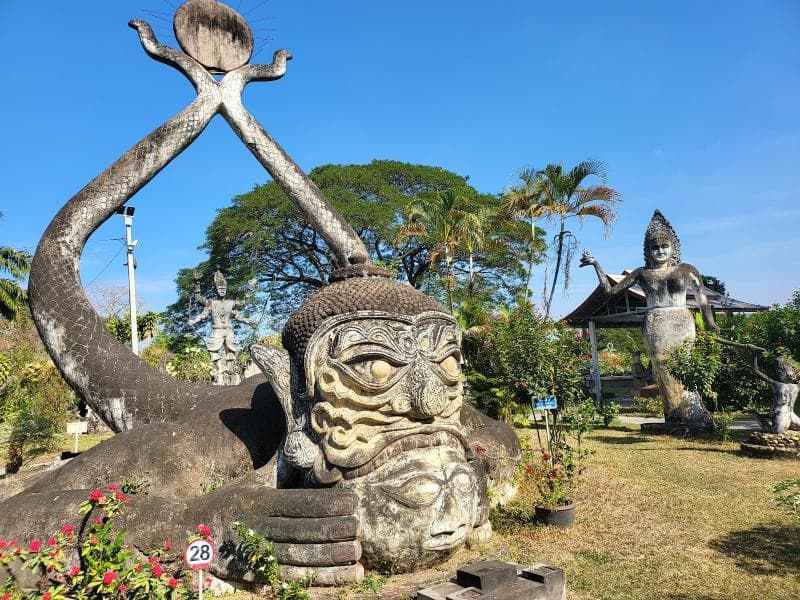
Discover tranquil meditation areas within Buddha Park in Vientiane, Laos, where serene sculptures inspire quiet reflection.
Overview
Tucked away amidst the verdant landscapes outside Vientiane, Laos, lies Buddha Park, officially known as Xieng Khuan, or 'Spirit City.' While not a traditional temple, this captivating open-air sculpture garden serves as a unique spiritual sanctuary, inviting visitors into a realm of contemplation and wonder. It’s a place where the spiritual traditions of Buddhism and Hinduism beautifully converge, offering a serene atmosphere for quiet reflection and meditation, even in the absence of formally designated meditation areas.
With over 200 elaborate concrete sculptures, Buddha Park presents a visual tapestry of deities, mythical creatures, and symbolic narratives drawn from both faiths. The park's tranquil setting along the Mekong River provides a peaceful escape, encouraging visitors to wander, observe, and engage with the profound spiritual artistry that defines this distinctive Laotian landmark.
History & Cultural Background
Buddha Park was conceived and created by the visionary priest-shaman, Luang Pu Bunleua Sulilat, who began its construction in 1958. Sulilat, having studied under a Hindu rishi in Vietnam, integrated both Buddhist and Hindu philosophies into his distinctive artistic expression. This unique fusion is the cornerstone of Buddha Park's cultural significance, making it a rare site where the iconographies of two major religions coexist and intertwine.
The park, despite its relatively modern origins, evokes a sense of ancient wisdom, a testament to Sulilat's profound spiritual insights. It reflects a deep respect for shared spiritual concepts, presenting a harmonious blend of traditions that resonate with many who seek a deeper understanding of faith and mythology. For locals, Xieng Khuan is often regarded as a holy place, despite not being a 'wat' or temple in the conventional sense.
What Makes It Special
What truly sets Buddha Park apart is its extraordinary collection of sculptures, each crafted from reinforced concrete to appear ancient and weather-worn. Visitors are greeted by a breathtaking array of figures, from the majestic, towering Buddhas in various postures to intricate depictions of Hindu gods like Shiva, Vishnu, and Indra. Celestial beings, multi-headed serpents (Nagas), and scenes illustrating karma and rebirth further enrich the spiritual landscape.
Among the most iconic features are the enormous 40-meter-long reclining Buddha, symbolizing the Buddha's entry into Nirvana, and a fascinating pumpkin-shaped structure. This multi-level 'pumpkin' invites visitors to metaphorically journey through hell, earth, and heaven, offering panoramic views of the park from its summit. These compelling sculptures, set against a backdrop of lush greenery, create an environment that naturally encourages introspection and quiet contemplation, making every corner a potential meditation spot.
Stories, Fun Facts & Local Details
The origin story of Luang Pu Bunleua Sulilat is as intriguing as his creations. Legend has it that as a child, he fell into a cave and met a hermit named Keoku, who became his spiritual mentor, guiding his unique blend of Buddhist and Hindu studies. This mystical encounter profoundly influenced the eclectic nature of the park's sculptures.
Interestingly, while the statues appear centuries old, they are in fact relatively modern, built starting in 1958. The park's Lao name, Xieng Khuan, translates to 'Spirit City,' perfectly encapsulating its essence as a place infused with spiritual energy. After the revolution in 1975, Sulilat fled to Thailand and created a 'twin' park, Sala Keoku, across the Mekong River, which is even larger and more fantastical. This adds another layer of unique history to Buddha Park, showing the enduring nature of his artistic and spiritual vision.
Visitor Perspective
For those seeking a moment of peace and introspection, Buddha Park offers an ideal setting. While there are no formal 'meditation areas,' the entire park exudes a meditative atmosphere. Visitors often find tranquil spots beneath large trees, beside the serene Mekong River, or in the quieter corners of the park to sit, reflect, and absorb the spiritual energy emanating from the myriad sculptures. The spacious layout allows for unhurried exploration, encouraging a slow pace that fosters mindful observation.
Many find themselves drawn to the statues, not just for their artistic merit, but for the profound narratives they convey, prompting quiet contemplation on life, death, and enlightenment. The park's blend of spiritual symbolism and artistic creativity provides a unique refuge from the bustling city, making it a compelling destination for anyone wishing to connect with Lao's rich cultural and spiritual heritage in a deeply personal and reflective way.
Coordinates: 102.765397, 17.91229
View on Google Maps💬 How Travelers Describe This Place
Based on community votes
Interesting
722Unique
698Must See
276Beautiful
126Photogenic
19
Traveler Stories
Discover memorable experiences shared by travelers who have visited this place.
No traveler stories yet.
Be the first traveler to share what made this place memorable.

Tour
By
Spot
Discover amazing places around the world. Your journey starts here.
Explore
© 2026 TourBySpot. All rights reserved.