Brandenburg Gate
Berlin, Germany
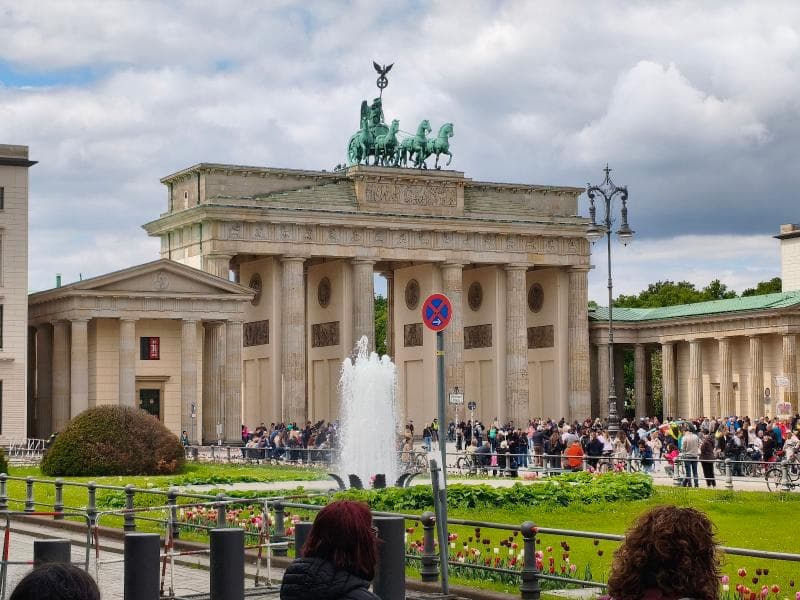
Explore Berlin's iconic Brandenburg Gate, a powerful symbol of German history, division, and reunification. Discover its neoclassical architecture and cultural significance.
Overview
The Brandenburg Gate, or Brandenburger Tor in German, stands as an unmistakable icon of Berlin and a profound symbol of Germany itself. This neoclassical monument, located in the heart of Berlin, is much more than just a historical structure; it represents a nation's journey through triumph, division, and ultimate reunification. Positioned at the western end of the grand Unter den Linden boulevard, it marks the entrance to Pariser Platz, a vibrant square surrounded by embassies and elegant buildings. For many, a visit to Berlin begins here, at the site that has witnessed some of the most pivotal moments in European history. Its imposing presence and intricate details invite travelers to delve into the rich tapestry of stories etched into its sandstone.
History & Cultural Background
Commissioned by King Frederick William II of Prussia, the Brandenburg Gate was constructed between 1788 and 1791. It was designed by court architect Carl Gotthard Langhans, who drew inspiration from the Propylaea, the monumental gateway to the Acropolis in Athens, reflecting the Neoclassical architectural style prevalent at the time. Originally known as the 'Peace Gate,' it was built on the site of a former city gate that marked the start of the road from Berlin to Brandenburg an der Havel. The gate is 26 meters high, 65.5 meters long, and 11 meters deep, supported by two rows of six Doric columns forming five passageways. The central archway was historically reserved for royalty and important state figures, while common citizens used the side arches.
Its history is deeply intertwined with that of Germany. In 1806, after defeating Prussia, Napoleon marched through the gate and controversially took its crowning sculpture, the Quadriga, as war booty to Paris. After Napoleon's defeat in 1814, the Quadriga was triumphantly returned to Berlin, with an Iron Cross added to signify victory. During the Nazi era, the gate was co-opted as a party symbol, forming part of the 'east–west axis' for grand parades. It suffered significant damage during World War II but was one of the few historic structures left standing in the area.
Perhaps its most poignant period was during the Cold War. When the Berlin Wall was erected in 1961, the Brandenburg Gate became part of the desolate 'no-man's-land' between East and West Berlin, inaccessible to all and symbolizing the painful division of a city and a nation. Its reopening on December 22, 1989, just weeks after the fall of the Berlin Wall, was a moment of immense celebration, transforming it into a powerful emblem of freedom and reunification.
What Makes It Special
The Brandenburg Gate's profound uniqueness lies in its metamorphosis from a symbol of royal power and military triumph to an enduring icon of peace, unity, and freedom. The Quadriga, a bronze sculpture depicting Victoria, the Roman goddess of victory, driving a chariot pulled by four horses, sits atop the gate, facing east. Its journey from Berlin to Paris and back perfectly encapsulates the turbulent history the gate has witnessed. Architecturally, it stands as Berlin's only surviving historical city gate and a prime example of Neoclassical design, modeled after ancient Greek structures. The sheer amount of history that has transpired beneath its arches – from royal processions to Nazi rallies, from Cold War division to joyous reunification celebrations – imbues it with an unparalleled emotional weight. It is a monument that has consistently mirrored the political and social landscape of Germany.
Stories, Fun Facts & Local Details
One of the most compelling stories associated with the gate involves the Quadriga. When Napoleon took it to Paris, Berliners affectionately referred to the gate without its goddess as a 'roof framework.' Its return was a moment of national pride, and the addition of the Iron Cross further cemented its symbolism of victory and resilience. Another memorable moment occurred on June 12, 1987, when U.S. President Ronald Reagan delivered his famous 'Tear Down This Wall' speech near the gate, directly challenging Soviet leader Mikhail Gorbachev. This speech, amplified by the gate's role in the divided city, remains a powerful testament to its significance in the Cold War narrative. Today, the area around the Brandenburg Gate is a focal point for major public events, concerts, and New Year's Eve celebrations, where large screens are sometimes set up for events like the FIFA World Cup. It's also a popular spot for peaceful demonstrations and cultural gatherings, continuing its legacy as a public stage.
Visitor Perspective
Visiting the Brandenburg Gate is an essential experience for any traveler to Berlin. It is freely accessible 24 hours a day, allowing visitors to appreciate its grandeur both by day and beautifully illuminated at night. The gate is located on Pariser Platz, a pedestrian-friendly square that provides ample space to admire the monument and reflect on its history. Nearby attractions include the Reichstag building, home to the German parliament, and the Memorial to the Murdered Jews of Europe, both just a short walk away. The expansive Tiergarten park also lies immediately to the west, offering a green oasis for relaxation. Many recommend visiting in the early morning or late afternoon to avoid larger crowds and capture stunning photographs, especially during sunrise or sunset, as the gate faces east-west. There's even a tourist information center located in one of its outbuildings, providing resources and a 'Room of Silence' for quiet reflection. Standing before the Brandenburg Gate truly means walking through layers of history, offering a tangible connection to Germany's complex and inspiring past.
Coordinates: 13.377639725356746, 52.5162451998281
View on Google Maps💬 How Travelers Describe This Place
Based on community votes
Unique
981Interesting
617Must See
565Photogenic
357Beautiful
28
Traveler Stories
Discover memorable experiences shared by travelers who have visited this place.
No traveler stories yet.
Be the first traveler to share what made this place memorable.
Things to see at Brandenburg Gate



Tour
By
Spot
Discover amazing places around the world. Your journey starts here.
Explore
© 2026 TourBySpot. All rights reserved.