Photo Viewing Areas
Berlin, Germany
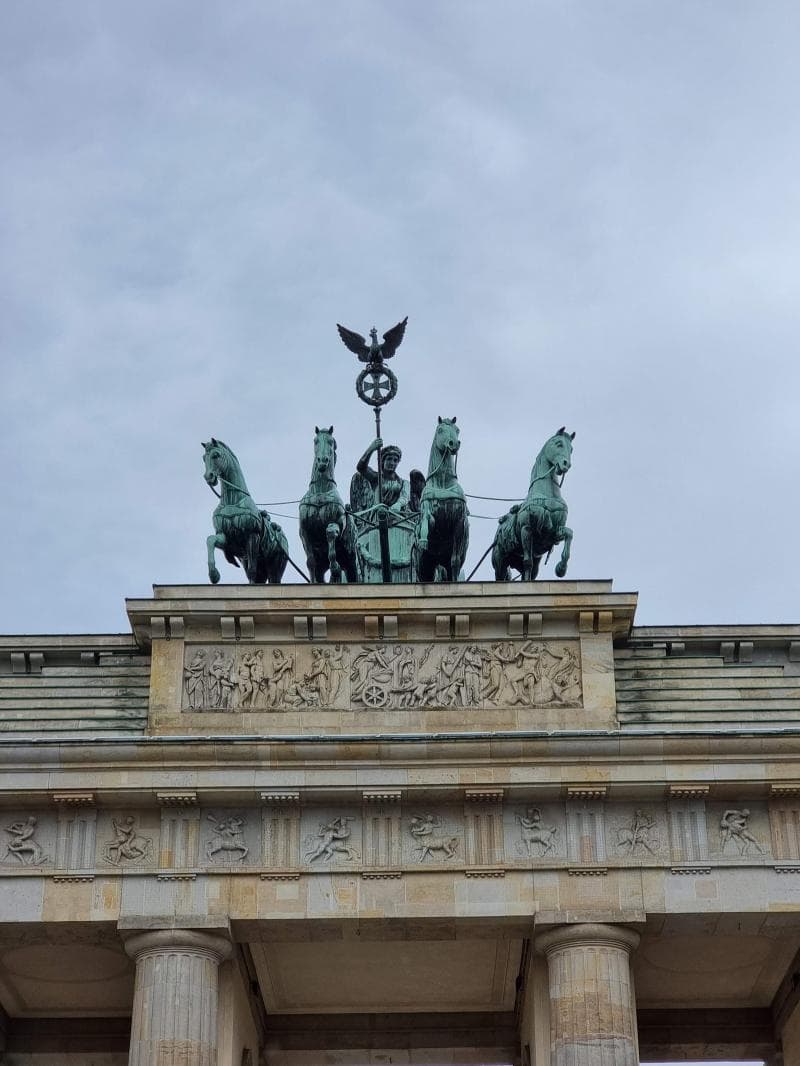
Discover the best photo viewing areas around Berlin's Brandenburg Gate, a symbol of German unity, with historical insights and visitor tips.
Overview
The Brandenburg Gate, or Brandenburger Tor as it's known locally, stands as Berlin's most iconic landmark, a neoclassical triumphal arch that has witnessed centuries of German history. Far more than just a historical monument, it is a powerful symbol of unity, peace, and the enduring spirit of Berlin. For curious travelers and photography enthusiasts alike, the areas surrounding the Brandenburg Gate offer unparalleled 'photo viewing areas', presenting diverse perspectives and capturing its grandeur and historical weight. Located centrally on Pariser Platz, the gate marks the ceremonial entrance to the magnificent boulevard Unter den Linden, and serves as a gateway to exploring Berlin's rich tapestry of past and present.
These 'photo viewing areas' encompass the expansive Pariser Platz on the eastern side, the verdant stretches of Tiergarten Park to the west, and various points that allow for unique angles of the monumental structure itself and its famed Quadriga statue. Visitors are invited to immerse themselves in the atmosphere, framed by the elegant architecture of the square, and to reflect on the profound significance of this site that once stood as a stark reminder of division during the Cold War.
History & Cultural Background
Constructed between 1788 and 1791 for King Frederick William II, the Brandenburg Gate was designed by Carl Gotthard Langhans, who drew inspiration from the monumental gateway to the Acropolis in Athens. Initially conceived as a gate of peace, it was crowned in 1793 by Johann Gottfried Schadow's Quadriga, a statue depicting Victoria, the goddess of victory, driving a four-horse chariot. This sculpture itself has a storied past, famously transported to Paris by Napoleon in 1806 as war booty before being returned to Berlin eight years later.
However, it was in the 20th century that the Brandenburg Gate gained its most profound symbolic meaning. During the Cold War, with the erection of the Berlin Wall in 1961, the gate found itself in an exclusion zone, a desolate no-man's-land inaccessible to both East and West Berliners. It became a potent symbol of a divided city and a divided nation. The gate's reopening on December 22, 1989, amidst the joyous cheers of over 100,000 people, marked a pivotal moment in history, transforming it into a powerful emblem of German reunification and peace. The architectural details, from its Doric columns to the intricate Quadriga, tell a story of shifting empires, artistic inspirations, and enduring national identity.
What Makes It Special
The Brandenburg Gate is not just visually striking; its power lies in the layers of history it represents. It is Berlin's only surviving historical city gate and an early, attractive example of neo-classical architecture in Germany. What makes the photo viewing areas around it so special is the opportunity to capture this monumental narrative in a single frame. The gate's sandstone facade, with its twelve columns forming five passages, offers compelling lines and symmetrical compositions. The Quadriga atop the gate, depicting the goddess Victoria, provides a dramatic focal point, symbolizing triumph and peace.
The surrounding Pariser Platz contributes significantly to the gate's allure. Rebuilt after the devastation of World War II, it is now home to elegant townhouses, embassies, and the historic Hotel Adlon, creating a grand backdrop for photographs. The juxtaposition of historical gravitas and the vibrant activity of modern Berlin makes any photo taken here a rich tapestry of time and culture. The area is freely accessible and open around the clock, allowing for dynamic photographic opportunities throughout the day and night.
Stories, Fun Facts & Local Details
Many stories are woven into the fabric of the Brandenburg Gate. It's said that in earlier times, the widest central passage of the gate was reserved exclusively for the royal family, while the adjacent passages were for the aristocracy, and the outer two for ordinary citizens. Another fascinating detail is the original symbolism of the Quadriga, which was meant to represent peace entering the city.
During the Cold War, West Berliners could climb viewing platforms to peer across the Wall at the gate, while it remained untouchable from the East. This history makes every step on Pariser Platz resonate with echoes of a not-so-distant past, adding immense depth to the experience. For photographers, local tips suggest that early mornings are ideal to avoid crowds and capture the gate in soft, eastern light. Around sunset, the sun setting directly behind the gate can create a dramatic silhouette, though this is also the busiest time. For a unique shot, try to visit during a snowy winter night or after a rain shower to capture stunning reflections on the wet cobblestones.
Visitor Perspective
Visiting the Brandenburg Gate is an essential Berlin experience, offering a direct connection to the city's tumultuous yet triumphant history. As a visitor, standing on Pariser Platz, you're not just observing a monument; you're standing on ground that has witnessed parades of Prussian kings, Napoleon's march, Nazi torchlight processions, and the joyful celebration of reunification.
The photo viewing areas provide different emotional and visual perspectives. From the eastern approach at Pariser Platz, you face the gate head-on, appreciating its classical symmetry and the grand scale of the square. Moving to the western side, looking back towards Pariser Platz through the gate, offers a view that frames the bustling city life against the historical arch. An elevated perspective, perhaps from the terrace of the nearby Reichstag building, provides a unique side-on view of the gate, offering a broader context within the urban landscape. The feeling of standing at this historical crossroads, where division once stood and unity now flourishes, is palpable, making every photograph a meaningful memento of Berlin's extraordinary journey. The site is free to access and open constantly, making it easy to return for different lighting conditions or simply to reflect.
Coordinates: 13.377704, 52.516275
View on Google Maps💬 How Travelers Describe This Place
Based on community votes
Must See
921Unique
831Photogenic
433Beautiful
232Interesting
211
Traveler Stories
Discover memorable experiences shared by travelers who have visited this place.
No traveler stories yet.
Be the first traveler to share what made this place memorable.

Tour
By
Spot
Discover amazing places around the world. Your journey starts here.
Explore
© 2026 TourBySpot. All rights reserved.