Pariser Platz
Berlin, Germany
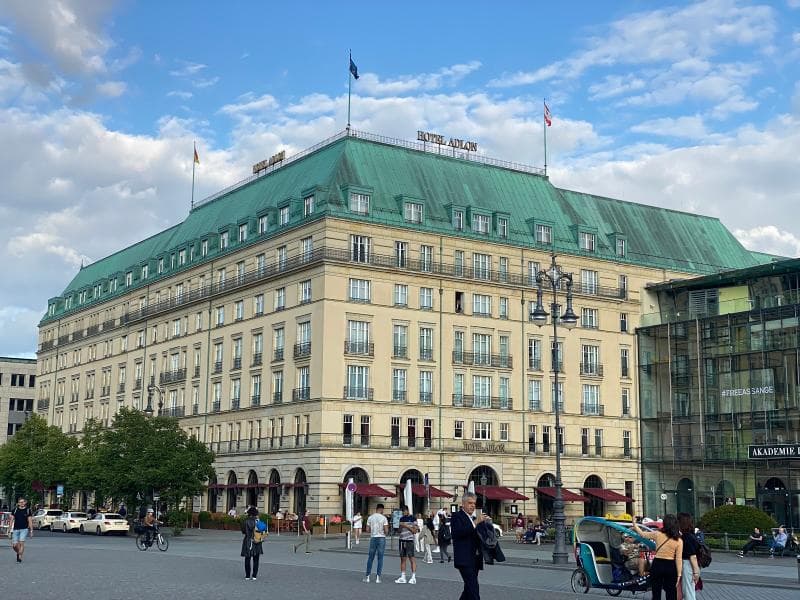
Explore Pariser Platz in Berlin, Germany—a historic square by the Brandenburg Gate. Discover its rich past, iconic architecture, and symbolic role in German history.
Overview
Pariser Platz, a grand public square nestled in the historic heart of Berlin, Germany, serves as an iconic gateway to the city's past and present. Situated directly at the eastern foot of the magnificent Brandenburg Gate, it marks the ceremonial end of the renowned Unter den Linden boulevard, Berlin's oldest promenade. Since 2002, this rectangular square, spanning approximately 1.5 hectares, has been a vibrant pedestrian zone, allowing visitors to leisurely soak in its rich atmosphere. It is a place where history resonates with every step, offering a captivating tableau of architectural grandeur and profound significance.
History & Cultural Background
Originally laid out between 1732 and 1735 by architect Philipp Gerlach, the square was initially known by the simpler names of 'Viereck' or 'Quarree', both meaning 'the Square'. Its transformation into 'Pariser Platz' occurred in March 1814, a renaming that celebrated the Prussian troops' triumphant capture of Paris following the defeat of Napoleon. Prior to the Second World War, Pariser Platz flourished as Berlin's most elegant and significant square, affectionately known as 'Berlin's living room'. It was adorned with aristocratic palaces, prestigious banks, and the city's finest hotels, epitomizing luxury and social prominence. However, the ravages of World War II left the square in ruins; devastating air raids and heavy artillery bombardment reduced nearly all surrounding buildings to rubble, with only the resilient Brandenburg Gate remaining upright. During the painful era of Germany's division and the Cold War, Pariser Platz became a desolate and restricted area, part of the infamous 'death strip' of the Berlin Wall. Its barren expanse starkly symbolized the divided city. Following the reunification of Germany in 1990, a broad consensus emerged to restore Pariser Platz to its former glory. Reconstruction began in 1993, meticulously blending historical elements with modern design, transforming it from a symbol of division into a powerful emblem of unity and renewal.
What Makes It Special
The unique allure of Pariser Platz lies in its harmonious blend of historical depth and modern vitality, intrinsically linked to its direct proximity to the Brandenburg Gate. It is not merely a space, but a stage for world history, flanked by a remarkable collection of institutions. Dominating the eastern side is the iconic Hotel Adlon Kempinski, a luxurious landmark rebuilt to evoke its original splendor after its destruction in WWII. To the north and south, the square hosts the prestigious French and U.S. Embassies, both returning to their historic locations and representing diplomatic presence in a reunified Germany. The Akademie der Künste (Academy of Arts) also graces the square, an esteemed cultural institution that promotes various arts through exhibitions and events. Further enriching the architectural tapestry are buildings like Haus Sommer and Haus Liebermann, designed to complement the Brandenburg Gate's aesthetic. The deliberate pedestrianization of the square in 2002 transformed it into an open, inviting urban space where visitors can freely gather, contemplate, and capture the essence of Berlin's journey.
Stories, Fun Facts & Local Details
- A Name Forged in Victory: The square's name, 'Pariser Platz', literally 'Parisian Square', is a direct commemoration of the Prussian victory over Napoleon in 1814, making it a tangible reminder of a pivotal moment in European history.
- The Quadriga's Journey: The Quadriga, the magnificent sculpture atop the Brandenburg Gate, has its own dramatic tale. Napoleon famously took it as a war trophy to Paris in 1806, only for it to be triumphantly returned to Berlin after his defeat, where an Iron Cross and eagle were added as symbols of victory.
- Berlin's Living Room: Before its destruction, Pariser Platz was often referred to as 'Berlin's living room' due to its status as a gathering place for the city's elite and its vibrant social life, surrounded by opulent buildings.
- Emptiness and Hope: For nearly three decades during the Cold War, Pariser Platz was a desolate no-man's-land, cut off by the Berlin Wall and inaccessible to most. Its emptiness stood as a stark symbol of division, making its post-reunification resurgence all the more powerful as a symbol of hope and unity.
- Architectural Dialogue: The reconstruction of Pariser Platz after reunification involved intense discussions to balance historical preservation with modern urban planning, resulting in buildings that respect the traditional heights and styles while incorporating contemporary elements.
Visitor Perspective
Today, Pariser Platz is a bustling, multilingual crossroads where visitors from around the globe converge to witness a truly iconic landmark. It offers an unparalleled vantage point for photographing the Brandenburg Gate, allowing for stunning captures of its classical beauty. Strolling across the square, one can feel the layers of history—from the echoes of imperial parades and celebratory marches to the somber silence of the Cold War and the joyous sounds of reunification. It is a place of profound reflection, where the past is palpable and the spirit of a united Germany shines through. As a central hub, it also serves as an excellent starting point for exploring other significant Berlin attractions along Unter den Linden and nearby, inviting curious travelers to delve deeper into the city's narrative.
Coordinates: 13.3789, 52.5164
View on Google Maps💬 How Travelers Describe This Place
Based on community votes
Interesting
921Must See
617Beautiful
357Photogenic
232Unique
147
Traveler Stories
Discover memorable experiences shared by travelers who have visited this place.
No traveler stories yet.
Be the first traveler to share what made this place memorable.

Tour
By
Spot
Discover amazing places around the world. Your journey starts here.
Explore
© 2026 TourBySpot. All rights reserved.