Quadriga Statue
Berlin, Germany
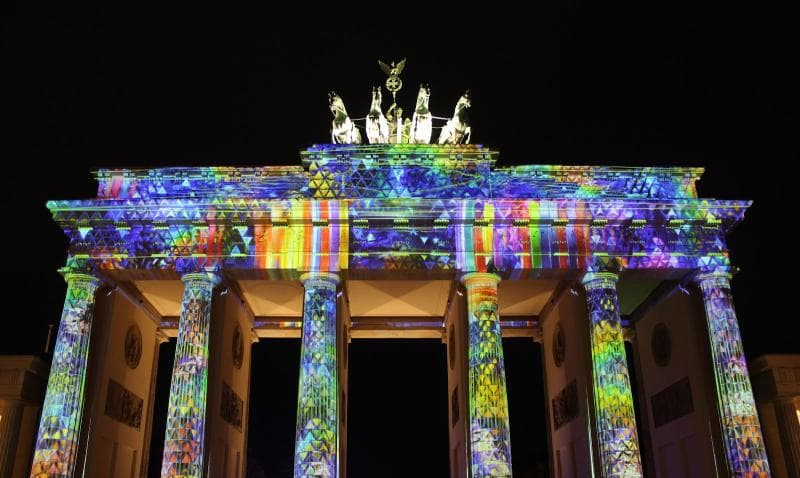
Discover the Quadriga Statue atop Berlin's Brandenburg Gate, a powerful symbol of peace, victory, and German reunification.
Overview
Perched majestically atop Berlin's iconic Brandenburg Gate, the Quadriga Statue is far more than mere ornamentation; it is a profound symbol woven into the fabric of German history and identity. This monumental bronze sculpture depicts a chariot drawn by four powerful horses, guided by a goddess. Created by renowned sculptor Johann Gottfried Schadow, the Quadriga has witnessed centuries of transformation, embodying themes of peace, victory, division, and reunification. It is a focal point for visitors to Berlin, instantly recognizable and deeply resonant with the city's tumultuous yet resilient spirit.
History & Cultural Background
The story of the Quadriga begins in 1793 when it was first placed on the newly completed Brandenburg Gate. Designed by Johann Gottfried Schadow, the statue originally represented Eirene, the Greek goddess of peace, holding a staff with an olive wreath, facing east towards the city center. The Brandenburg Gate itself was conceived as a 'Gate of Peace' by King Frederick William II.
However, the statue's serene symbolism was soon swept into the tides of European conflict. In 1806, after defeating Prussia, Napoleon Bonaparte famously ordered the Quadriga to be dismantled and transported to Paris as a war trophy, a grand gesture of his victory. This act left the Brandenburg Gate 'denuded' and became a symbol of Prussian resistance.
Eight years later, following Napoleon's defeat in 1814, the Quadriga was triumphantly returned to Berlin. Upon its return, Karl Friedrich Schinkel redesigned elements to reflect a new era of Prussian pride. Eirene was reinterpreted as Victoria, the Roman goddess of victory, and her olive wreath was replaced with an Iron Cross, featuring a Prussian eagle, atop her staff. This transformation solidified its role as a powerful national symbol.
The Quadriga endured significant damage during World War II. By 1950, the original sculpture was largely destroyed, with only the head of one horse surviving, now preserved in the Märkisches Museum. A replica, based on surviving casts and models, was then created between 1956 and 1958. During Berlin's division, the Iron Cross and eagle were removed from the statue by the East German government, associating them with Prussian militarism. It was only after German reunification in 1990 that these elements were restored, completing its return as a symbol of a united Germany.
What Makes It Special
The Quadriga's uniqueness lies in its profound ability to reflect and embody the shifting historical currents of Berlin and Germany. It is not merely a static artwork but a living testament to peace and war, occupation and liberation, division and unity. Its survival and numerous transformations make it a powerful metaphor for the German nation's resilience. The sculpture's journey from a symbol of peace to victory, then to a monument representing a divided city, and finally to an icon of reunification, is unparalleled. Its artistic merit, crafted by Johann Gottfried Schadow, combines classical influences with powerful narrative.
Stories, Fun Facts & Local Details
The 'Retourkutsche' Nickname: The Quadriga's dramatic journey to Paris and back gave rise to the German nickname 'Retourkutsche' (return carriage or payback), a term still colloquially used today to describe a clever retort or retaliation.
The Goddess's Modesty: Schadow's initial design for Eirene depicted her wearing only a chiton, an ancient Greek undergarment. Local sensibilities of the time found this too revealing, leading to her being given a more modest, longer gown.
A Single Survivor: Of the original 1793 Quadriga, only one piece survived the ravages of World War II: the head of one of the four horses. This precious relic is now housed in the Märkisches Museum in Berlin, offering a tangible link to the statue's initial form.
Facing East, Always: Despite popular urban legends, particularly during the Cold War era, the Quadriga has consistently faced east, towards Berlin's city center, since its inception. The myth of it being turned around to face west by East Germany is a captivating story but not historically accurate.
Visitor Perspective
Today, the Quadriga atop the Brandenburg Gate is an unmissable sight for any traveler to Berlin. Standing on Pariser Platz, visitors can gaze up at the bronze masterpiece, appreciating its intricate details and the powerful sense of history it conveys. The statue's prominent position makes it a natural focal point for photographs and reflection. It stands as a silent, yet eloquent, storyteller of Berlin's past, present, and future, inviting contemplation on the themes of peace, struggle, and eventual unity. Accessible to all, it offers a tangible connection to pivotal moments in German and European history, serving as a powerful reminder of how far the city has come.
Coordinates: 13.3777, 52.5163
View on Google Maps💬 How Travelers Describe This Place
Based on community votes
Unique
326Must See
279Beautiful
276Interesting
270Photogenic
146
Traveler Stories
Discover memorable experiences shared by travelers who have visited this place.
No traveler stories yet.
Be the first traveler to share what made this place memorable.

Tour
By
Spot
Discover amazing places around the world. Your journey starts here.
Explore
© 2026 TourBySpot. All rights reserved.