Unter Den Linden
Berlin, Germany
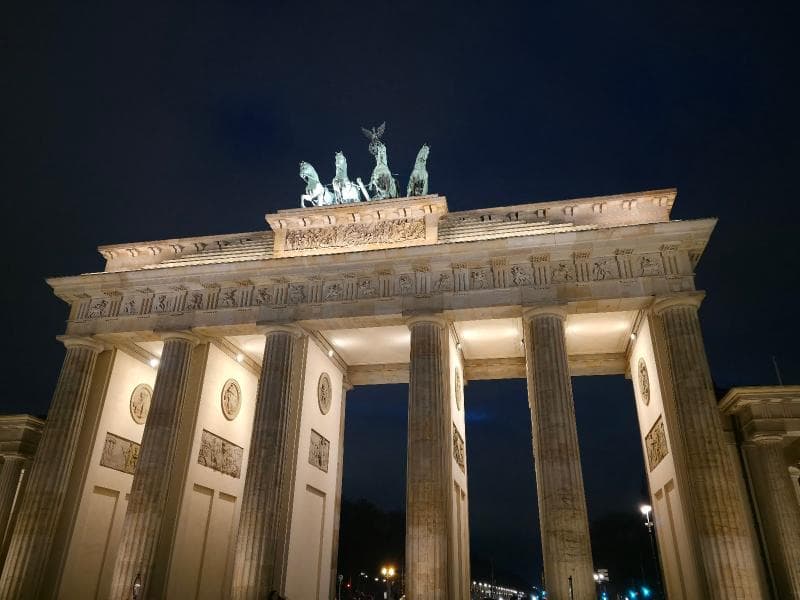
Explore Unter den Linden, Berlin's historic boulevard. Discover its rich history, cultural landmarks, and connection to the iconic Brandenburg Gate in Germany.
Overview
Unter den Linden, a name that beautifully translates to 'under the linden trees', stands as Berlin, Germany's most iconic and historically resonant boulevard. This grand avenue serves as a vital artery, stretching approximately 1.5 kilometers through the heart of the city's Mitte district. It majestically connects two of Berlin's most significant landmarks: the historic Schlossbrücke (Palace Bridge) near Museum Island in the east, and the internationally recognized Brandenburg Gate at its western end. While not physically 'inside' the Brandenburg Gate, Unter den Linden culminates dramatically at Pariser Platz, leading directly into the gate itself, forming an inseparable historical and visual link. This tree-lined promenade is more than just a street; it's a living museum, a narrative etched in stone and greenery, inviting visitors to stroll through centuries of Prussian, German, and European history.
History & Cultural Background
The genesis of Unter den Linden dates back to the 16th century when it began as a humble bridle path, laid out by Elector John George of Brandenburg, connecting the royal palace to his hunting grounds in the Tiergarten. Its transformation into a magnificent boulevard began in the mid-17th century under Duke Frederick William, known as the Great Elector, who ordered the planting of linden and walnut trees to beautify the route and aid Berlin's recovery after the Thirty Years' War.
By the 18th century, King Frederick the Great further enhanced its grandeur, commissioning impressive buildings like the Staatsoper and the royal library, solidifying its status as a prestigious urban space. The 19th century saw Unter den Linden evolve into Berlin's most renowned street, a central gathering place adorned with statues, including the equestrian monument of Frederick the Great. Its elegance earned it the moniker 'Champs-Élysées of Berlin' during the late 1800s, becoming a vibrant hub of imperial Germany.
The 20th century, however, brought immense devastation. The venerable linden trees, some 250 years old, were tragically cut down during wartime for various reasons, including streetcar tunnel construction and firewood. World War II left much of the boulevard in rubble. Post-war, during Berlin's division, Unter den Linden found itself in East Berlin, and the area near the Brandenburg Gate became part of the no-man's-land, symbolizing the city's painful partition. Following the fall of the Berlin Wall in 1989 and German reunification, the boulevard was slowly revitalized, with new linden trees replanted in the 1950s, and many historic buildings meticulously restored or rebuilt.
What Makes It Special
What truly sets Unter den Linden apart is its unparalleled concentration of architectural masterpieces and its profound symbolic weight. It’s a thoroughfare where every step narrates a chapter of German history. The boulevard's focal point, the Brandenburg Gate, stands as an enduring emblem of peace, division, and ultimate reunification. As visitors approach this neoclassical marvel, they are walking on ground steeped in centuries of events that shaped not just Berlin, but Europe itself.
Along its expanse, one encounters the stately Humboldt University, housed in what was once a royal palace, fostering intellectual thought since the early 19th century. The German State Opera (Staatsoper Unter den Linden) exemplifies cultural sophistication, while the Zeughaus, Berlin's oldest building on the boulevard, now houses the Deutsches Historisches Museum, offering deep dives into the nation's past. The Neue Wache, originally a guardhouse, now serves as Germany's Central Memorial for the Victims of War and Tyranny, a poignant reminder of conflict and remembrance. The sheer scale and consistent grandeur of these structures, often rebuilt to their former glory after wartime destruction, create an immersive historical experience that is truly special.
Stories, Fun Facts & Local Details
The very name 'Unter den Linden' holds a charming story, originating from the thousands of linden trees planted to provide shade for royal carriages traversing the path. Sadly, these historical trees faced multiple destructions, first for firewood and construction, and then extensively during World War II. The linden trees visible today are a testament to post-war reconstruction, replanted in the 1950s, symbolizing renewal and continuity.
A particularly captivating tale involves the Quadriga, the copper statue of the goddess Victoria atop the Brandenburg Gate. In 1806, Napoleon Bonaparte, after conquering Berlin, had the Quadriga dismantled and transported to Paris as a war trophy. It was triumphantly returned to Berlin eight years later after his defeat, becoming an even stronger symbol of Prussian victory and resilience. In the roaring 1920s, the area around Unter den Linden and Friedrichstraße was a vibrant hotspot for Berlin's legendary nightlife, a place of artistic freedom and cultural exuberance. Despite its grand appearance, the boulevard also bore witness to poignant moments during the Cold War, becoming a stark boundary, with the Brandenburg Gate being inaccessible for decades, transforming into a potent symbol of division before its joyous reopening in 1989.
Visitor Perspective
Walking along Unter den Linden is an essential Berlin experience, offering a journey through time and an unparalleled view of Germany's historical landscape. Beginning at the majestic Brandenburg Gate, one can feel the weight of history and the spirit of a reunified nation. The wide, tree-lined central promenade provides a pleasant pathway for a leisurely stroll, offering moments of tranquility amidst the bustling city.
As you progress eastward, each architectural marvel unfolds, from the solemnity of the Neue Wache to the academic prestige of Humboldt University and the cultural richness of Museum Island, culminating near the Berlin Palace and Cathedral. This boulevard is perfectly situated for exploration, with many of Berlin's other key attractions, such as the Reichstag Building and Gendarmenmarkt, just a short detour away. Whether you're a history enthusiast, an architecture admirer, or simply a curious traveler, Unter den Linden provides a captivating and accessible overview of Berlin's grandeur, its past struggles, and its vibrant present, making it a truly memorable destination.
Coordinates: 13.3892, 52.517
View on Google Maps💬 How Travelers Describe This Place
Based on community votes
Beautiful
852Photogenic
645Interesting
244Must See
146Unique
80
Traveler Stories
Discover memorable experiences shared by travelers who have visited this place.
No traveler stories yet.
Be the first traveler to share what made this place memorable.

Tour
By
Spot
Discover amazing places around the world. Your journey starts here.
Explore
© 2026 TourBySpot. All rights reserved.