Boboli Gardens
Florence, Italy
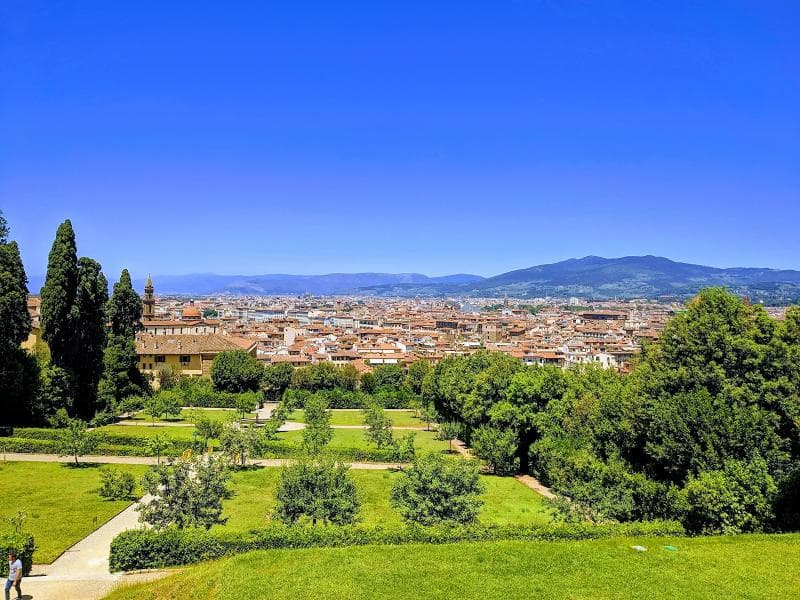
Explore the historic Boboli Gardens in Florence, Italy – a stunning Renaissance masterpiece with statues, grottoes, and panoramic city views.
Overview
Nestled behind the imposing Pitti Palace in Florence, Italy, the Boboli Gardens ('Giardino di Boboli') stand as a monumental testament to Italian Renaissance landscape design. Far more than a mere park, this vast green expanse functions as an extraordinary open-air museum, seamlessly blending nature, art, and history. It is recognized as one of the earliest and most significant examples of the 'Italian garden' style, a model that would inspire aristocratic gardens across Europe, including the famous Gardens of Versailles. A UNESCO World Heritage site, Boboli offers visitors a unique journey through centuries of Medici grandeur and horticultural artistry.
History & Cultural Background
The genesis of the Boboli Gardens dates back to 1549 when Duchess Eleonora di Toledo, wife of Cosimo I de' Medici, purchased the Pitti Palace. Finding the Palazzo Vecchio insufficient, she envisioned a grand ducal residence with equally magnificent gardens. The initial layout was entrusted to Niccolò Pericoli, known as Tribolo, who began work in 1550. Upon Tribolo's untimely death, the ambitious project was continued by prominent artists and architects of the era, including Bartolomeo Ammannati, Giorgio Vasari, and Bernardo Buontalenti. The gardens underwent several stages of enlargement and restructuring over subsequent centuries. The Medici family's successors, the Habsburg-Lorraine and Savoy dynasties, further developed the layout, extending its boundaries and adding new features. While initially an exclusive domain of the ruling families, a portion of the gardens was eventually opened to the public in 1766, allowing Florentines and visitors alike to experience its splendor.
What Makes It Special
The Boboli Gardens are an intricate tapestry of geometrically arranged trees, wide gravel avenues, and a wealth of artistic elements. One of its most striking features is the Amphitheatre, built into a natural hillside that was originally a quarry used for the Pitti Palace's construction. This grand space, initially formed by clipped greenery, was later formalized in stone and became a stage for lavish Medici court performances. Dominating its center is a towering Egyptian obelisk, transported from Luxor and brought to Florence in the 18th century, alongside a large granite basin from the Roman Baths of Caracalla. Another marvel is the Buontalenti Grotto ('Grotta Grande'), an extraordinary artificial cave constructed between 1583 and 1593 by Bernardo Buontalenti. This three-chambered grotto features stalactites, shells, and frescoes, and famously housed Michelangelo's 'Prisoners' (now replaced by copies) in its first chamber. Further exploration reveals the Fountain of Neptune, affectionately nicknamed 'the Fork Fountain' by locals, and the monumental Ocean Fountain by Giambologna, situated on the Isolotto, an artificial island. The 'Viottolone,' a grand cypress-lined avenue, invites visitors down a long perspective, while architectural gems like the Rococo-style Kaffeehaus and the spacious Lemon House ('Limonaia') offer serene points of interest and stunning views over Florence.
Stories, Fun Facts & Local Details
The very name 'Boboli' is believed to be a corruption of 'Bogoli' or 'Borgoli,' possibly referring to an earlier family who owned the land. The gardens' influential design, with its axial developments, statuary, and water features, served as a blueprint for numerous European royal gardens, showcasing the Medici's advanced aesthetic and engineering prowess. A fascinating detail is the Bacchino Fountain, featuring the Medici court dwarf Morgante portrayed as Bacchus, riding a tortoise, adding a touch of playful humor to the classical landscape. Despite its lush appearance, the Boboli Gardens originally lacked a natural water source, necessitating the construction of an ingenious irrigation system that brought water from the nearby Arno River. The garden's ability to seamlessly integrate natural elements with elaborate artificial structures, such as grottoes with their concealed waterworks and luxuriant vegetation, was a hallmark of its innovative design.
Visitor Perspective
Visiting the Boboli Gardens offers a peaceful respite from the bustling streets of Florence, providing a tranquil escape amidst history and natural beauty. It's an ideal place for leisurely strolls, discovery of hidden pathways, and enjoying panoramic vistas of Florence's iconic skyline, including the Duomo. Given its vast size, spanning approximately 45,000 square meters (about 11 acres), visitors should allocate ample time—at least two to three hours—to explore its many corners, fountains, and sculptures without rush. The terrain includes hilly sections, gravel paths, and steps, so comfortable and sturdy footwear is highly recommended. The gardens are intricately linked to the Pitti Palace; a combined ticket often allows access to both, offering a comprehensive understanding of the Medici's lavish lifestyle. Exploring Boboli is not just a walk through a garden; it's an immersion into an outdoor museum where every path, statue, and fountain tells a story of artistic ambition and dynastic power.
Coordinates: 11.2482, 43.7625
View on Google Maps💬 How Travelers Describe This Place
Based on community votes
Photogenic
950Beautiful
929Interesting
858Must See
730Unique
275
Traveler Stories
Discover memorable experiences shared by travelers who have visited this place.
No traveler stories yet.
Be the first traveler to share what made this place memorable.
Things to see at Boboli Gardens



Tour
By
Spot
Discover amazing places around the world. Your journey starts here.
Explore
© 2026 TourBySpot. All rights reserved.