Viottolone Avenue
Florence, Italy
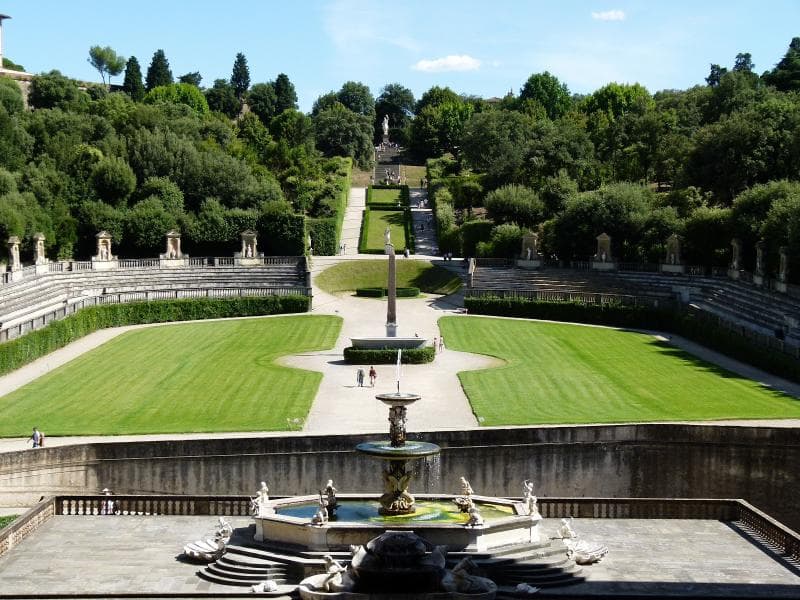
Explore Viottolone Avenue in Florence's Boboli Gardens, a cypress-lined path adorned with statues and rich Medici history in Italy.
Overview
Nestled within the monumental Boboli Gardens in Florence, Italy, lies the majestic Viottolone Avenue, also known as Viale dei Cipressi or Cypress Avenue. This grand, tree-lined thoroughfare serves as a primary axis, guiding visitors through a landscape rich with history and artistic design. Stretching from the upper terraces near the Amphitheatre down towards the serene Isolotto Basin, the Viottolone offers a visual journey that encapsulates the Renaissance ideals of geometry, perspective, and the thoughtful integration of art with nature. It is less a simple path and more a carefully orchestrated experience, inviting contemplation and admiration for centuries of meticulous landscape architecture.
As one of the most striking features of the Boboli Gardens, the Viottolone stands as a testament to the Medici family's ambition and refined taste. Its immense scale and formal design highlight its role as a grand processional route, intended to impress and delight courtiers and guests alike. The avenue is flanked by rows of ancient cypress trees and adorned with classical statues, creating a powerful sense of order and beauty. It terminates dramatically at the Isolotto, an artificial island that further enhances the avenue's theatrical perspective.
History & Cultural Background
The story of the Viottolone Avenue is deeply intertwined with the history of the Boboli Gardens and the powerful Medici dynasty. The gardens themselves began development in the mid-16th century, after Eleonora di Toledo, wife of Cosimo I de' Medici, purchased the Pitti Palace and its surrounding land in 1549. The initial layout was envisioned by Niccolò Pericoli, known as Tribolo, and later expanded upon by esteemed architects and artists such as Bartolomeo Ammannati and Bernardo Buontalenti.
The creation of the Viottolone specifically dates to the 17th century, under Grand Dukes Cosimo II and Ferdinando II de' Medici. It was conceived as a significant extension to the southern part of the gardens, parallel to the Pitti Palace, with earthworks beginning around 1612. Giulio Parigi and Alfonso Parigi the Younger were instrumental in its design and refinement. The avenue was flanked by cypress trees, planted in 1637, and adorned with numerous statues, many from the 17th and 18th centuries, though some ancient pieces were also incorporated. This grand expansion was a 'second stage' in the garden's development, dramatically altering its scope and further solidifying its status as a model for European royal gardens, including Versailles.
What Makes It Special
What truly sets the Viottolone Avenue apart is its masterful blend of natural elements and sophisticated architectural design. It is often described as a 'masterpiece of spatial illusion,' meticulously crafted to manipulate perspective and draw the eye towards its distant focal point. The avenue's gentle descent and remarkable length create a powerful sense of depth, with rows of slender, centuries-old cypress trees forming a living architectural colonnade.
Along its route, visitors encounter dozens of statues, symmetrically arranged. These sculptures, depicting Roman deities, allegories of the seasons, and personifications of virtues, were carefully chosen to reflect the Medici ideal of enlightened rule and provide thematic depth to the landscape. The avenue terminates at the magnificent Isolotto Basin, an artificial island adorned with fountains and more sculptures, including Giambologna's monumental 'Ocean Fountain' (though the original is now in a museum, a replica stands in the gardens). This combination of disciplined symmetry, theatrical effect, and classical artistry makes the Viottolone an unparalleled example of Renaissance landscape design.
Stories, Fun Facts & Local Details
The Viottolone has witnessed centuries of Florentine life and even played a role in modern fiction. It achieved a moment of contemporary fame when it was featured in Dan Brown's novel 'Inferno.' In the book, the Viottolone is described as being 'as wide as a two-lane road and lined by a row of slender, four-hundred-year-old cypress trees,' forming a dramatic backdrop for a key chase sequence. This literary connection has brought renewed interest to its historical pathways.
Historically, this avenue was not merely for visual pleasure; it was a grand stage for courtly promenades and symbolic processions. The trees and statues were part of a larger narrative, expressing the power and cultivated image of the Medici. At the beginning of the avenue, near the Prato dell'Uccellare, stand two notable statues known as the Greek Tyrannicides, one of which is a valuable copy of a 5th-century BC Greek bronze group. The avenue's clever design also once included complex hydraulic systems hidden beneath the ground, feeding the fountains and irrigating the vast garden, showcasing the advanced engineering of the era.
Visitor Perspective
Walking the Viottolone Avenue today is an immersive experience, offering a tangible connection to the past. As you stroll along the gravel path, the rhythmic pattern of cypress trees and classical statues creates a tranquil yet grand atmosphere. The gentle slope of the avenue offers a unique perspective, making the journey feel like a slow descent through time. The shade provided by the cypress trees, especially during the warmer Florentine months, offers a welcome respite.
The avenue guides you towards the captivating Isolotto, where the 'Ocean Fountain' awaits, providing a picturesque destination and a moment to pause. For the curious traveler, the Viottolone is more than just a path; it is an open-air museum, filled with art, history, and a serene beauty that allows you to imagine the Medici court parading through this very landscape centuries ago. It's an essential part of understanding the grandeur and intricate design of the Boboli Gardens, inviting visitors to appreciate the careful artistry behind this magnificent Italian garden.
Coordinates: 11.248217207735514, 43.76244293955144
View on Google Maps💬 How Travelers Describe This Place
Based on community votes
Unique
948Interesting
913Must See
595Photogenic
337Beautiful
196
Traveler Stories
Discover memorable experiences shared by travelers who have visited this place.
No traveler stories yet.
Be the first traveler to share what made this place memorable.

Tour
By
Spot
Discover amazing places around the world. Your journey starts here.
Explore
© 2026 TourBySpot. All rights reserved.