Isolotto
Florence, Italy
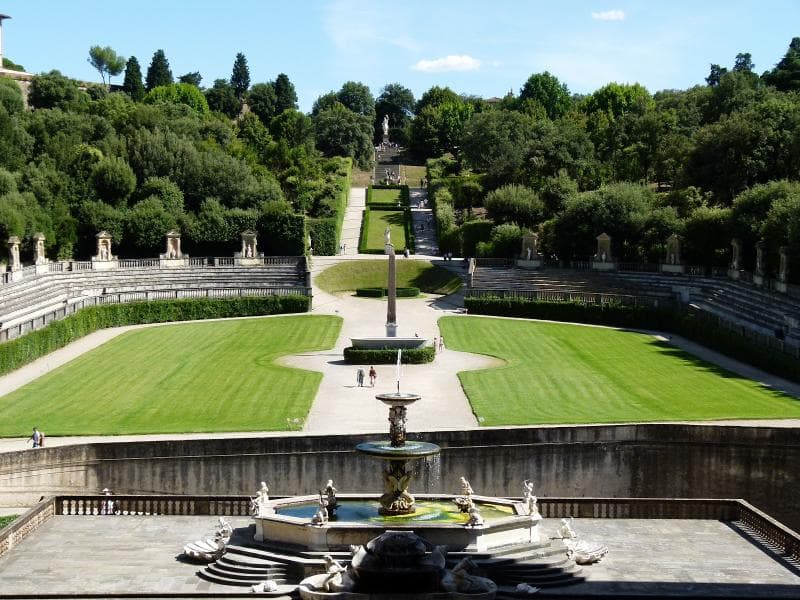
Explore the Isolotto, a serene oval island with Giambologna's Fountain of the Ocean, nestled within Florence's historic Boboli Gardens, Italy.
Overview
Deep within the sprawling green embrace of Florence's Boboli Gardens lies a captivating treasure known as the Isolotto, or 'small island'. This serene, oval-shaped island, set within a wide circular basin, represents a pinnacle of Baroque garden design and a tranquil escape from the Florentine bustle. It is a masterpiece where art, architecture, and water harmoniously converge, inviting travelers to step into a world shaped by the powerful Medici dynasty.
Accessible by charming bridges, the Isolotto is more than just a decorative feature; it is a carefully curated landscape, reflecting Renaissance ideals and the Medici's desire to create an outdoor museum of unparalleled beauty. Its central Fountain of the Ocean, surrounded by mythical figures and lush greenery, offers a moment of profound contemplation and a testament to centuries of artistic vision.
History & Cultural Background
The Isolotto was conceived and laid out around 1618 by the architects Giulio and Alfonso Parigi, as a significant part of the Boboli Gardens' Baroque expansion under the Grand Dukes Cosimo II and Ferdinando II de' Medici. Its creation marked a sophisticated evolution in the garden's design, extending the long secondary axis known as the Viottolone, or Cypress Road, towards this grand aquatic complex.
The centerpiece, the Fountain of the Ocean, though now a copy, was originally sculpted by the renowned Giambologna in 1576 for Francesco I de' Medici. Its strategic placement within the Isolotto underscores the Medici's powerful influence and artistic patronage, symbolizing their dominion over both land and sea. This intricate hydraulic marvel, once fed by an underground aqueduct, was revolutionary for its time, maintaining circulating water year-round. The Isolotto's design was so innovative and influential that it inspired similar features in prominent European royal gardens, including the famous Gardens of Versailles and the Royal Palace of Caserta.
What Makes It Special
The Isolotto's allure lies in its meticulously crafted details and its stunning visual impact. The island itself is framed by a circular moat, connected to the mainland by two elegant small bridges. These bridges are guarded by imposing gateways, each adorned with a statue of a Capricorn, a symbol of the Grand Duchy of Tuscany's power.
At the heart of the Isolotto stands the monumental Fountain of the Ocean. Neptune, the sea god, rises majestically from the water, encircled by allegorical figures representing the world's great rivers: the Nile, the Ganges, and the Euphrates. Their forms are beautifully reflected in the rippling surface of the water. Emerging from the surrounding waters are other captivating 17th-century marble groups from the school of Giambologna, depicting Perseus on horseback and Andromeda with her ankles shackled to a rock. The entire perimeter is further enhanced by lush holm oak hedges and stone railings, often featuring decorative jars filled with vibrant citrus fruits and other ornamental plants, creating a picturesque setting that changes with the seasons.
Stories, Fun Facts & Local Details
Beyond its architectural grandeur, the Isolotto holds layers of fascinating history and symbolism. During the Medici era, this picturesque island was a vibrant stage for elaborate private festivities and court entertainments. Imagine floating stage sets, enchanting music drifting across the water, and the glimmer of torchlight transforming the basin into a 'mirror of paradise' for the aristocratic elite.
The Fountain of the Ocean, with its depiction of global rivers, was a deliberate artistic statement by the Medici, showcasing their vast influence and vision extending far beyond the borders of Florence. It wasn't just a beautiful ornament; it was a testament to their political and cultural might. While the original Fountain of the Ocean now resides in the Bargello Museum, the perfectly rendered copy on the Isolotto ensures that visitors can still experience Giambologna's masterful composition in its intended setting.
Visitor Perspective
Approaching the Isolotto along the cypress-lined Viottolone is an experience designed to build anticipation. As you traverse this long avenue, the glimmering water and the majestic fountain gradually reveal themselves, creating a visual illusion of discovery. Once you arrive, the Isolotto offers a profound sense of tranquility, a welcome respite from the bustling city. It's a place where you can slow down, linger, and truly immerse yourself in the beauty of Renaissance and Baroque artistry.
The sound of trickling water, the play of light on the sculptures, and the distant views of Florence beyond the garden's greenery combine to create an atmosphere of timeless balance. Many visitors find themselves pausing here, perhaps sitting on a bench, allowing the serenity to wash over them. It is a contemplative space, a sanctuary within the vast Boboli Gardens, perfect for those seeking to connect with history, art, and nature on a deeper level.
Coordinates: 11.24833, 43.7625
View on Google Maps💬 How Travelers Describe This Place
Based on community votes
Must See
540Photogenic
252Unique
147Beautiful
114Interesting
19
Traveler Stories
Discover memorable experiences shared by travelers who have visited this place.
No traveler stories yet.
Be the first traveler to share what made this place memorable.

Tour
By
Spot
Discover amazing places around the world. Your journey starts here.
Explore
© 2026 TourBySpot. All rights reserved.