Beihai Park
Beijing, China
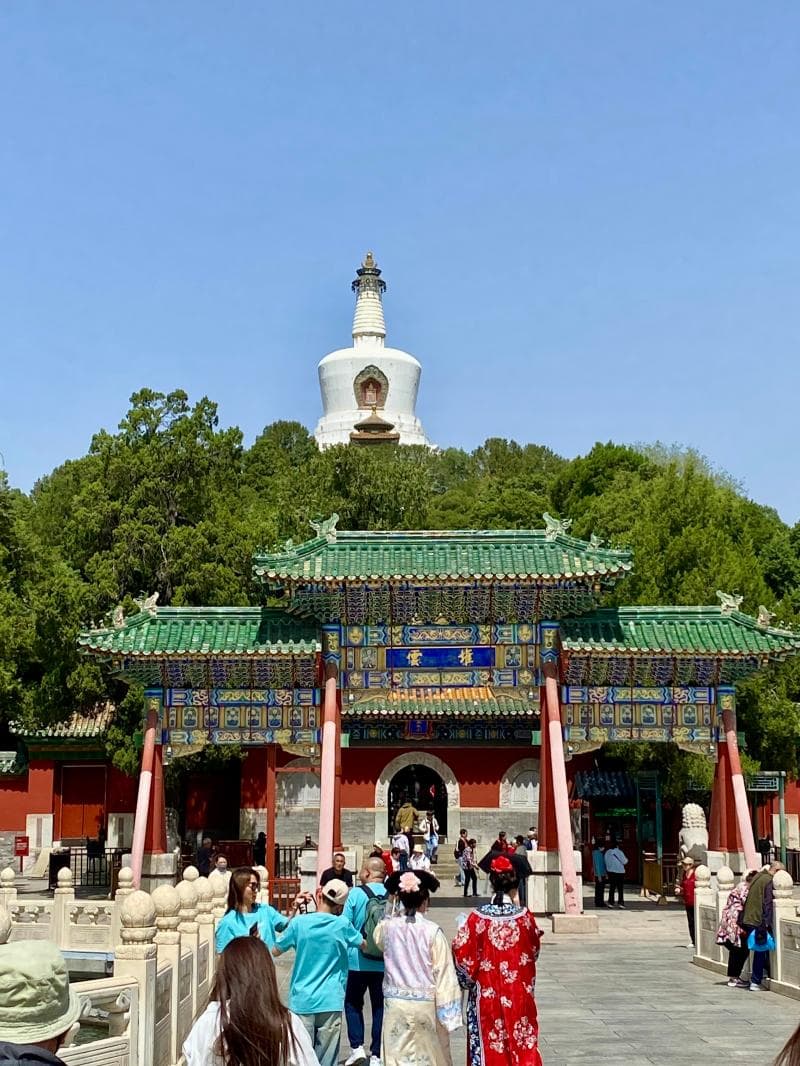
Discover Beihai Park in Beijing, China: an ancient imperial garden with the iconic White Dagoba, Nine-Dragon Wall, and serene lake. Explore centuries of history.
Overview
Nestled in the heart of Beijing, China, Beihai Park stands as a tranquil oasis, a sprawling imperial garden that offers a captivating journey through centuries of Chinese history and landscape design. It is one of the oldest, largest, and best-preserved imperial gardens in the country, encompassing an area of approximately 71 hectares, with a vast lake forming its central feature. The park’s layout masterfully blends magnificent imperial architecture with serene natural scenery, creating an immersive experience for visitors. Just northwest of the Forbidden City, Beihai Park serves as a peaceful counterpoint to Beijing's more monumental sites, inviting contemplation and exploration.
History & Cultural Background
The origins of Beihai Park are deeply rooted in imperial China, with its history dating back as early as the 10th or 11th century. It began as an imperial garden during the Liao Dynasty and continued to be developed and expanded through successive dynasties, including the Jin, Yuan, Ming, and Qing. Each era left its indelible mark, adding new structures, temples, and gardens that reflect the evolving architectural and artistic styles of the time. For example, during the Yuan Dynasty, Kublai Khan redesigned parts of the island and gardens when Dadu became the capital. Westerners sometimes referred to it as the 'Winter Palace,' highlighting its regal past. Beihai Park officially opened to the public in 1925, transforming a private imperial retreat into a shared cultural heritage.
Culturally, the park's design is heavily influenced by ancient Chinese mythology. It was conceived to replicate the legendary 'one pool and three mountains' layout, inspired by the mythical Penglai, Yingzhou, and Fangzhang mountains—believed to be the dwelling places of immortals holding the elixir of life. This mythological connection infused the park with a sense of wonder and a timeless quest for immortality, an ambition shared by many emperors who commissioned its construction.
What Makes It Special
Beihai Park is a living tapestry of imperial artistry and natural beauty, featuring several iconic landmarks. The most striking is arguably the White Dagoba, a magnificent 40-meter-high Tibetan-style stupa crowning Jade Flower Island (Qionghua Island). Erected in 1651 to commemorate the visit of the 5th Dalai Lama, its white stone structure stands as a prominent symbol of the park and a testament to the influence of Buddhist teachings.
Another marvel is the Nine-Dragon Wall, a vibrant masterpiece constructed in 1402. Made of glazed bricks in seven colors, it features nine dynamic dragons on each side, frolicking amidst clouds. It is considered one of only three such walls in all of China, showcasing exquisite craftsmanship. The Circular City, located near the south gate, houses the Hall to Receive Light and a precious 1.6-meter-tall white jade Buddha statue, presented by a Khmer king to the Guangxu Emperor. The Five-Dragon Pavilions, built during the Ming Dynasty, are another highlight, comprising five interconnected structures on the north bank of the lake.
Stories, Fun Facts & Local Details
Beihai Park is rich with fascinating stories and details that bring its history to life. The park's famous Taihu rocks, known for their porous and intricate forms, were originally shipped from Henan Province, demonstrating the lengths to which emperors went to perfect their imperial gardens. Art enthusiasts can discover a remarkable collection within the park, ranging from Yuan Dynasty jade jars to nearly 500 centuries-old inscribed stelae.
A popular anecdote tells of Dowager Cixi, a powerful figure during the late Qing Dynasty, who frequently relaxed in a palace located between the adjacent Zhonghai and Nanhai lakes and entertained guests in the Jingxin House (Quieting Heart Room) on Beihai Park's north shore. During winter, the lake occasionally freezes over, transforming into a picturesque ice-skating rink, while in summer, it bursts with vibrant lotus blooms. As dusk falls, the White Dagoba becomes even more enchanting as it lights up, casting a serene glow over the park.
Visitor Perspective
Visiting Beihai Park offers a deeply enriching experience, whether you seek historical immersion or a peaceful retreat. It is conveniently located just a short walk northwest of the Forbidden City, making it an ideal complement to a day of exploring Beijing's imperial core. To fully appreciate its beauty and numerous attractions, allocating at least two hours is recommended, though a half-day allows for a more leisurely exploration. For a more serene visit, consider coming on a weekday or in the early morning, when locals engage in activities such as tai chi, bird-walking, singing, and calligraphy, providing a glimpse into authentic Beijing life.
A 'through ticket' is advisable to access Jade Island and the iconic White Dagoba. Boating on the expansive lake is a must-do, particularly enchanting at dusk when the setting sun paints the sky and the dagoba begins to glow. The park is easily accessible via Metro Line 6 to Beihai North station, further enhancing its appeal as a convenient and captivating destination for any traveler to Beijing.
Coordinates: 116.388, 39.929
View on Google Maps💬 How Travelers Describe This Place
Based on community votes
Must See
950Beautiful
287Photogenic
255Unique
231Interesting
86
Traveler Stories
Discover memorable experiences shared by travelers who have visited this place.
No traveler stories yet.
Be the first traveler to share what made this place memorable.
Things to see at Beihai Park



Tour
By
Spot
Discover amazing places around the world. Your journey starts here.
Explore
© 2026 TourBySpot. All rights reserved.