Nine-Dragon Wall
Beijing, China
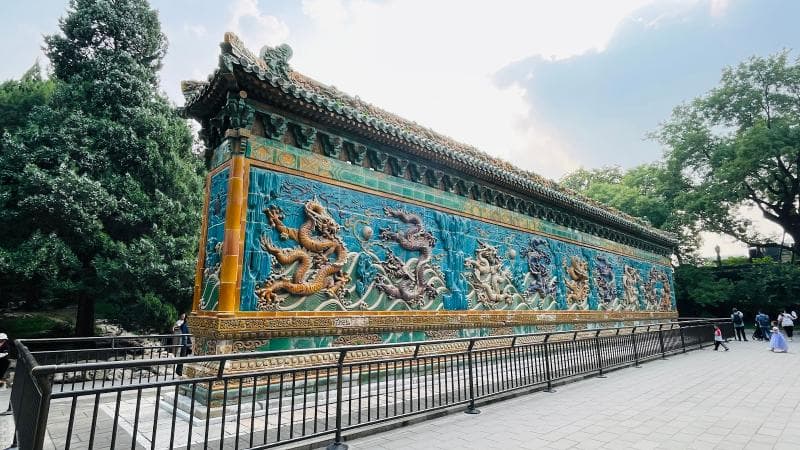
Discover the exquisite Nine-Dragon Wall in Beihai Park, Beijing, China. Explore its imperial history, unique double-sided design, and symbolic dragons.
Overview
Nestled within the serene landscapes of Beihai Park in Beijing, China, stands the magnificent Nine-Dragon Wall, an extraordinary example of imperial Chinese artistry and symbolism. This vibrant, multi-colored glazed screen wall is not merely a decorative element but a profound cultural statement. Located on the north shore of Beihai Park, near the northeast of Chengguan Hall, it faces Taiye Pool and offers a captivating sight amidst cypress trees and stone paths. It is notably distinguished as the only double-sided Nine-Dragon Wall among the three existing in China, making it a unique and invaluable treasure.
History & Cultural Background
The Nine-Dragon Wall in Beihai Park was meticulously constructed in 1756, during the 21st year of Emperor Qianlong's reign in the Qing Dynasty. Its original purpose was to serve as a spirit screen in front of the Zhendi Gate of the Dayuanjing Zhibao Hall, a temple complex. This type of screen wall was traditionally placed at the gates of important buildings, believed to ward off malevolent spirits and provide a symbolic barrier. Tragically, the Dayuanjing Zhibao Hall was destroyed by fire during the invasion of the Eight-Nation Alliance in 1900, and again after a rebuilding effort in 1919. However, the resilient Nine-Dragon Wall stood firm, surviving these devastations and preserving a piece of Qing Dynasty grandeur.
The cultural significance of the dragon in Chinese imperial history cannot be overstated. Dragons symbolize imperial power, prosperity, and divine legitimacy. The number nine, considered the ultimate yang number, held deep symbolic meaning, representing utmost perfection, longevity, and supreme imperial authority. The combination of nine dragons, especially in conjunction with the number five, embodied the royal dignity and the emperor's supreme status, often referred to as the 'Majesty of Nine and Five.'
What Makes It Special
What truly sets Beihai Park's Nine-Dragon Wall apart is its exceptional double-sided design, a feature unmatched by its counterparts in the Forbidden City and Datong. This remarkable wall is approximately 27 meters long, 5 meters high, and 1.2 meters thick. It is constructed from 424 colored glazed bricks, showcasing a dazzling array of hues that have remarkably retained their vibrancy over centuries of exposure to the elements.
Each side of the wall features nine enormous, three-dimensional dragons, coiled and dynamic, set against a backdrop of swirling clouds and waves. Beyond these 18 prominent dragons, countless smaller dragon motifs adorn the wall's ridge, eaves, barrel tiles, and brackets. In total, the Nine-Dragon Wall is home to an astonishing 635 dragons, solidifying its reputation as a masterpiece of glazed architectural art.
Stories, Fun Facts & Local Details
The dragons depicted on the Beihai Nine-Dragon Wall are not only numerous but also incredibly diverse. Each of the nine main dragons on both sides possesses a unique posture, ensuring no two are alike. They are depicted in lively scenes, playing with pearls, breaking through waves, or spiraling towards the sky, embodying movement and energy. The colors used for these mythical creatures are equally significant: the yellow dragon symbolizes nobility, the purple dragon represents mystery, and the white dragon conveys elegance. These vivid color combinations contribute to the wall's enduring appeal and artistic depth.
Observing the intricate details, one can appreciate the meticulous craftsmanship that went into its creation during the Qing Dynasty. The wall's survival through the destruction of its associated temple adds a layer of historical intrigue, highlighting its robustness and the profound cultural value placed upon it. It stands as a testament to the advanced ceramic technology and artistic prowess of its era, with its bright colors remaining unfaded for nearly 300 years.
Visitor Perspective
For visitors to Beihai Park, approaching the Nine-Dragon Wall is an immersive experience. The sheer scale and intricate detail of the glazed artwork are awe-inspiring. Walking around the wall, one can appreciate the dynamic forms of the dragons from all angles, each perspective revealing new nuances in their design and composition. It’s a moment to connect with ancient Chinese imperial history and admire an architectural marvel that has gracefully withstood the test of time. The wall's vibrant colors and lively depictions of dragons offer a vivid glimpse into the rich mythological and artistic traditions of China, making it a focal point of any visit to Beihai Park. It's a journey into a past where art, architecture, and profound symbolism converged to create lasting wonders.
Coordinates: 116.39723, 39.9075
View on Google Maps💬 How Travelers Describe This Place
Based on community votes
Interesting
953Beautiful
695Photogenic
658Must See
396Unique
22
Traveler Stories
Discover memorable experiences shared by travelers who have visited this place.
No traveler stories yet.
Be the first traveler to share what made this place memorable.

Tour
By
Spot
Discover amazing places around the world. Your journey starts here.
Explore
© 2026 TourBySpot. All rights reserved.