White Dagoba
Beijing, China
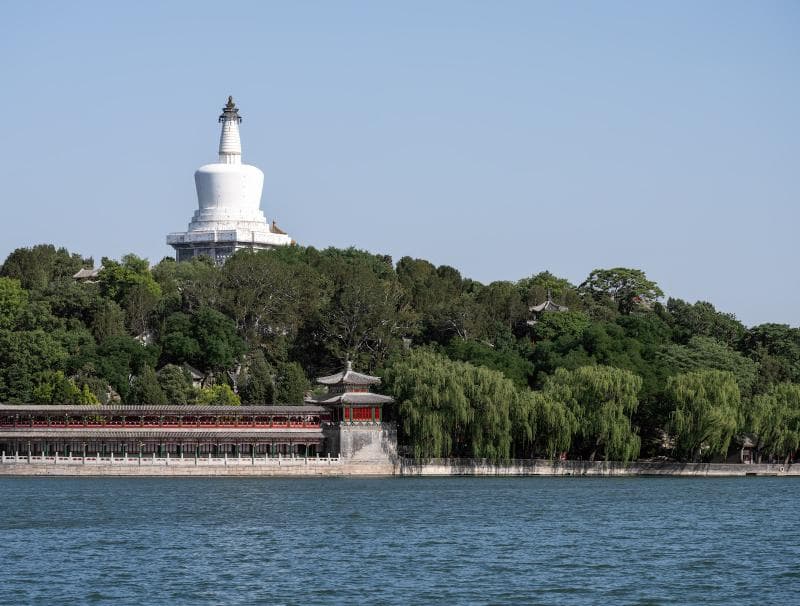
Discover the White Dagoba in Beijing's Beihai Park, a stunning Tibetan-style stupa offering rich history, cultural insights, and panoramic views of the city. Explore this iconic landmark.
Overview
Nestled within the serene expanse of Beihai Park in Beijing, China, stands the magnificent White Dagoba. This striking white stupa, often referred to as the White Pagoda, is a landmark feature prominently situated atop Jade Flower Island (Qionghua Island), commanding panoramic views of the surrounding lake and gardens. It is a Tibetan-style Buddhist structure, a silent sentinel that beautifully contrasts with the traditional Chinese imperial garden landscape. The Dagoba is not merely an architectural marvel; it is a repository of history and a symbol of cultural exchange, drawing visitors into a rich narrative that spans centuries of imperial China. Visible from various points across the park, its elegant silhouette is an iconic part of Beijing's skyline, offering a tranquil escape within the bustling metropolis.
History & Cultural Background
The White Dagoba's story began in 1651, during the Qing Dynasty, when it was erected by order of Emperor Shunzhi. Its construction was a significant gesture, commemorating the historic visit of the 5th Dalai Lama to Beijing. More than just a memorial, the emperor intended it to symbolize his devout belief in Buddhism and to foster unity among China's diverse ethnic groups. The Dagoba stands on the former site of the Palace in the Moon, a place of historical significance where Kublai Khan reportedly received Marco Polo during the Yuan Dynasty. This lineage roots the structure deeply in imperial history, connecting the Qing Dynasty back to the earlier Mongol era. The White Dagoba is an integral part of the Temple of Everlasting Peace (Yong'an Temple), which is also located on Jade Flower Island.
Over its long existence, the Dagoba has endured several natural calamities, notably earthquakes. It was damaged in 1679 and rebuilt the following year. Further tremors in 1730 and the devastating Tangshan earthquake of 1976 caused more damage, with its upper brass tip collapsing, though it was promptly restored. A major architectural restoration took place in 2005, ensuring its preservation for future generations.
What Makes It Special
What truly sets the White Dagoba apart is its unique blend of architectural styles and profound symbolism. Standing at approximately 35.9 to 40 meters tall, its dome-shaped design is characteristic of a Tibetan-style stupa, a rare sight within Beijing's traditional imperial architecture. The structure is made of white stone or marble, giving it its distinctive radiant appearance. Housing sacred Buddhist relics, scriptures, monks' robes, alms bowls, and even the ashes and bones of monks, it serves as an important spiritual center. The Dagoba's upper part features a brass tip, known as the 'thirteen heavens' canopy, from which 14 bronze bells hang, chiming melodiously with the breeze. Its base is adorned with niches containing inscriptions in the Tibetan language, adding to its mystical aura and cultural depth.
Philosophically, the White Dagoba is understood to be a three-dimensional map of the universe. Its various components—the square Sumeru pedestal, the bowl-shaped body, the thirteen-tiered wheel of the heavens, the gilded canopy, and the jeweled finial—represent the five great elements: Earth, Water, Fire, Wind, and Space/Spirit, respectively. This intricate symbolism invites contemplation and a deeper understanding of Buddhist cosmology.
Stories, Fun Facts & Local Details
One fascinating detail is that the White Dagoba in Beihai Park is sometimes referred to as the 'younger brother' to an even older Tibetan-style stupa, the White Pagoda at Miaoying Temple, which dates back to the Yuan Dynasty. This highlights a rich tradition of Tibetan Buddhist architecture in Beijing, initiated by the patronage of figures like Kublai Khan. The Dagoba's resilience through multiple earthquakes and subsequent meticulous restorations speaks volumes about its cultural and historical value to the city. Visitors can still observe cracks from past earthquakes, carefully repaired, offering a tangible link to its tumultuous past.
For many Beijing residents, Beihai Park, with the White Dagoba as its centerpiece, is a living, breathing space rather than a static museum. Early mornings often see locals practicing tai chi on the causeways, while families enjoy paddle boats on the lake during the day. This vibrant daily life against such a historic backdrop creates a unique charm. The White Dagoba is considered a national treasure and was included in the first list of Major Historical and Cultural Sites Protected at the National Level in 1961, affirming its exceptional value to Chinese history and culture.
Visitor Perspective
Experiencing the White Dagoba offers a journey through history and a moment of tranquility. Perched on the highest point of Jade Flower Island, reaching it involves a scenic, albeit gentle, hike. The effort is rewarded with breathtaking panoramic views of Beihai Park, the shimmering lake, and even glimpses of the Forbidden City in the distance. The best times to visit for a more serene experience are typically early mornings or late afternoons, especially at sunset, when the soft light illuminates the white structure beautifully. Viewing the Dagoba from the opposite side of the lake provides stunning reflections on the water, making for picturesque photography opportunities.
While inside the park, take time to explore the surrounding Temple of Everlasting Peace at the base of the Dagoba. The combination of the sacred architecture and the vibrant atmosphere of Beihai Park makes a visit to the White Dagoba a deeply enriching experience, connecting visitors with Beijing's imperial past and its living cultural heritage.
Coordinates: 116.39, 39.925
View on Google Maps💬 How Travelers Describe This Place
Based on community votes
Beautiful
836Unique
797Photogenic
396Interesting
286Must See
255
Traveler Stories
Discover memorable experiences shared by travelers who have visited this place.
No traveler stories yet.
Be the first traveler to share what made this place memorable.

Tour
By
Spot
Discover amazing places around the world. Your journey starts here.
Explore
© 2026 TourBySpot. All rights reserved.