Round City
Beijing, China
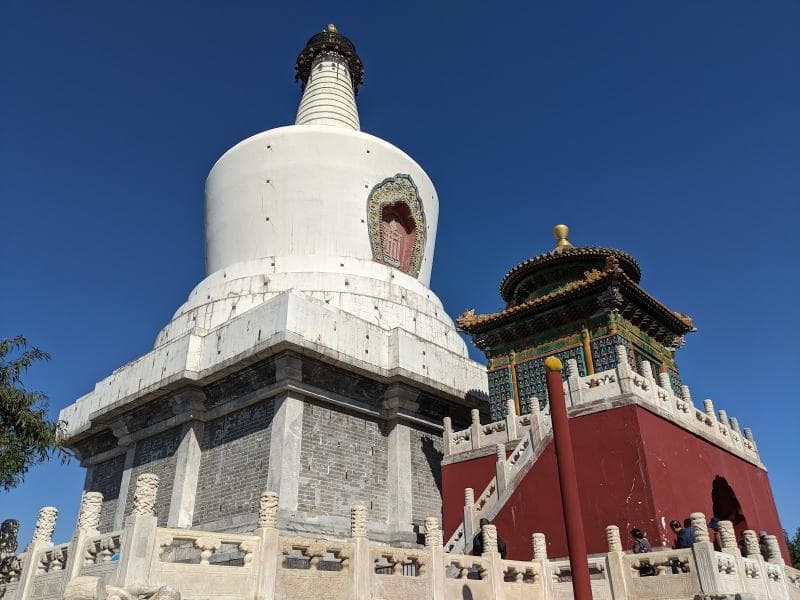
Explore Beijing's Round City (Tuancheng) within Beihai Park, a historical imperial fortress featuring ancient artifacts and unique tales.
Overview
Tucked within the expansive grounds of Beihai Park in Beijing, China, lies a captivating sub-spot known as the Round City, or Tuancheng. This compact, circular fortress-style garden offers a fascinating glimpse into imperial China's rich history and cultural heritage. Situated near the south gate of Beihai Park, the Round City is immediately identifiable by its sturdy circular wall, standing approximately 4.6 to 5 meters high. Originally an islet within the Taiyechi (Pool of Great Secretion), it transformed over centuries into a unique sanctuary of ancient halls, pavilions, and venerable trees. Designated as a key cultural relics protection unit in China, the Round City invites curious travelers to explore its storied past and discover its remarkable treasures, all within a tranquil, self-contained environment.
History & Cultural Background
The history of the Round City stretches back over eight centuries, intertwining with the various imperial dynasties that shaped Beijing. It began its life as an imperial island-palace during the Jin Dynasty (1115–1234), emerging from lake excavations. It later took on its distinct circular fortress form in 1420 during the Ming Dynasty under Emperor Yongle. Initially, the structure served a dual purpose: a military watchtower safeguarding the western flank of the Forbidden City and, concurrently, an intimate imperial garden retreat. The most significant building within, the Hall to Receive Light (Chengguangdian), was first constructed during the Yuan Dynasty (1279-1368), and subsequently saw renovations during both the Ming and Qing Dynasties, reflecting its enduring importance through different eras. The Qing Dynasty, particularly under Emperor Qianlong, saw extensive expansions and beautification, further solidifying its role as a cherished imperial garden. Its historical significance is formally recognized by its inclusion, since 1961, as a major historical and cultural site protected at the national level.
What Makes It Special
What truly sets the Round City apart are its extraordinary historical artifacts and unique natural elements. The centerpiece is undoubtedly the Hall to Receive Light (Chengguangdian), which houses an incredibly precious white jade statue of Sakyamuni Buddha. This magnificent statue, 1.6 meters tall and carved from a single piece of pure white jade, was brought from Burma at the close of the Qing Dynasty. Another remarkable treasure is the large dark jade urn, found within the Jade Jar Pavilion. This urn, intricately carved with 13 kinds of sea creatures and weighing around 1100 kilograms, dates back to Kublai Khan's palace during the Yuan Dynasty and is considered 'the foremost national jade artifact.' Beyond its architectural marvels, the Round City is also home to ancient trees, including an over 800-year-old Liao Dynasty oil pine. This venerable tree was famously bestowed the title 'Shade Marquis' by Emperor Qianlong himself. Its compact and fortified design, coupled with its rich contents, has even earned it the affectionate moniker of 'the world's smallest castle.'
Stories, Fun Facts & Local Details
The Round City is steeped in tales that add layers of charm and intrigue to its historical facade. One particularly captivating story revolves around the magnificent dark jade urn. After falling into obscurity for three centuries, this priceless artifact was astonishingly discovered serving as a humble pickle jar among common folk. Emperor Qianlong, upon learning of its whereabouts, spared no expense to repurchase it, restoring its dignity and placing it back in the imperial collection within the Round City. Another anecdote concerns the ancient oil pine tree: on a hot summer's day, Emperor Qianlong sought respite under its abundant canopy, and so impressed was he by its shade that he personally bestowed upon it the distinguished title of 'Shade Marquis.' A poignant detail of history also marks the white jade Buddha statue; its left arm bears the scars of damage inflicted by the Eight-Nation Alliance during the tumultuous Battle of Beijing in 1900. Furthermore, the entire Beihai Park, including the Round City, was designed with profound cosmological significance, reflecting the Chinese mythological concept of 'one lake and three hills' – a symbolic landscape believed to hold the secret to immortality and heavenly realms.
Visitor Perspective
For the modern traveler, a visit to the Round City offers a unique and intimate historical experience. Conveniently located at the south gate of Beihai Park, it is easily accessible and typically requires about an hour to explore thoroughly. Visitors can stroll along the top of the ancient circular walls, offering a different perspective of the surrounding park and city. Inside, the well-preserved halls and courtyards provide a tangible connection to imperial life. When entering the Chengguang Hall, visitors should be mindful that flash photography is prohibited to protect the delicate jade Buddha statue and other precious artifacts. A bridge connects the main island of Beihai Park to this 'city within a city,' creating a seamless journey through time. It is a place that truly rewards a curious traveler, providing not just visual splendor but also a deep sense of historical narrative and cultural resonance in the heart of Beijing.
Coordinates: 116.3917, 39.9298
View on Google Maps💬 How Travelers Describe This Place
Based on community votes
Photogenic
953Unique
695Beautiful
396Must See
286Interesting
22
Traveler Stories
Discover memorable experiences shared by travelers who have visited this place.
No traveler stories yet.
Be the first traveler to share what made this place memorable.

Tour
By
Spot
Discover amazing places around the world. Your journey starts here.
Explore
© 2026 TourBySpot. All rights reserved.