Ban Jelačić Square
Zagreb, Croatia
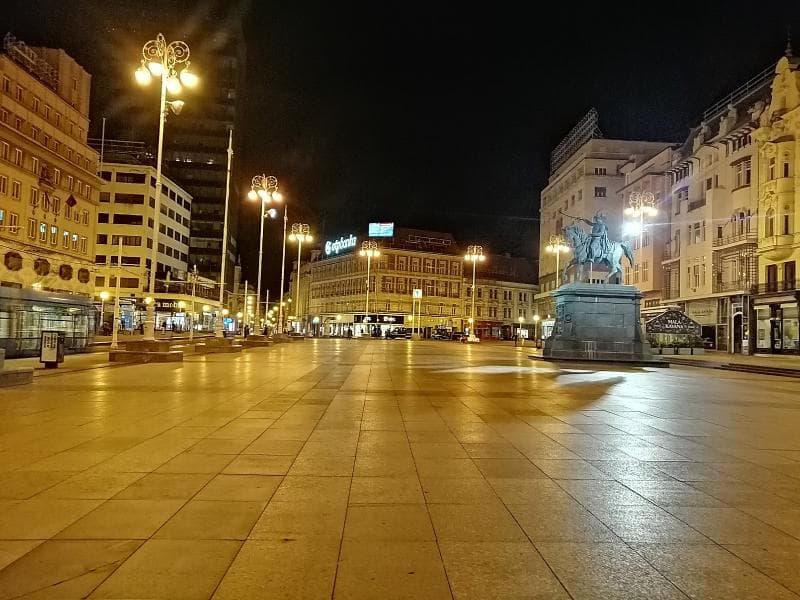
Discover Ban Jelačić Square, Zagreb, Croatia's vibrant heart. Explore its rich history, iconic statue, and bustling atmosphere.
Overview
Ban Jelačić Square, known locally as Trg bana Josipa Jelačića, stands as the vibrant heart of Zagreb, Croatia. This expansive public space is not merely a landmark; it is the city's central meeting point and a bustling hub where social, commercial, and transportation activities converge. Functioning primarily as a pedestrian zone, the square still gracefully accommodates Zagreb's iconic blue trams, making it easily accessible and a constant flow of urban life. The square is beautifully framed by a collection of historic buildings, many dating back to the 19th and 20th centuries, showcasing a rich tapestry of architectural styles including Neo-styles, Biedermeier, Secession (Art Nouveau), modern, and postmodern influences. Strategically positioned, Ban Jelačić Square effectively connects Zagreb's charming Upper Town with the more modern Lower Town, and serves as a gateway to popular areas like Ilica Street, Tkalčićeva Street, and the lively Dolac Market.
History & Cultural Background
The origins of Ban Jelačić Square date back to 1641, when it was established as a marketplace near the Manduševac spring, initially named Manduševec and later Harmica. The name 'Harmica' derived from the Hungarian word for 'thirty', referencing a tax levied on goods sold by merchants at the time. For centuries, this area served as a vital commercial hub and a crucial transit point for merchandise. In a significant turning point, the square was officially renamed Ban Jelačić Square in 1848, honoring Ban Josip Jelačić, a revered national hero and an influential Croatian political figure of the 19th century. An impressive equestrian statue of Ban Josip Jelačić, sculpted by Dominik Fernkorn, was erected in his honor in 1866. However, the square's name and its central monument faced political changes; from 1946 to 1990, during Yugoslavia's communist rule, it was known as Republic Square (Trg Republike), and Jelačić's statue was removed from public view. Following Croatia's independence, the statue was triumphantly returned, and the square's original name was reinstated in 1990, marking a powerful moment in the nation's history.
What Makes It Special
Beyond its historical significance, Ban Jelačić Square boasts several features that make it truly special. At its core stands the iconic equestrian statue of Ban Josip Jelačić, not just a work of art but a profound symbol of Zagreb and Croatian national identity. Another distinctive element is the Manduševac Fountain, which once served as a crucial source of drinking water for the city's residents. The architectural diversity of the surrounding buildings, showcasing styles from various eras, contributes significantly to the square's unique aesthetic appeal. As Zagreb's primary public gathering place, the square frequently hosts major events, political rallies, cultural festivals, and celebrations, embodying the city's vibrant communal spirit. Its role as the main tram hub further solidifies its importance as a nexus of urban activity. Moreover, the square's strategic location offers convenient access to other significant Zagreb attractions, including the bustling Dolac Market, the majestic Zagreb Cathedral, and the charming Tkalčićeva Street.
Stories, Fun Facts & Local Details
Ban Jelačić Square is steeped in local lore and fascinating details. One enduring legend connects the Manduševac Fountain to the very naming of Zagreb. The tale recounts an old Croatian warrior, weary and thirsty from battle, asking a beautiful girl named Manda to 'scoop' (zagrabiti in Croatian) him some water from the spring, thus giving the city its name. The statue of Ban Josip Jelačić holds its own intriguing stories; initially, it faced north, symbolizing his defense against Hungary. Upon its return in 1990, its orientation was changed to face south, prompting various theories, including a symbolic gesture towards the Serbian-occupied town of Knin or simply for aesthetic balance within the square. Locals commonly use specific phrases to arrange meetings here, often saying 'Let's meet under the clock' or 'under the horse's tail' (referring to Jelačić's statue). The square was once an open field outside the city walls, serving as a gathering place for newcomers before Zagreb expanded. It is also a favored spot for the Croatian pastime of 'špica', which involves leisurely people-watching from the surrounding cafes.
Visitor Perspective
For visitors, Ban Jelačić Square is an essential starting point for any exploration of Zagreb. Its constant energy and lively atmosphere make it a captivating place to experience the city's pulse. The square's central location and extensive tram network ensure that navigating to and from other key attractions is seamless, offering a perfect blend of convenience and authentic urban immersion. Surrounded by numerous cafes, shops, and restaurants, it provides ample opportunities to relax, people-watch, and soak in the local culture. Whether it's to delve into Zagreb's rich history, observe daily life, or simply enjoy a coffee, the square offers a unique window into the Croatian capital, allowing travelers to truly feel the 'heartbeat of Zagreb'.
Coordinates: 15.97722, 45.81306
View on Google Maps💬 How Travelers Describe This Place
Based on community votes
Beautiful
958Must See
794Interesting
565Unique
157Photogenic
28
Traveler Stories
Discover memorable experiences shared by travelers who have visited this place.
No traveler stories yet.
Be the first traveler to share what made this place memorable.
Things to see at Ban Jelačić Square



Tour
By
Spot
Discover amazing places around the world. Your journey starts here.
Explore
© 2026 TourBySpot. All rights reserved.