Harmica Building
Zagreb, Croatia
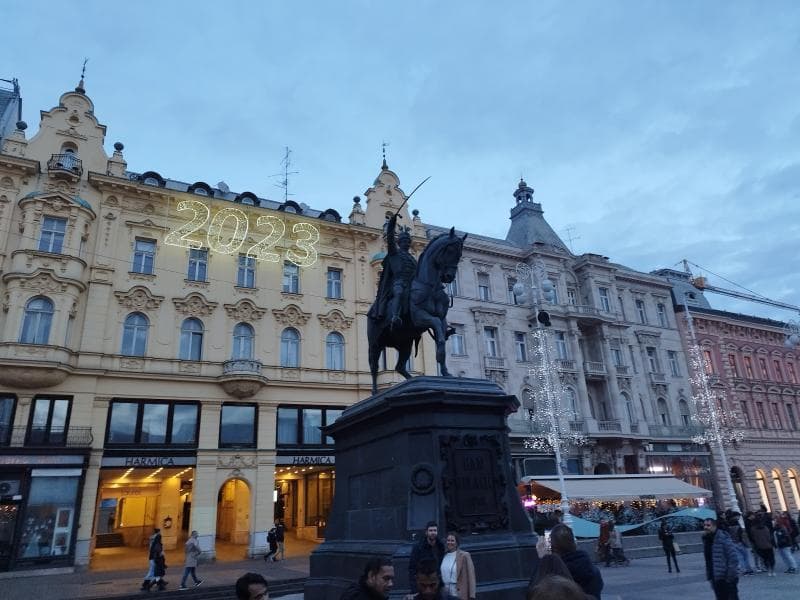
Explore the historic Harmica Building, a vital passage connecting Ban Jelačić Square and Dolac Market in Zagreb, Croatia, rooted in the city's trading past.
Overview
Nestled within the bustling heart of Zagreb, Croatia, the Harmica Building serves as a living remnant of the city's rich commercial past. While not a standalone edifice in the traditional sense today, 'Harmica' refers to a significant passage that connects Ban Jelačić Square, the city's main square, with the vibrant Dolac Market. This architectural feature is more than just a thoroughfare; it's a historical echo, a bustling artery of urban life, and a quiet witness to centuries of Zagreb's evolution. It embodies the transition from a medieval marketplace to the dynamic capital we see today, offering both locals and curious travelers a tangible link to the city's origins.
Functioning as a pedestrian gateway, the Harmica passage is integrated into the ground floor of a surrounding building, providing access and continuity in the urban fabric. It represents the historical core of what was once the entire main square, a place where trade, culture, and daily life have intersected for generations. To understand the Harmica Building is to understand a crucial chapter in Zagreb's story, reflecting its transformation from a modest trading post to a vibrant European capital.
History & Cultural Background
The name 'Harmica' itself is steeped in history, originating from the Hungarian word 'harmincz', meaning 'thirty'. This term directly points to the area's earliest known function: a customs post where a tax, specifically a thirtieth of the value of goods, was levied on merchandise entering the city. This vital economic activity meant that the area now known as Ban Jelačić Square was historically called Harmica until 1848.
From the 17th century onwards, this open space, situated strategically between the medieval settlements of Gradec and Kaptol, grew from a simple trading ground into a significant marketplace. Records show that the first houses in Harmica were built in the 17th century. As the city expanded beyond its original walls and the threat of Turkish invasions subsided, Harmica became a natural gathering point and a commercial nexus, facilitating trade and social interaction between the Upper and Lower Towns.
In 1848, the square was officially renamed Ban Jelačić Square in honor of Ban Josip Jelačić, a pivotal figure in Croatian history. Despite this renaming, the essence of 'Harmica' persisted, eventually being preserved in the form of the passage we see today. This evolution from a central square to a specific passage highlights the layered history of Zagreb, where old names and functions often find new forms within the modern urban landscape.
What Makes It Special
The Harmica Building's significance lies not in its architectural grandeur as a singular structure, but in its role as a historical and functional passage. It is a direct physical link to the square's past as a vibrant customs and market area. The passage, essentially the open ground floor of a residential building, is one of the key pedestrian connectors in Zagreb's city center, funnelling people between the dynamic Ban Jelačić Square and the famous open-air Dolac Market.
What makes it truly special is this palpable connection to centuries of commerce and daily life. Walking through Harmica, one treads the very ground where merchants once paid their dues, and where goods changed hands. It’s a place where the city's historical metabolism can still be felt, facilitating the flow of people and goods much as it did hundreds of years ago. The passage's understated nature belies its profound historical importance, serving as a subtle but powerful reminder of the square's original identity.
Stories, Fun Facts & Local Details
The story of Harmica is intrinsically tied to the practicalities of medieval and early modern trade. Imagine a time when every cart and merchant entering Zagreb had to pass through this very spot, their wares subject to the 'thirtieth' tax. This historical detail gives the name 'Harmica' a tangible connection to the economic engine that helped build Zagreb.
Locals today might simply refer to the passage as 'Harmica' without necessarily knowing its deep historical roots, yet its function as a busy connector remains. It's often bustling with people heading to Dolac Market for fresh produce, or simply navigating the city center. This enduring vibrancy highlights how historical pathways often continue to shape urban routines. It’s a fun fact that while the main square changed its name to honor a national hero, a small, yet significant, part of it retained the ancient moniker, preserving a piece of linguistic and economic heritage.
The concept of 'Harmica' also serves as a micro-history of urban development, showing how a designated market area evolved into a grand central square, and how a specific function (customs collection) left an indelible mark on the cityscape, enduring even as a passage through a building.
Visitor Perspective
For a curious traveler, stepping through the Harmica passage offers a brief, yet meaningful, journey through time. It's a subtle experience, easily overlooked if one is not aware of its significance. As you pass from the grand, open expanse of Ban Jelačić Square into the covered, bustling passage, you are literally walking through a historical threshold.
This passage connects you directly to Dolac Market, an explosion of colors, sounds, and scents, where local vendors ('kumice') sell their fresh produce. This immediate juxtaposition—the historical passage leading to a lively market—beautifully illustrates Zagreb's continuity. It’s a chance to feel the city's pulse, observing daily life unfold where generations before conducted their commerce. While there isn't a museum or plaque explicitly detailing 'Harmica Building', the experience of traversing this lively passage, understanding its name's origin, and seeing how it still facilitates urban movement, provides a unique and authentic insight into Zagreb's enduring character. It’s a quiet testament to the city’s ability to evolve while retaining its deep-seated history.
Coordinates: 15.97722, 45.81306
View on Google Maps💬 How Travelers Describe This Place
Based on community votes
Must See
826Photogenic
494Beautiful
242Interesting
125Unique
82
Traveler Stories
Discover memorable experiences shared by travelers who have visited this place.
No traveler stories yet.
Be the first traveler to share what made this place memorable.

Tour
By
Spot
Discover amazing places around the world. Your journey starts here.
Explore
© 2026 TourBySpot. All rights reserved.