Zagreb Clock
Zagreb, Croatia
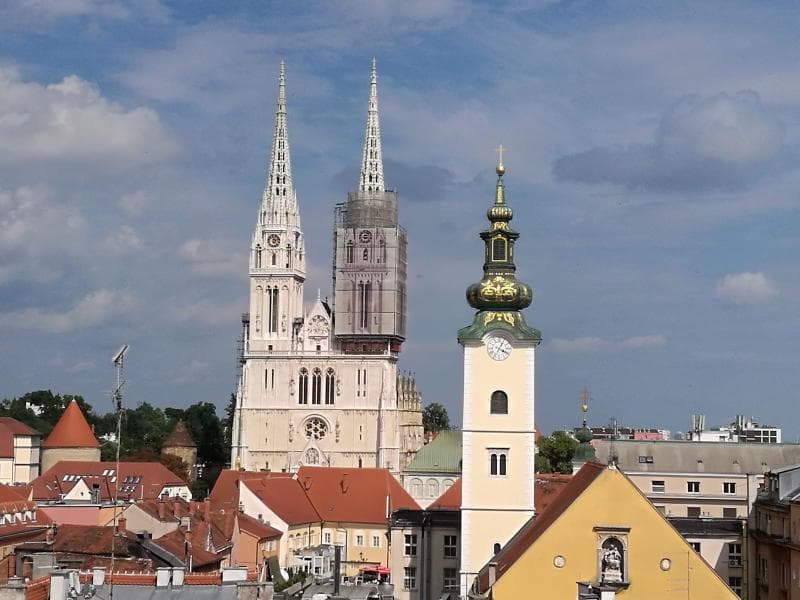
Explore the iconic Zagreb Clock at Ban Jelačić Square, Zagreb, Croatia. Uncover its rich history, cultural significance, and role as the city's beloved meeting point.
Overview
At the bustling heart of Zagreb, Croatia, lies Ban Jelačić Square, a vibrant urban space that serves as the city's central meeting point and a dynamic hub of activity. Amidst the historic facades and the lively ebb and flow of daily life, you will find a modest yet immensely significant landmark: the Zagreb Clock. Often affectionately referred to by locals simply as 'the clock' or 'the white clock', this timepiece is more than just a mechanism for telling time; it is a cultural touchstone, deeply embedded in the social fabric of the Croatian capital. Situated prominently on the west side of the square, the Zagreb Clock is an indispensable reference point, guiding countless rendezvous and witnessing the daily rhythm of Zagreb's citizens and visitors alike.
History & Cultural Background
The history of the Zagreb Clock is intrinsically linked to the evolution of Ban Jelačić Square itself. This grand square, officially named Trg bana Josipa Jelačića, began its life in the 17th century as a humble marketplace known as Harmica, a name derived from the tax levied on goods sold there. As Zagreb expanded and flourished, the square transformed from a trading ground to the city's vibrant main square, officially receiving its current name in 1848 in honor of Ban Josip Jelačić. Within this historical backdrop, the clock emerged as a practical necessity for the market's activities and quickly evolved into a fixed point for social gatherings. Early records suggest that the first clock gracing Ban Jelačić Square was brought from Vienna in the 1920s. Furthermore, the renowned Lebarović family of watchmakers has played a crucial role in maintaining public clocks across Zagreb, including the one on the main square, since 1959. This long-standing connection underscores the clock's deep roots and enduring presence in the city's narrative.
What Makes It Special
What truly sets the Zagreb Clock apart is its profound social and cultural significance rather than any extraordinary architectural or mechanical grandeur. It is, unequivocally, *the* primary meeting point in Zagreb. In a city brimming with landmarks, this unassuming clock stands out as a focal point for human connection. It symbolizes reliability and continuity in the bustling urban landscape, serving as a silent witness to countless first dates, friendly reunions, and hurried farewells. The clock's strategic location within the pedestrian zone of Ban Jelačić Square ensures its constant visibility and accessibility, contrasting with the more imposing equestrian statue of Ban Josip Jelačić, which also serves as a meeting spot, affectionately known as 'under the horse's tail'.
Stories, Fun Facts & Local Details
The Zagreb Clock is steeped in local lore and everyday traditions. A common phrase heard throughout Zagreb is 'Let's meet under the clock', a testament to its unchallenged status as the city's unofficial rendezvous point. This simple idiom captures the clock's essential role in the lives of Zagrebians, highlighting its practical utility interwoven with a sense of collective memory and routine. The 'white clock' nickname further endears it to the locals, giving it a personal, almost familiar identity. The enduring craftsmanship of families like the Lebarovićs, who have dedicated generations to maintaining Zagreb's public timepieces, adds a layer of heritage and personal connection to these urban fixtures. Ban Jelačić Square itself, where the clock resides, has been the stage for many of Zagreb's pivotal moments, from historical markets to modern-day celebrations and public demonstrations, each event adding another thread to the rich tapestry surrounding this central timepiece.
Visitor Perspective
For any traveler exploring Zagreb, the clock at Ban Jelačić Square offers an immediate immersion into the local way of life. It is an effortlessly recognizable and convenient landmark for orienting oneself within the city, making it an ideal starting point for sightseeing or for coordinating with travel companions. Observing the continuous stream of people gathering and dispersing around the clock provides a fascinating, unfiltered glimpse into the daily rhythms and social dynamics of Zagreb. You might witness emotional reunions, friends catching up, or individuals simply pausing to check the time before heading to the nearby Dolac Market or the vibrant Tkalčićeva Street. The Zagreb Clock, therefore, becomes more than just an inanimate object; it is a vibrant pulse of the city, offering a unique opportunity to experience Zagreb's authentic charm and community spirit.
Coordinates: 15.97722, 45.81306
View on Google Maps💬 How Travelers Describe This Place
Based on community votes
Unique
670Beautiful
655Photogenic
594Must See
266Interesting
166
Traveler Stories
Discover memorable experiences shared by travelers who have visited this place.
No traveler stories yet.
Be the first traveler to share what made this place memorable.

Tour
By
Spot
Discover amazing places around the world. Your journey starts here.
Explore
© 2026 TourBySpot. All rights reserved.