Ateshgah Of Baku
Baku, Azerbaijan
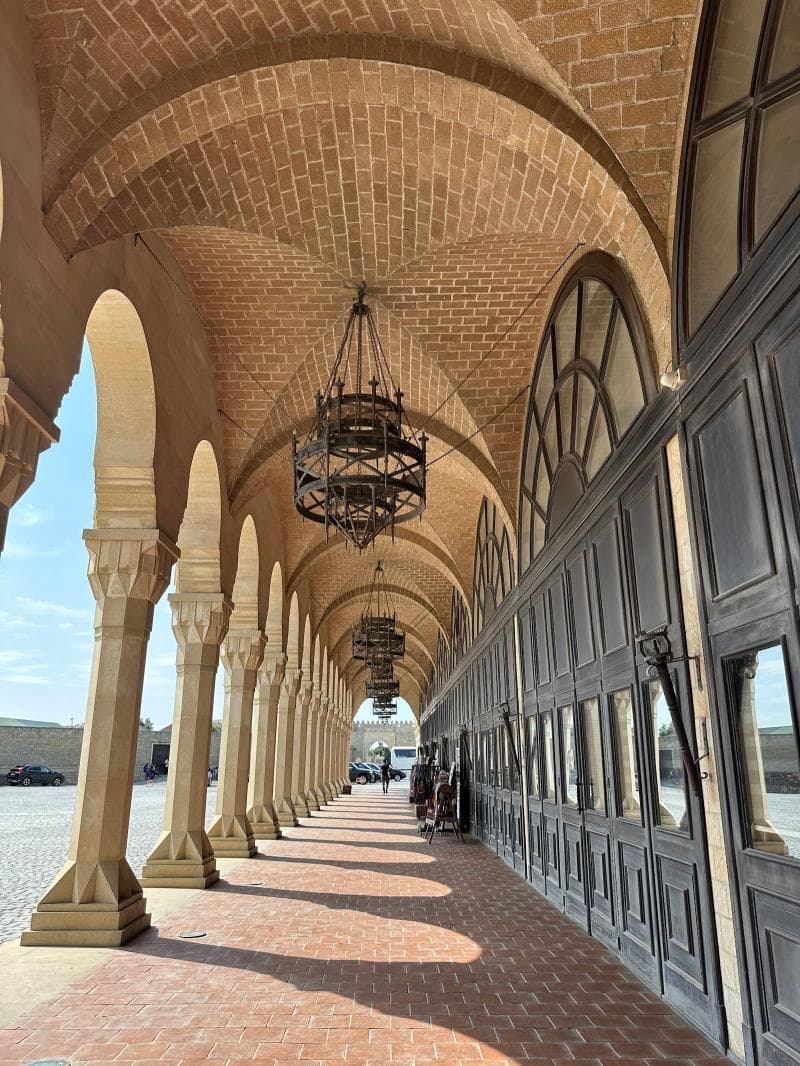
Explore the ancient Ateshgah Fire Temple in Baku, Azerbaijan, a historical site of fire worship for Zoroastrians, Hindus, and Sikhs, steeped in unique cultural heritage.
Overview
The Ateshgah of Baku, often referred to as the Fire Temple of Baku, stands as a profound testament to Azerbaijan's rich historical and spiritual landscape. Located on the Absheron Peninsula in Surakhany, a suburb of the capital city, Baku, this unique monument was once a vibrant center for fire worship. Its name, 'Ateshgah', directly translates from Persian as 'House of Fire' or 'Place of Fire', aptly describing its purpose and the natural phenomenon that originally drew worshippers here. This pentagonal complex, resembling a fortified caravanserai, features a central altar and cells that once housed pilgrims and ascetics. Today, it operates as a state historical-architectural reserve, welcoming visitors from around the globe to explore its fascinating past and cultural significance.
For centuries, the Ateshgah attracted devotees from various faiths, particularly Zoroastrians, Hindus, and Sikhs, all drawn by the seemingly eternal flames fueled by natural gas vents beneath the earth's surface. While the natural fires extinguished in 1969 due to extensive gas exploitation, the flames within the temple are now sustained by Baku's main gas supply, preserving the site's mystical ambiance. The Ateshgah offers a captivating glimpse into the crossroads of ancient trade routes and diverse religious practices that shaped this region, known historically as the 'Land of Fire'.
History & Cultural Background
The history of the Ateshgah is deeply intertwined with Azerbaijan's geological marvels and its position along ancient trade routes. Evidence suggests that fire worship rituals have taken place on the Absheron Peninsula for at least a millennium, with some historical accounts tracing back to the 10th century AD, and archaeological evidence even further. The current architectural complex, built in the style of a caravanserai (a roadside inn for travelers and traders), predominantly dates to the 17th and 18th centuries.
Its construction is largely attributed to Indian merchants and traders, particularly those from the Indian subcontinent, who journeyed through the Caspian region along the Silk Road or 'Grand Trunk Road'. These traders, including Hindu and Sikh devotees, found a sacred place in the naturally burning flames, establishing the temple as a pilgrimage site. Zoroastrians, whose religion places great importance on fire as a symbol of divine knowledge and purity, also revered the site, continuing an ancient tradition that predates the current structure.
The blend of cultures is vividly reflected in the temple's inscriptions, featuring writings in Sanskrit, Punjabi, and Persian, some dedicating invocations to Hindu deities like Lord Shiva and Ganesha. European travelers from the 17th and 18th centuries documented the presence of various religious practitioners, including Zoroastrians (referred to as 'Guebres'), Hindus, and Sikhs, coexisting and worshipping at the Ateshgah.
What Makes It Special
What truly sets the Ateshgah apart is its profound syncretic nature and its connection to the earth's fiery heart. It is one of the rare places globally where Zoroastrian, Hindu, and Sikh faiths converged and left their indelible marks within a single complex. The enduring spiritual significance stems from the natural gas vents that once fed its perpetual flames, transforming the temple into a mystical beacon for fire worshippers. While the natural gas supply eventually depleted, the maintained flames continue to evoke a sense of ancient mystery and devotion, offering a tangible link to millennia of human spirituality.
The architecture itself is a unique blend, mirroring the functionality of a caravanserai with its central courtyard surrounded by 24 cells, yet possessing the spiritual gravity of a temple. The central altar, a stone pavilion with four columns and a dome, stands as the focal point where the sacred fire traditionally burned. The intricate Persian and Indian inscriptions, along with the symbolic trishul atop the temple, further emphasize its multicultural heritage, making it a living museum of cross-cultural exchange and religious tolerance that is truly exceptional.
Stories, Fun Facts & Local Details
Legend has it that the natural fire phenomena of the Absheron Peninsula, including those at Ateshgah, have been observed for thousands of years, earning Azerbaijan its moniker, the 'Land of Fire'. The presence of Indian communities in Baku, crucial to the temple's construction, was a direct result of their extensive trade networks along the Silk Road, demonstrating Baku's historical role as a significant hub for international commerce and cultural exchange.
One poignant detail is that the 'eternal' natural flame at Ateshgah eventually extinguished in 1969, a consequence of intensive gas extraction in the region during the Soviet era. Today's flames are symbolically reignited, sustained by a piped gas supply, allowing visitors to still witness the mesmerizing sight that captivated ancient pilgrims. The cells surrounding the central courtyard, once used by ascetics for meditation and religious practices, now house various exhibits, some featuring mannequins dressed in period costumes, offering a vivid portrayal of the daily lives and rituals of the devotees who once inhabited this sacred space.
Visitor Perspective
Visiting the Ateshgah of Baku offers a unique and contemplative experience. The site provides a compact yet deeply resonant journey into a rich historical and spiritual tapestry. Walking through the pentagonal courtyard and exploring the individual cells allows for a tangible connection to the pilgrims and merchants who once sought spiritual solace here. Informative displays within the museum shed light on Zoroastrian traditions, the importance of fire, and the diverse cultural heritage of the region.
The Ateshgah is well-maintained and offers amenities such as wheelchair accessibility, with photography generally permitted. Many visitors choose to combine their trip to Ateshgah with a visit to the nearby Yanar Dag, or 'Burning Mountain', another natural gas fire phenomenon, creating a comprehensive half-day tour of Azerbaijan's fiery wonders. Allow approximately one hour to fully immerse yourself in the temple's history and ambiance. It stands as a powerful reminder of an era of profound religious tolerance and the enduring human connection to nature's awe-inspiring elements.
Coordinates: 50.0083, 40.4154
View on Google Maps💬 How Travelers Describe This Place
Based on community votes
Unique
804Interesting
733Beautiful
563Photogenic
404Must See
63
Traveler Stories
Discover memorable experiences shared by travelers who have visited this place.
No traveler stories yet.
Be the first traveler to share what made this place memorable.
Things to see at Ateshgah Of Baku



Tour
By
Spot
Discover amazing places around the world. Your journey starts here.
Explore
© 2026 TourBySpot. All rights reserved.