Historical Displays
Baku, Azerbaijan
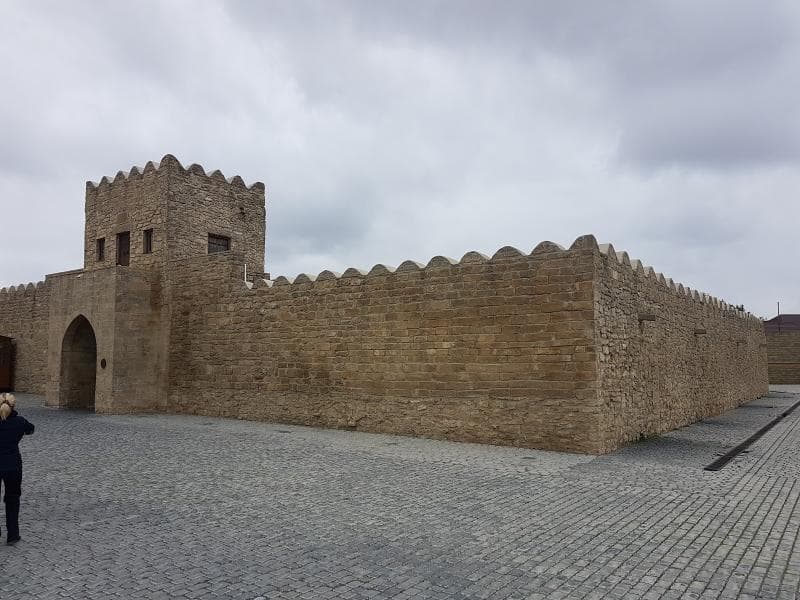
Explore the Historical Displays at Ateshgah of Baku, Azerbaijan, a unique Fire Temple showcasing Zoroastrian, Hindu, and Sikh heritage.
Overview
The Ateshgah of Baku, often referred to as the 'Fire Temple of Baku,' stands as a captivating historical and architectural reserve in Surakhany, a suburb of Azerbaijan's vibrant capital, Baku. This pentagonal complex, renowned for its ancient association with fire worship, now serves as a compelling open-air museum. Exploring its historical displays provides a rich narrative of the beliefs and practices that shaped this extraordinary site. It offers a unique glimpse into a syncretic past where Zoroastrian, Hindu, and Sikh traditions converged around the sacred element of fire, making it a profound testament to spiritual diversity and cultural exchange.
History & Cultural Background
The origins of Ateshgah are deeply intertwined with Azerbaijan's ancient reputation as the 'Land of Fire,' a land rich in subterranean natural gas reserves that often ignited spontaneously, creating natural flames. While evidence suggests earlier Zoroastrian sanctuaries existed at this location, the present-day structure primarily dates from the 17th and 18th centuries. It was largely built and sustained by Indian merchants and pilgrims traveling the extensive Silk Road and Grand Trunk Road through the Caspian region. These traders, representing Hindu, Sikh, and Zoroastrian faiths, found a spiritual home here, drawn by the naturally burning flames, which were central to their worship. The complex served as a significant pilgrimage site and a place of worship for centuries before it was eventually abandoned in the late 19th century, likely due to a decline in the Indian population and the depletion of natural gas reserves. In 1975, this significant site was converted into a museum, preserving its profound historical and cultural legacy for future generations.
What Makes It Special
What truly distinguishes Ateshgah is its unique architectural design and the blend of religious influences etched into its very stones. The pentagonal courtyard is enclosed by tall battlement walls, featuring a single arched entrance portal. At its heart stands a central altar, a stone pavilion on four columns beneath which the sacred fire once burned. Around the perimeter, 26 small cells once housed hermits and pilgrims. The temple's architecture prominently displays the Trishul, a Hindu trident symbol, atop the main altar, reflecting its strong connections to Hinduism. Numerous inscriptions in Sanskrit, Gurumukhi (Sikh script), and Persian adorn the walls, offering tangible evidence of the diverse communities who worshipped here. While the natural eternal flame famously extinguished in 1969 due to intensive gas exploitation, it is now maintained using a piped gas supply, ensuring that the symbol of fire continues to burn brightly, embodying centuries of devotion.
Stories, Fun Facts & Local Details
Stepping into the cells of Ateshgah is like opening a series of ancient storybooks. Each chamber, once a dwelling for ascetics, now houses historical displays with reconstructed interiors, mannequins in traditional attire, and installations that bring to life the daily routines and spiritual quests of the pilgrims. Visitors can decipher fragments of history through the numerous inscriptions found on the walls. For example, many Hindu inscriptions begin with an invocation to Lord Ganesha ('Om Shri Ganeshaya Namah') and mention the fire goddess Jwala Ji, while others pay homage to Shiva. Sikh inscriptions in Gurumukhi also tell tales of traders and devotees from Punjab. These fascinating details highlight a rare example of religious syncretism, where adherents of various faiths worshipped side by side in the same sacred space. The economic ties through the Silk Road trade also played a crucial role, with Indian merchants funding much of the complex's construction. This collective history makes Ateshgah a living testament to intercultural exchange and shared spiritual reverence for fire.
Visitor Perspective
For the modern traveler, visiting Ateshgah offers an immersive journey through time and culture. The historical displays within the cells are particularly insightful, providing detailed explanations and visual reconstructions that enhance understanding of the site's complex past. You'll gain an appreciation for the ascetic lifestyles of the fire worshippers and the profound significance of fire in their spiritual beliefs. The tranquil atmosphere, combined with the rich historical context presented throughout the museum, allows for a deeply reflective experience. As a state historical-architectural reserve since 2007, Ateshgah is meticulously preserved, inviting curious minds to explore its unique blend of ancient religious practices and geological marvels in the heart of Azerbaijan.
Coordinates: 50.0052, 40.4093
View on Google Maps💬 How Travelers Describe This Place
Based on community votes
Unique
445Interesting
416Must See
289Beautiful
141Photogenic
33
Traveler Stories
Discover memorable experiences shared by travelers who have visited this place.
No traveler stories yet.
Be the first traveler to share what made this place memorable.

Tour
By
Spot
Discover amazing places around the world. Your journey starts here.
Explore
© 2026 TourBySpot. All rights reserved.