Caravansary Courtyard
Baku, Azerbaijan
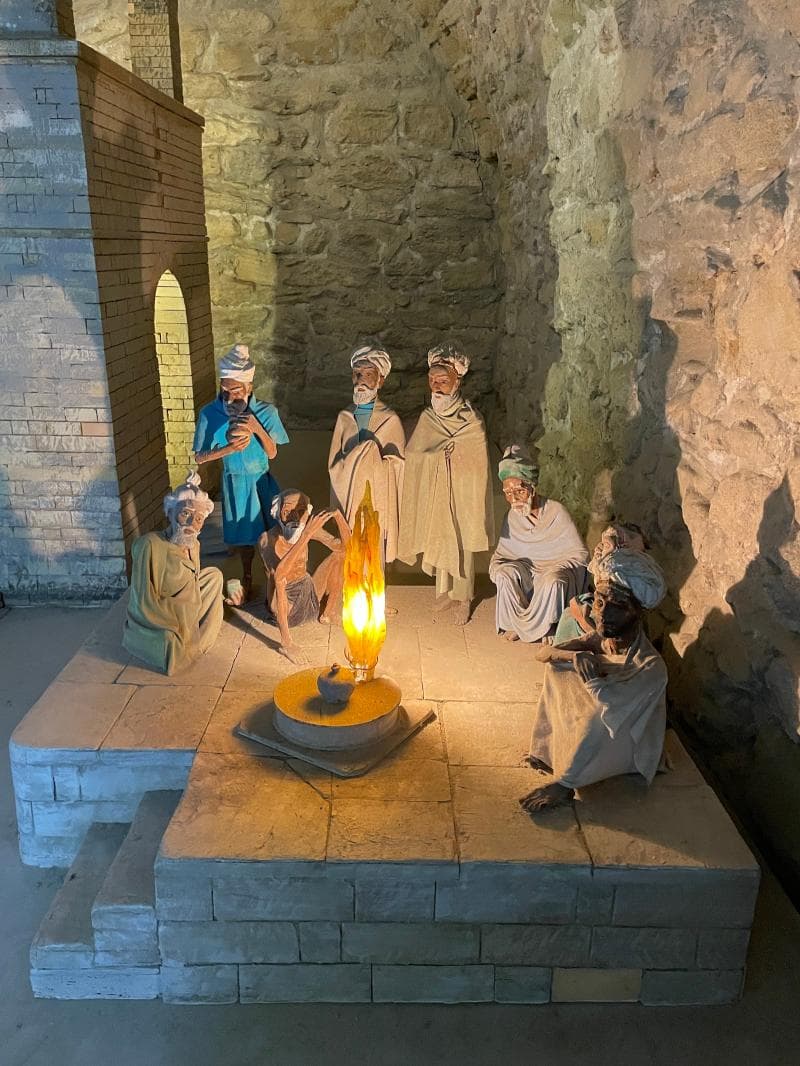
Explore the Caravansary Courtyard at Ateshgah of Baku, Azerbaijan, a historical fire temple where diverse faiths converged. Discover its unique architecture and spiritual heritage.
Overview
Nestled in the Surakhani district, a short distance from Baku, Azerbaijan, lies the Ateshgah, an extraordinary fire temple with a rich tapestry of history and culture. Within its pentagonal walls, the Caravansary Courtyard serves as the heart of this ancient complex. Far more than just a courtyard, it represents a unique fusion of religious sanctuary and a traveler's inn, historically accommodating pilgrims, merchants, and ascetics from diverse backgrounds. The entire structure, built between the 17th and 18th centuries, strikingly resembles a traditional caravanserai, a testament to its role along historical trade routes. Today, it stands as a captivating state historical-architectural reserve, inviting visitors to step back in time and explore a site where natural flames once burned eternally.
History & Cultural Background
The Ateshgah of Baku, meaning 'House of Fire' in Persian, boasts a history deeply intertwined with fire worship traditions, particularly Zoroastrianism, which predates the current structure. The site's significance stems from natural gas vents that allowed flames to spontaneously ignite from the earth. While Zoroastrian practices at the site date back centuries, the existing pentagonal complex was primarily constructed between the 17th and 18th centuries. This construction was largely funded and maintained by Indian merchants and pilgrims who traveled along the Silk Road, transforming it into a syncretic place of worship for Hindus, Sikhs, and Zoroastrians. The cells surrounding the Caravansary Courtyard were built to house these spiritual seekers, reflecting the temple's role as both a sacred space and a resting point for travelers. The natural flames, a focal point of worship for centuries, extinguished in 1969 due to extensive petroleum and gas extraction, but have since been artificially maintained to preserve the site's historical ambiance.
What Makes It Special
The Caravansary Courtyard at Ateshgah is special due to its unique architectural design and its profound cultural significance. Its pentagonal layout, enclosed by tall battlement walls, echoes the form of an ancient caravanserai, providing a fortified yet welcoming space. Within this courtyard stands the central altar, a stone pavilion on four columns beneath which the sacred fire, now fed by a piped gas supply, continues to burn. Surrounding the courtyard are twenty-six cell-like rooms that once served as living quarters for ascetics, monks, and pilgrims. These sparse chambers offer a glimpse into the devotional and often austere lives of those who tended the sacred fires. Inscriptions in Sanskrit and Gurmukhi found within these cells further highlight the diverse religious communities—Hindu and Sikh—who frequented and contributed to this holy site. The presence of a Trishul, a Hindu trident symbol, atop the temple's dome also signifies this cultural blend.
Stories, Fun Facts & Local Details
The name Ateshgah itself, meaning 'House of Fire', directly refers to the incredible natural phenomenon of flames rising from underground gas vents that characterized this location for millennia. For centuries, these 'eternal flames' attracted pilgrims and sparked awe, making the Absheron Peninsula known as the 'Land of Fire'. Imagine the stories shared around these fires, tales of distant lands, spiritual quests, and the wonders of nature. The inscriptions left by pilgrims in the courtyard cells are like handwritten notes from history, detailing their names, dates, and sometimes even their devotion to Hindu deities like Lord Shiva and Ganesha. One fun fact is that while the natural flames have ceased, the tradition continues, with gas supplied to keep the central fire burning, ensuring the temple's evocative atmosphere persists for modern-day visitors. The site's architectural resemblance to a caravanserai also tells a tale of its dual function as both a spiritual sanctuary and a vital stopping point for traders and travelers on the ancient Silk Road, showcasing the region's historical importance as a crossroads of cultures.
Visitor Perspective
Visiting the Caravansary Courtyard offers a tranquil yet profound experience. As you pass through the arched entrance and step into the pentagonal courtyard, you are immediately enveloped by a sense of history and spiritual resonance. The quiet atmosphere provides an ideal setting for contemplation and photography, allowing for an unhurried exploration of the unique architecture and the stories embedded within its stone walls. Wandering through the individual cells that line the courtyard, now often housing informative exhibits and mannequins depicting the lives of former residents, offers a vivid connection to the ascetic life of the monks and pilgrims. The central altar with its continuously burning flame serves as the powerful focal point, reminding visitors of the site's enduring significance as a place of worship. A typical visit to Ateshgah, including the courtyard, usually takes one to two hours and is often combined with a trip to the nearby Yanar Dag, another natural fire site, making for a fascinating half-day excursion from Baku.
Coordinates: 50.0052, 40.4093
View on Google Maps💬 How Travelers Describe This Place
Based on community votes
Must See
912Interesting
771Photogenic
767Beautiful
479Unique
181
Traveler Stories
Discover memorable experiences shared by travelers who have visited this place.
No traveler stories yet.
Be the first traveler to share what made this place memorable.

Tour
By
Spot
Discover amazing places around the world. Your journey starts here.
Explore
© 2026 TourBySpot. All rights reserved.