Temple Cells
Baku, Azerbaijan
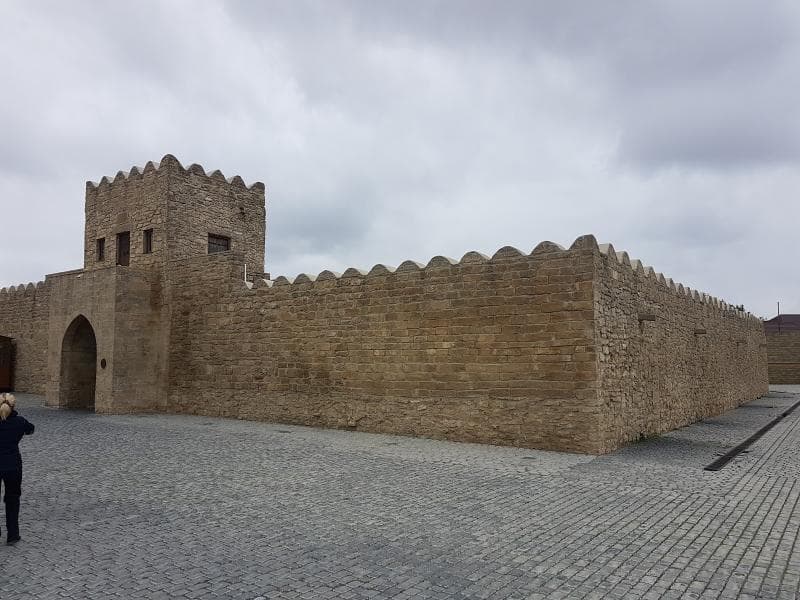
Explore the ancient Temple Cells of Ateshgah of Baku, Azerbaijan, a syncretic fire temple where Zoroastrians, Hindus, and Sikhs once worshipped.
Overview
The Temple Cells, an integral part of the Ateshgah of Baku in Azerbaijan, offer a profound glimpse into a bygone era of spiritual devotion and cultural exchange. This unique pentagonal complex, located in the Surakhany town, functioned as a syncretic place of worship for Zoroastrians, Hindus, and Sikhs, drawing pilgrims and ascetics from across the ancient Silk Road. The cells, numbering around two dozen, form a significant part of the historical-architectural reserve, surrounding a central courtyard and the main fire altar. Each cell once served as a humble dwelling for those who dedicated their lives to fire worship and philosophical pursuits. Today, they stand as silent witnesses to centuries of diverse religious practices, providing visitors with an immersive historical experience in Baku, the 'Land of Fire'.
History & Cultural Background
The history of the Ateshgah, and by extension its Temple Cells, stretches back to ancient times, with roots in Zoroastrian fire worship. While natural gas vents fueling eternal flames have been revered for millennia, the current pentagonal structure of Ateshgah, including its cells, was primarily constructed between the 17th and 18th centuries. This reconstruction was largely undertaken by Indian merchants and masons, many of whom were Hindu and Sikh, as trade flourished along the Silk Road. These traders, originating primarily from the northwestern Indian subcontinent, established the Ateshgah as a pilgrimage and philosophical center.
The cells themselves were built to accommodate these traveling pilgrims, monks, and ascetics, serving as their living quarters and spaces for spiritual contemplation. Historical sources suggest that Zoroastrians had worshipped at this site much earlier, but the temple decayed after the rise of Islam. The subsequent influx of Indian traders revitalized the site, leading to the construction of the present complex with its numerous cells. The presence of inscriptions in Sanskrit and Gurmukhi within many of these cells provides undeniable evidence of the Hindu and Sikh communities' deep connection to Ateshgah. The complex eventually ceased to be a place of worship in the late 19th century, partly due to the dwindling Indian population and the onset of intensive oil and gas exploitation in the region, which caused the natural flames to extinguish in 1969. It was later converted into a museum in 1975.
What Makes It Special
What makes the Temple Cells particularly special is their tangible connection to the spiritual lives of the ascetics and pilgrims who once inhabited them. Each cell, though outwardly simple, tells a story of devotion and endurance. They are not merely architectural features but intimate spaces where individuals sought enlightenment and practiced ancient rituals. The inscriptions etched into the walls, particularly those in Sanskrit and Gurmukhi, are a powerful testament to the temple's multicultural significance. These sacred texts, sometimes invoking deities like Lord Shiva and Ganesha, offer direct evidence of the diverse religious traditions that converged here.
The architectural style of the cells, lining the inner walls of the pentagonal courtyard, resembles that of a caravanserai or roadside inn, reflecting the site's importance as a stop for travelers along trade routes. This unique blend of a spiritual center with the practical design of a traveler's lodge highlights its role as a nexus of commerce and faith. The very existence of these cells within the Ateshgah complex underscores the profound respect given to the resident holy men, who maintained the sacred flames and pursued their ascetic lifestyles in this 'House of Fire'.
Stories, Fun Facts & Local Details
Imagine the solitude and dedication of a yogi or a Zoroastrian priest living within these modest stone cells, meditating by the light of a perpetual flame that once rose naturally from the earth. Some cells feature small stone platforms that served as both beds and meditation spaces, hinting at the ascetic practices of their former inhabitants. Oral traditions and traveler accounts from the 17th and 18th centuries speak of various religious figures, including Hindu yogis and Zoroastrian Mobeds, living and worshipping here.
A fascinating detail is the debate among historians and religious scholars regarding the temple's true origins—whether it was originally Zoroastrian before Hindu and Sikh pilgrims rebuilt and used it, or if it was predominantly a Hindu shrine from the start. However, the inscriptions within the cells, including one showing an invocation to Lord Shiva and his son Ganesha, firmly establish a significant Hindu presence. Local narratives often highlight the 'eternal flames' that captivated travelers for centuries, a phenomenon so potent it led to Azerbaijan being known as the 'Land of Fire'. The complex was also a center for understanding the four holy elements of fire, air, water, and earth, held sacred by Zoroastrians. In recent years, additional cells have been opened for visitors, revealing artifacts dating back to even earlier periods.
Visitor Perspective
For the curious traveler, exploring the Temple Cells at the Ateshgah of Baku is like stepping back in time. Walking through the quiet courtyard and into the individual cells provides a tangible connection to the spiritual history of the region. Visitors can explore the various monk cells, many of which still house exhibits and artifacts detailing the history of fire worship and the lives of those who resided here. The atmosphere within the complex is serene, fostering reflection on the diverse faiths that coexisted and interacted at this unique site. Informative displays throughout the cells offer context to the inscriptions and the broader history of the temple. It's a truly enriching experience that transcends mere sightseeing, offering a profound appreciation for the enduring human quest for spiritual understanding and the rich tapestry of cultures along the Silk Road.
Coordinates: 50.00832110763009, 40.41542789956181
View on Google Maps💬 How Travelers Describe This Place
Based on community votes
Unique
897Must See
695Beautiful
605Interesting
498Photogenic
481
Traveler Stories
Discover memorable experiences shared by travelers who have visited this place.
No traveler stories yet.
Be the first traveler to share what made this place memorable.

Tour
By
Spot
Discover amazing places around the world. Your journey starts here.
Explore
© 2026 TourBySpot. All rights reserved.