Ancient Inscriptions
Baku, Azerbaijan
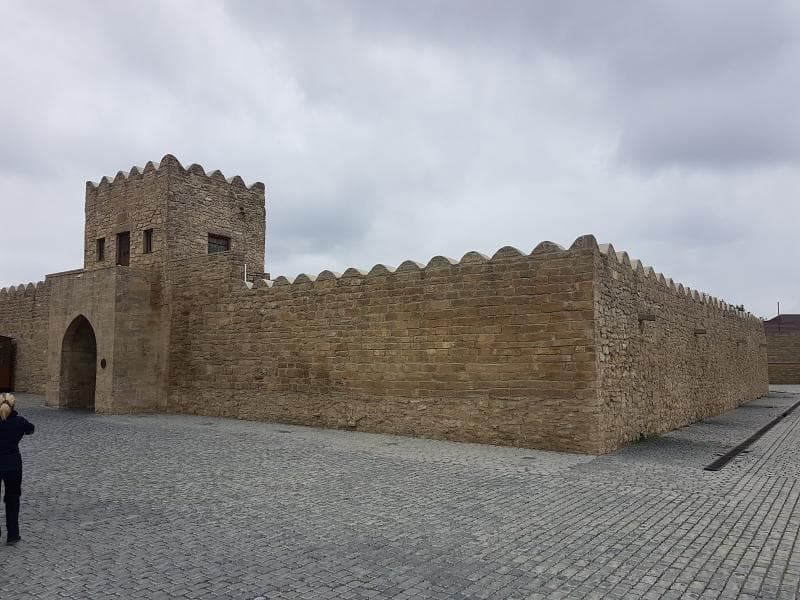
Explore the ancient inscriptions at Ateshgah of Baku, Azerbaijan. Discover Hindu, Sikh, and Persian carvings revealing centuries of fire worship history.
Overview
Deep within the Absheron Peninsula, not far from the vibrant city of Baku, Azerbaijan, lies the remarkable Ateshgah of Baku, a historical and architectural complex often referred to as the 'Fire Temple.' This unique pentagonal structure, resembling an ancient caravanserai, has long drawn travelers and pilgrims due to its natural, eternal flames fueled by underground gas vents. Within its venerable walls, the 'Ancient Inscriptions' stand as silent witnesses to centuries of diverse spiritual practices and cultural exchange. These carved texts, found on doorways and within the monastic cells, are a profound testament to the Hindu, Sikh, and Zoroastrian worshippers who once frequented this sacred site, leaving behind messages that bridge continents and faiths.
History & Cultural Background
The history of Ateshgah is intrinsically linked to Azerbaijan's ancient reputation as the 'Land of Fire,' a region where natural gas seepages historically ignited perpetual flames. While evidence suggests fire worship occurred here much earlier, the current Ateshgah complex was primarily constructed between the 17th and 18th centuries. It was built by Indian traders and pilgrims who journeyed along the Silk Road, establishing a strong presence in Baku. These merchants, predominantly from Northern India, brought their religious traditions with them, transforming the site into a syncretic place of worship where Hindu, Sikh, and, to a lesser extent, Zoroastrian devotees coexisted and practiced their faiths. The design, with its central altar and surrounding cells for ascetics, reflects this communal and spiritual purpose.
What Makes It Special
The ancient inscriptions are arguably the most compelling feature of Ateshgah, offering direct insights into the lives and beliefs of its historical occupants. There are a total of 17 inscriptions, predominantly in Sanskrit and Punjabi (using the Gurmukhi script), with one notable Persian inscription. These carvings are not mere markings; they are invocations, prayers, and records left by devout individuals. Many of the Hindu inscriptions begin with 'Om Shri Ganeshaya Namah' (I salute Lord Ganesha) and frequently invoke Jwala Ji, the Hindu fire deity, and Lord Shiva. The Punjabi inscriptions include quotations from the Adi Granth, the holy scripture of Sikhism. These texts not only confirm the temple's role as a Hindu and Sikh place of worship but also chronicle the period of its active use, with dates ranging from 1668 CE to 1816 CE. The solitary Persian inscription, though containing grammatical errors, also refers to fire and dates to 1745 CE, indicating a broader spiritual interest in the site.
Stories, Fun Facts & Local Details
Beyond their scholarly value, the inscriptions tell human stories. Imagine a traveler from distant India, arriving at this 'House of Fire' after a long and arduous journey, compelled to carve their devotion into stone. Some scholars even suggest that certain Jwala Ji devotees regarded the Ateshgah as the 'greater Jwala Ji' compared to a famed shrine in the Himalayas, highlighting its profound spiritual significance for them. The fact that these inscriptions contain dates, sometimes in multiple calendars (Samvat and Hijri), offers a fascinating glimpse into the precise timeline of their visits. The presence of a trident, a Hindu symbol of Lord Shiva, atop the central altar further underlines the strong Indian influence at the site. While the natural flames that initially drew pilgrims to Ateshgah eventually subsided in 1969 due to gas extraction, the inscriptions remain an enduring link to the eras when these fires burned spontaneously, making the site a beacon of faith and wonder.
Visitor Perspective
Today, as you wander through the quiet courtyard of Ateshgah, now a State Historical-Architectural Reserve and museum, the ancient inscriptions offer a tangible connection to its storied past. Observing the intricate scripts and devotional messages etched into the stone brings a sense of wonder, allowing you to almost hear the prayers and feel the presence of the countless pilgrims who passed through these very spaces. These carvings transform the temple from a mere architectural relic into a living archive of faith and cultural exchange. They invite contemplation on the enduring human quest for spirituality and the historical ties that linked diverse cultures across vast geographical distances. It's a humbling experience to stand where ancient traders and ascetics once stood, their beliefs preserved in stone for modern eyes to discover.
Coordinates: 50.00832110763009, 40.41542789956181
View on Google Maps💬 How Travelers Describe This Place
Based on community votes
Must See
995Unique
839Beautiful
388Interesting
289Photogenic
141
Traveler Stories
Discover memorable experiences shared by travelers who have visited this place.
No traveler stories yet.
Be the first traveler to share what made this place memorable.

Tour
By
Spot
Discover amazing places around the world. Your journey starts here.
Explore
© 2026 TourBySpot. All rights reserved.