Museum Exhibits
Baku, Azerbaijan
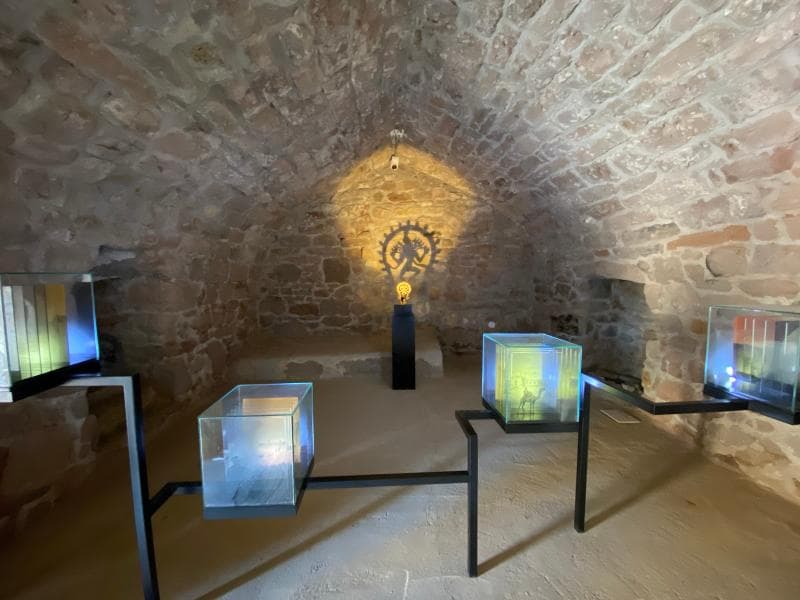
Explore the Museum Exhibits at Ateshgah Of Baku, Azerbaijan. Discover the history of fire worship, cultural exchanges, and ascetic life in this ancient temple.
Overview
Nestled on the Absheron Peninsula, a short journey from Azerbaijan's capital, Baku, lies the enigmatic Ateshgah, often referred to as the 'Fire Temple of Baku'. This unique pentagonal complex, resembling a fortified caravanserai, served historically as a significant place of worship for Zoroastrians, Hindus, and Sikhs, all drawn by the region's natural gas seepages that ignited 'eternal' flames. Today, the Ateshgah functions as an open-air museum and state historical-architectural reserve, offering visitors a profound journey into its multicultural and spiritual past.
The museum exhibits within Ateshgah are primarily housed in the former cells where ascetics and pilgrims once resided. These exhibits vividly portray the temple's rich history, the diverse religious practices it accommodated, and the everyday lives of those who maintained its sacred fires. Walking through these preserved chambers, travelers can explore artifacts, informational displays, and meticulously recreated scenes that bring centuries of devotion and trade to life.
History & Cultural Background
The history of Ateshgah stretches back to ancient times, with roots potentially linked to early Zoroastrian fire worship, a religion that held fire as a sacred symbol and connection to God. While the site likely hosted fire worship for millennia, the current stone structure was primarily constructed between the 17th and 18th centuries by Indian merchants and pilgrims traveling the Silk Road.
These traders, many from the Indian subcontinent, funded and shaped the complex, creating a syncretic temple where Hindu, Sikh, and Zoroastrian traditions converged. The natural gas flames that continuously emerged from the ground fueled this spiritual fervor, making the Ateshgah a unique pilgrimage site. However, with the rise of industrial oil and gas extraction in the early 20th century, the natural gas reservoirs depleted, and the eternal flames flickered out in 1969. The complex was then converted into a museum in 1975, and its central fire is now sustained by piped gas from the city mains, preserving its symbolic significance.
What Makes It Special
What truly distinguishes the Ateshgah's museum exhibits is their direct connection to the living spaces of those who once worshipped here. Each of the 26 cells surrounding the central courtyard, once home to hermits and pilgrims, has been transformed into a thematic display. These exhibits delve into the specific religious practices of the Hindus, Sikhs, and Zoroastrians who frequented the temple, showcasing their rituals, beliefs, and the objects they used.
The complex's pentagonal architecture, reminiscent of a caravanserai, highlights its dual role as both a spiritual sanctuary and a resting place for merchants along the historic trade routes. The integration of various religious inscriptions in Sanskrit, Gurmukhi, and Persian directly on the temple walls further underscores its unique multicultural heritage, providing tangible evidence of this rare religious tolerance and interaction.
Stories, Fun Facts & Local Details
The cells of the Ateshgah whisper tales of devotion. Many contain inscriptions, often beginning with invocations to Hindu deities like Ganesha ('Om Shri Ganeshaya Namah') and mentioning Jwala Ji, the goddess of fire. Other inscriptions are in Gurumukhi, the sacred script of the Sikhs, attesting to their presence alongside Hindu pilgrims.
One intriguing detail is the trident (Trishul) adorning the central temple, a distinctly Hindu sacred symbol of Lord Shiva, although some interpretations have attempted to link it to Zoroastrianism as well. The exhibits also reveal the austere life of the ascetics who meditated and tended the flames, often depicting their sparse living conditions with stone platforms serving as beds. You might even discover details about the cremation pit, where deceased Indian pilgrims' bodies were once ritually burned in the sacred fire.
A fascinating 'fun fact' is how the depletion of natural gas reserves in the early 20th century meant the 'eternal' flames had to be artificially maintained. This detail, often revealed within the exhibits, highlights the interplay between natural phenomena, human reverence, and the impact of industrialization.
Visitor Perspective
For the curious traveler, the museum exhibits at Ateshgah provide an immersive and reflective experience. Upon entering the courtyard, the architectural layout itself begins the storytelling, with the main fire altar as the focal point. Moving into the individual cells, visitors encounter carefully curated displays that include fire-worship relics, such as brass oil lamps bearing centuries of soot, ancient manuscripts outlining Zoroastrian rituals, and historical photographs.
Interactive elements and informative placards, sometimes supported by audio guides, help to contextualize the historical artifacts and inscriptions. The exhibits allow one to visualize the ascetic lifestyle, understand the complexities of the Silk Road trade that brought diverse communities together, and appreciate the spiritual significance of fire to multiple faiths. Visitors can spend ample time exploring each chamber, gaining insights into a unique cross-cultural and religious dialogue that unfolded in this 'House of Fire' in Baku, Azerbaijan.
Coordinates: 50.0083, 40.4154
View on Google Maps💬 How Travelers Describe This Place
Based on community votes
Photogenic
912Beautiful
875Interesting
820Unique
718Must See
648
Traveler Stories
Discover memorable experiences shared by travelers who have visited this place.
No traveler stories yet.
Be the first traveler to share what made this place memorable.

Tour
By
Spot
Discover amazing places around the world. Your journey starts here.
Explore
© 2026 TourBySpot. All rights reserved.