Astronomical Clock
Prague, Czech Republic
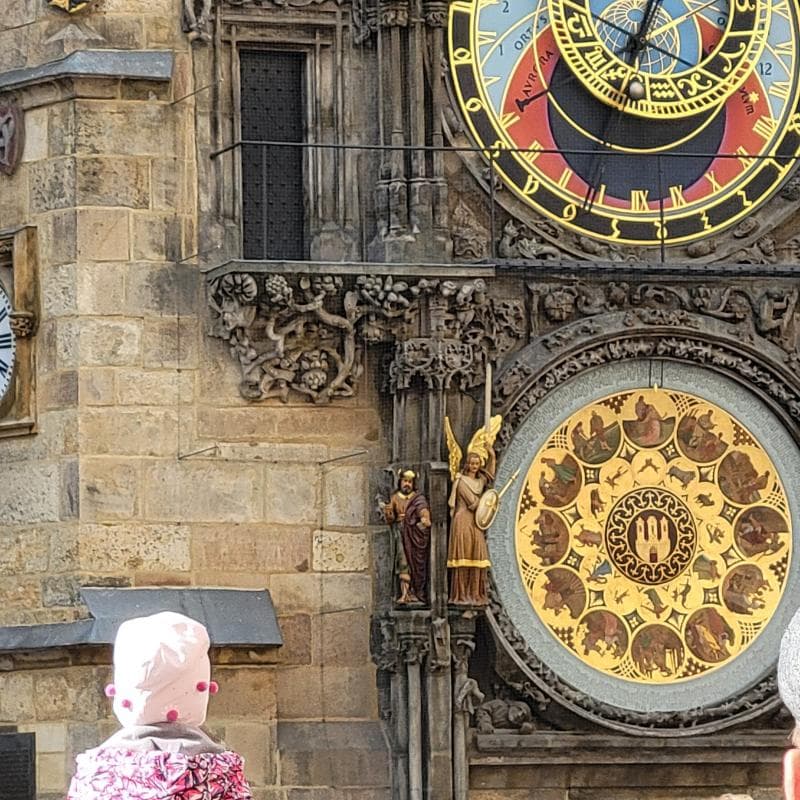
Discover the medieval wonder of the Prague Astronomical Clock (Orloj) in Prague, Czech Republic. Explore its history, intricate dials, hourly show, and captivating legends.
Overview
The Prague Astronomical Clock, locally known as the Orloj, is a medieval marvel adorning the southern wall of the Old Town Hall in Prague, Czech Republic. It is not merely a timepiece but a complex mechanism that captivated medieval minds and continues to enchant visitors today. Installed in 1410, it holds the distinction of being the world's third-oldest astronomical clock and the oldest still in operation, a testament to centuries of engineering ingenuity.
This iconic landmark in Old Town Square functions as a detailed cosmic display, exhibiting the relative positions of the Sun, Moon, Earth, and Zodiac constellations. Beyond telling time, it provides the date, astrological information, and, most famously, an hourly spectacle featuring animated figures.
History & Cultural Background
The oldest components of the Orloj, including its mechanical clock and astronomical dial, were created in 1410 by horologist Mikuláš of Kadaň and Jan Šindel, a professor of mathematics and astronomy at Charles University. Around 1490, the calendar dial was added, and Gothic sculptures began to adorn the clock's facade.
A popular legend attributes the clock's creation to Master Hanuš and claims he was blinded by Prague councillors to prevent him from replicating his masterpiece elsewhere. This tale, popularized by Alois Jirásek, also suggests that Hanuš, in revenge, disabled the clock, rendering it inoperable for a century. However, historical research has revealed this to be a historical mistake and a captivating legend rather than fact, with Mikuláš of Kadaň and Jan Šindel being the true original makers.
Over the centuries, the clock has undergone numerous repairs and enhancements. Wooden statues were added between 1629 and 1659. A significant refit between 1787 and 1791 saw the addition of the Apostle statues, and during renovations from 1865 to 1866, painter Josef Mánes contributed the calendar dial with its medallions and a golden crowing rooster was added. The clock endured severe damage during the Prague Uprising in May 1945 towards the end of World War II, but was subsequently restored. More recent renovations in 2005 and 2018 have ensured its continued operation and preservation.
What Makes It Special
The Prague Astronomical Clock is a marvel of medieval engineering, featuring three primary components, each rich in detail and symbolism:
- Astronomical Dial: This upper dial acts as a mechanical astrolabe, displaying the Sun's and Moon's positions in the sky, along with zodiacal constellations. It showcases time in three historical ways: local Prague time (Roman numerals), unequal hours (curved golden lines), and Old Czech time, which counts hours after sunset. The background uses different hues of blue and brown to represent sunrise, daybreak, daytime, and nighttime, with the Earth centrally located.
- Calendar Dial: Situated below the astronomical dial, this intricate plate displays the months of the year through medallions depicting rural life and activities, along with the zodiac signs. It also indicates the current day and annual events. The current calendar plate is a replacement from 1880, based on Josef Mánes's original painting from 1865.
- The Walk of the Apostles: On the hour, from 9 AM to 11 PM, two windows above the astronomical dial open, revealing a procession of the Twelve Apostles. Simultaneously, allegorical figures around the clock face spring into action. These include Death (a skeleton ringing a bell), Vanity (looking in a mirror), Greed (holding bags of money), and a Turk (representing lust or vice). This brief, yet captivating, show culminates with the crow of a golden rooster.
Stories, Fun Facts & Local Details
The Orloj is steeped in folklore and symbolism. Beyond the tragic (and historically inaccurate) legend of Master Hanuš's blinding, other tales surround the clock's figures. One myth suggests that if the Orloj stops for an extended period, it foretells hard times for the Czech nation, with the skeleton nodding its head as confirmation. Another legend recounts a knight imprisoned nearby, who found hope watching a sparrow escape from Death's closing jaws.
Each animated figure carries deep symbolic meaning reflecting medieval societal values. Death, the skeleton, is the most prominent, while Vanity, Greed, and the Turk (representing lust) embody human vices. An astonishing fact is that approximately 75% of the clock's parts remain original from the 15th century, a testament to its enduring craftsmanship. The clock's ability to display complex astronomical data, far beyond simple timekeeping, made it a cutting-edge piece of technology in its era, combining astronomy, mathematics, and mechanical engineering.
Visitor Perspective
The Prague Astronomical Clock is a must-see for anyone visiting Prague. The hourly show, which runs from 9 AM to 11 PM, is free to watch from Old Town Square and draws significant crowds. To secure a good viewing spot, especially during peak season, it's advisable to arrive 10-15 minutes before the top of the hour. The spectacle itself is relatively short, lasting about 45 seconds, but it's a memorable experience.
For a deeper understanding and a different perspective, visitors can purchase tickets to ascend the Old Town Hall Tower. This allows for an up-close view of the clock's intricate mechanism from behind and offers panoramic views of Old Town Square and the city from the observation deck. Guided tours often provide rich insights into its historical and astronomical functions, making the visit even more enriching.
Coordinates: 14.4209167, 50.0870083
View on Google Maps💬 How Travelers Describe This Place
Based on community votes
Must See
898Photogenic
853Beautiful
667Interesting
190Unique
32
Traveler Stories
Discover memorable experiences shared by travelers who have visited this place.
No traveler stories yet.
Be the first traveler to share what made this place memorable.
Things to see at Astronomical Clock



Tour
By
Spot
Discover amazing places around the world. Your journey starts here.
Explore
© 2026 TourBySpot. All rights reserved.