Gothic facade
Prague, Czech Republic
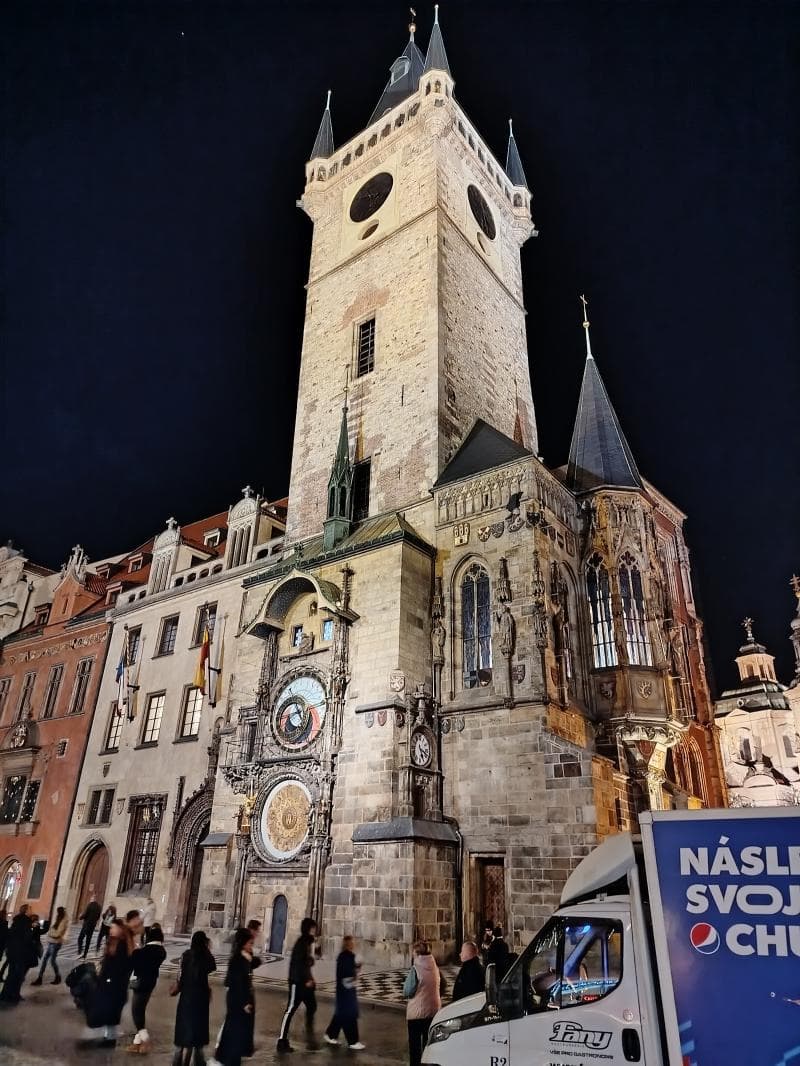
Explore the Gothic facade of Prague's Astronomical Clock, a medieval masterpiece in Old Town Square, rich in history, symbolism, and intricate carvings.
Overview
Nestled within the ancient heart of Prague, Czech Republic, on the southern wall of the Old Town Hall, stands the magnificent Astronomical Clock, known locally as the Orloj. Beyond its intricate time-telling mechanisms and hourly procession of figures, it is the clock's striking Gothic facade that first captures the eye. This medieval marvel, dating back to 1410 for its oldest mechanical parts, is a testament to the ingenuity and artistic expression of its era. The Gothic facade, an integral part of its enduring charm, showcases a rich tapestry of stone carvings, sculptures, and architectural details that weave together history, faith, and medieval understanding of the cosmos.
The facade is not merely decorative; it serves as a visual narrative, enriching the clock's complex functions with allegorical figures and structural artistry. It represents a harmonious blend of engineering and art, inviting visitors to delve deeper into the stories etched in stone. The entire structure of the Old Town Hall itself is a prominent example of Gothic architecture, providing a grand setting for the Orloj and its ornate embellishments.
History & Cultural Background
The Astronomical Clock was first installed in 1410, a groundbreaking achievement for its time, created by clockmaker Mikuláš of Kadaň and astronomer Jan Šindel. However, the elaborate Gothic facade, as we largely see it today, came into being later. Around 1490, the calendar dial was added, and simultaneously, the clock's facade was adorned with a wealth of Gothic sculptures. This period marked a significant enhancement, transforming the functional timepiece into an elaborate public display.
The Old Town Hall, which houses the clock, had its origins much earlier, with its tower constructed in 1338. The building underwent remodeling in the Gothic style in 1470, unifying its interior and exterior. The Gothic stone sculptures that intricately decorate the facade, particularly those flanking the astronomical dial and adorning its architrave, are believed to have been crafted by members of the masonic lodge led by Peter Parler at the beginning of the 15th century, belonging to the Vladislav Gothic style, a Czech equivalent of Flamboyant Gothic. Subsequent centuries saw further additions, such as wooden statues between 1629 and 1659, and the figures of the Twelve Apostles during a major repair between 1787 and 1791.
What Makes It Special
The Gothic facade of the Prague Astronomical Clock is distinguished by its intricate carvings and symbolic statuary. It features a rich array of allegorical figures that articulate medieval beliefs and moral lessons. On either side of the astronomical dial, you'll find the four primary moving figures: Vanity, represented by a man admiring himself in a mirror; the Miser, clutching a bag of gold; Death, a skeletal figure who tolls the bell every hour; and a Turkish figure symbolizing earthly pleasures. These figures are not just ornamental; they serve as a powerful memento mori and a commentary on human vices, reflecting the moralistic worldview of the Middle Ages.
Above the clock, two small windows open hourly to reveal the 'Walk of the Apostles,' a procession of Christ leading his disciples, adding a dynamic and spiritual dimension to the facade. Below the main astronomical dial, the calendar dial, added around 1490, is framed by a series of medallions representing the months, each depicting traditional rural life and zodiac signs, an exquisite example of later Gothic embellishment. The entire facade, with its pointed arches, ornate tracery, and detailed sculptures, embodies the dramatic and expressive qualities of Gothic art, drawing the eye upwards and inviting contemplation.
Stories, Fun Facts & Local Details
One of the most enduring legends associated with the Astronomical Clock and its Gothic embellishments concerns its supposed maker, Master Hanuš. According to local lore, after completing his masterpiece, the Prague councillors, fearing he might build a similar or even grander clock for another city, blinded him. In a tragic act of revenge, Hanuš is said to have disabled the clock, which then remained broken for a century. While historical records now attribute the original clock to Mikuláš of Kadaň and Jan Šindel, and the Gothic additions to Jan Růže around 1490, the legend persists, adding a captivating, albeit dark, layer to the clock's history.
Another fascinating detail visible on the Gothic facade is the display of 'Old Czech Time' with its distinct Gothic numbers on the outermost ring of the astronomical dial. This system counted hours from sunset, a practice that adjusted daily with the changing seasons, a subtle yet profound reflection of medieval life's connection to natural cycles. The clock's resilience is also a testament to its historical significance; it survived significant damage during the Prague Uprising in 1945, with its mechanical parts and some wooden sculptures later restored and replaced.
Visitor Perspective
Visiting the Gothic facade of the Astronomical Clock offers a truly immersive experience for any traveler. Positioned in the bustling Old Town Square, the clock acts as a magnet, drawing crowds who gather on the hour to witness the animated display of the Apostles and allegorical figures. Observing the intricate dance of the statues against the backdrop of the richly adorned Gothic stonework provides a profound sense of stepping back in time. The facade's details, from the grim reaper of Death to the detailed medallions of the calendar dial, offer endless points of fascination.
For a closer look at the historical and architectural context, visitors can explore the Old Town Hall complex. This includes the opportunity to visit the Gothic Chapel of the Virgin Mary, situated behind the clock on the second floor of the tower. Here, you can often gain a unique perspective on the clock's inner workings and the mechanisms that bring its Gothic figures to life. Climbing the Old Town Hall tower also provides panoramic views of Prague, allowing one to appreciate the clock's prominent position within the city's historic landscape.
Coordinates: 14.4209167, 50.0870083
View on Google Maps💬 How Travelers Describe This Place
Based on community votes
Beautiful
683Unique
642Photogenic
597Interesting
300Must See
88
Traveler Stories
Discover memorable experiences shared by travelers who have visited this place.
No traveler stories yet.
Be the first traveler to share what made this place memorable.

Tour
By
Spot
Discover amazing places around the world. Your journey starts here.
Explore
© 2026 TourBySpot. All rights reserved.