Interior exhibits
Prague, Czech Republic
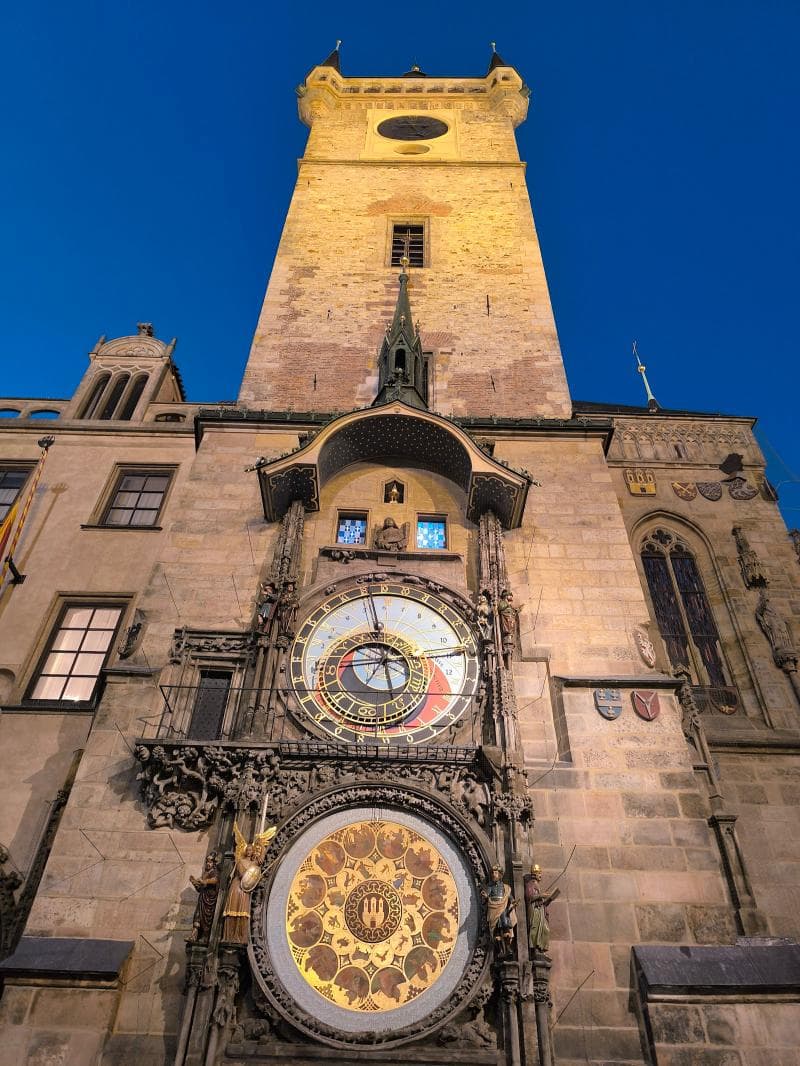
Overview
Beyond the famed hourly spectacle of its exterior, the Astronomical Clock in Prague's Old Town Hall offers a captivating journey into its 'Interior exhibits'. These often-overlooked spaces reveal the clock's intricate workings and the rich history of the building that houses it. While crowds gather outside for the animated figures, those who venture inside are rewarded with a deeper understanding of this medieval marvel and the layers of history within the Old Town Hall. You will discover not only the mechanical heart of the clock but also centuries of Prague's civic life.
The interior experience includes a close look at the astronomical dial's reverse side, the elaborate mechanism room, and the original, preserved calendar plate. Furthermore, visitors can explore the historical halls, a Gothic chapel, and even the medieval underground of the Old Town Hall. These 'Interior exhibits' transform a fleeting moment of observation into an immersive historical exploration.
History & Cultural Background
The Astronomical Clock, or Orloj, first graced the Old Town Hall in 1410, making it one of the world's oldest and still-operating astronomical clocks. It was the brainchild of clockmaker Mikuláš of Kadaň and astronomer Jan Šindel, combining meticulous craftsmanship with advanced celestial understanding of the era.
The clock itself is integrated into the Old Town Hall, a complex structure that began its life in 1338 when Prague's Old Town councillors acquired a patrician house for their administrative seat. The tower, completed in 1364, became the tallest in medieval Prague, a testament to the city's growing prosperity and power. Over centuries, the Hall expanded, absorbing adjacent houses and undergoing numerous renovations, each leaving its architectural imprint from Gothic to Renaissance and Baroque styles. The interior exhibits reflect this continuous evolution, showcasing spaces like the 15th-century Council Chamber with its preserved Gothic character and wooden coffered ceiling.
The Gothic Chapel of the Virgin Mary, built in 1381 and located within the tower, further highlights the spiritual and historical depth of the complex. These interior spaces have witnessed pivotal moments in Czech history, serving as a backdrop for civic governance, religious devotion, and public life.
What Makes It Special
What truly sets the 'Interior exhibits' apart is the rare opportunity to peek behind the curtain of the Astronomical Clock's exterior display. Inside the tower, you can witness the ingenious medieval clockwork in action. The mechanism room allows a close-up view of the gears, weights, and escapement system that have kept time for over 600 years. This access offers a profound appreciation for the engineering prowess of the clock's creators.
Another remarkable feature is the conserved original medieval calendar disc by Josef Mánes, a detailed artistic and calendrical masterpiece that is replaced by a copy on the clock's exterior. Exploring the Old Town Hall's historical interiors provides a direct connection to Prague's civic heritage. The Council Hall, with its original Gothic features, Gothic wooden panelling, and a precious wooden sculpture of Christ Suffering from the early 15th century, transports visitors back to a time of council deliberations and significant historical events.
For a contemporary touch, the 'Digital Twin of the Astronomical Clock' exhibition offers a unique 3D digital model, enabling an in-depth, interactive exploration of the clock's intricate components and functions that is impossible to discern from the outside.
Stories, Fun Facts & Local Details
While the exterior of the Astronomical Clock is steeped in legends, such as the tale of Master Hanuš being blinded to prevent him from replicating his work, the interior tells a different kind of story – one of meticulous craftsmanship and preservation. It is fascinating to learn that the clock's mechanism, despite centuries of operation and numerous repairs, still retains much of its original components.
Visitors often delight in realizing that the intricate 'Walk of the Apostles' observed from outside is driven by mechanical gears that can be viewed from within the Gothic Chapel, offering a 'behind-the-scenes' perspective. The Old Town Hall itself holds many secrets, including its medieval underground, which once served as a grim city dungeon. The continuous blend of architectural styles throughout the building, from its Romanesque cellars to its Gothic tower and later additions, illustrates Prague's rich, evolving history in a very tangible way.
Visitor Perspective
For the curious traveler, visiting the 'Interior exhibits' of the Astronomical Clock and Old Town Hall is an enriching experience that complements the famous exterior show. Rather than just being a passive observer of the hourly chime, you become an active explorer of its history and mechanics. The elevator access to the tower's observation deck provides breathtaking panoramic views of the Old Town Square and beyond, a truly rewarding vista after exploring the historical depths below.
The accessibility of the tower, including a lift, makes it an inclusive destination for many. Stepping inside offers a quieter, more reflective experience away from the bustling square, allowing for genuine engagement with the monument's historical and engineering significance. It's an opportunity to connect with centuries of human ingenuity and cultural heritage, making your visit to Prague's Astronomical Clock truly complete.
Coordinates: 14.4209167, 50.0870083
View on Google Maps💬 How Travelers Describe This Place
Based on community votes
Must See
717Photogenic
618Interesting
449Beautiful
335Unique
22
Traveler Stories
Discover memorable experiences shared by travelers who have visited this place.
No traveler stories yet.
Be the first traveler to share what made this place memorable.

Tour
By
Spot
Discover amazing places around the world. Your journey starts here.
Explore
© 2026 TourBySpot. All rights reserved.