Calendar dial
Prague, Czech Republic
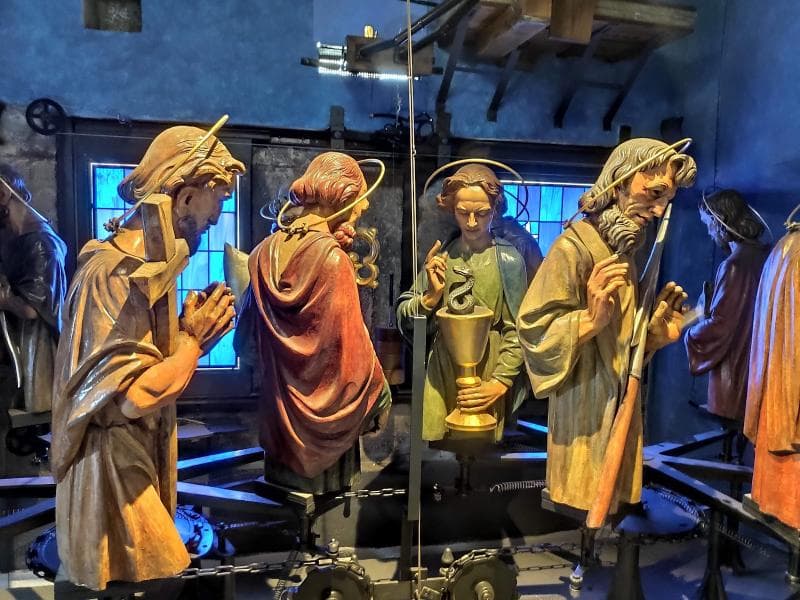
Explore the Calendar dial of Prague's Astronomical Clock, a medieval marvel showcasing months, zodiac signs, and Bohemian life in the heart of the Czech Republic.
Overview
The Calendar dial, an integral and captivating component of the renowned Astronomical Clock (Orloj) in Prague, Czech Republic, offers a rich visual narrative of time, seasons, and Bohemian life. Situated directly below the larger astronomical dial on the southern wall of the Old Town Hall, this intricate plate serves as a perpetual calendar, showcasing the days, months, and their associated symbols. It's a masterpiece that blends art, astronomy, and daily life from centuries past, providing both practical information and profound cultural insight.
While the upper astronomical dial focuses on cosmic movements, the lower Calendar dial grounds the observer in the earthly cycle of a year. Its vibrant imagery and meticulous details make it a focal point for visitors, who often gather hourly to witness the clock's famous procession of figures, with the Calendar dial quietly tracking the passage of time beneath it.
History & Cultural Background
The history of the Calendar dial is deeply intertwined with that of the Astronomical Clock itself. The oldest parts of the Orloj, including the mechanical clock and the astronomical dial, date back to 1410. The Calendar dial, however, was a later addition, presumably incorporated around 1490 to complete the clock's comprehensive display of time.
The original calendar plate was quite rudimentary. The iconic and highly detailed version we see today is a 19th-century creation by the renowned Czech artist Josef Mánes. Painted between 1865 and 1866, Mánes's design vividly depicts the twelve months of the year through allegories of rural Bohemian life, such as harvesting, sowing, and feasting. This artistic renewal was part of a major restoration of the entire clock. The original Mánes painting was later moved to the Prague City Museum for conservation, and the dial currently displayed on the Orloj is a faithful copy, installed in 1880.
The Calendar dial has endured significant historical events, including severe damage during the Prague Uprising in May 1945, when the Old Town Hall and its clock were heavily impacted. The wooden sculptures and the calendar dial face itself suffered, necessitating further restoration and repainting efforts.
What Makes It Special
The Calendar dial is a remarkable example of artistic craftsmanship combined with precise calendrical function. At its heart lies the emblem of the Old Town of Prague, symbolizing the city's civic pride. Surrounding this central motif are twelve large medallions, each representing a month of the year with a detailed scene of agricultural activities or traditional celebrations pertinent to that month in Bohemia. For instance, January might show a scene of feasting, while July depicts harvesting.
Interspersed with these monthly allegories are smaller medallions featuring the twelve zodiac signs, connecting the earthly calendar to celestial influences. An outer ring around the dial lists the names of 365 saints, along with church holidays, reflecting the importance of the liturgical calendar in medieval and early modern life. A golden arrow on the dial indicates the current day, which automatically advances at midnight.
Flanking the Calendar dial are four stationary, allegorical figures: a Philosopher, an Archangel, an Astronomer, and a Chronicler. These figures represent the intellectual and spiritual pillars of the era, observing the passage of time and knowledge.
Stories, Fun Facts & Local Details
Josef Mánes's artistic contribution to the Calendar dial is a celebration of 19th-century Bohemian rural life, offering a charming glimpse into the customs and livelihoods of the time. The choice of these scenes makes the dial not just a timekeeping device, but a cultural artifact, telling stories of daily existence and the rhythm of seasons. The detail in each medallion invites a closer look, revealing the subtle beauty and historical context embedded within the clock.
A less-known fact is that the calendar dial was originally designed to be manually shifted each night to mark the new day. It wasn't until 1566 that the entire Orloj, including the Calendar dial, was fully mechanized, allowing for its automatic progression. This automation was a significant technological leap for its time. The fact that the current dial is a copy of Mánes's original, carefully preserved in a museum, highlights the immense value placed on this artwork and the desire to protect its delicate details from the elements.
Visitor Perspective
For visitors to the Astronomical Clock, the Calendar dial is often the first element to capture their attention after the dramatic hourly show. Its position at eye level below the complex astronomical dial makes it easily accessible for close examination. Travelers are encouraged to spend time deciphering the allegorical scenes and zodiac signs, as each detail tells a part of Prague's rich story and the medieval understanding of time and the universe.
The Calendar dial, with its earthly depictions, provides a grounding contrast to the celestial mechanics of the upper dial. It offers a tangible connection to the past, allowing one to imagine life in Prague centuries ago through the eyes of its people and their connection to the land and the seasons. It's a reminder that beneath the grand astronomical movements, life continues day by day, marked by human endeavors and traditions. Observing the current date indicated by the golden arrow provides a personal connection to this enduring historical masterpiece.
Coordinates: 14.4209167, 50.0870083
View on Google Maps💬 How Travelers Describe This Place
Based on community votes
Beautiful
836Interesting
795Must See
620Unique
522Photogenic
489
Traveler Stories
Discover memorable experiences shared by travelers who have visited this place.
No traveler stories yet.
Be the first traveler to share what made this place memorable.

Tour
By
Spot
Discover amazing places around the world. Your journey starts here.
Explore
© 2026 TourBySpot. All rights reserved.