Apostles procession
Prague, Czech Republic
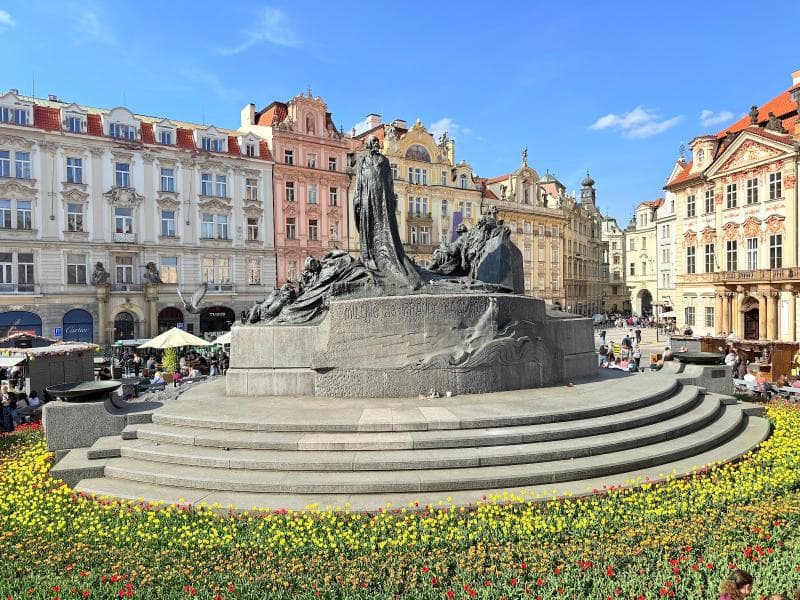
Witness the mesmerizing Apostles procession at the historic Prague Astronomical Clock in Czech Republic, a medieval marvel blending science, art, and history.
Overview
Deep within the intricate medieval mechanics of the Prague Astronomical Clock, known locally as the Orloj, lies a captivating hourly spectacle: the Apostles procession. This charming moving display brings a unique spiritual dimension to the clock's complex astronomical and calendrical functions, drawing thousands of onlookers to Prague's Old Town Square each day. As one of the oldest working astronomical clocks in the world, the Orloj is a testament to medieval ingenuity, combining science, art, and theology into a single, breathtaking masterpiece. The procession of the Twelve Apostles, appearing in two small windows above the main dial, is the highlight of this horological marvel, offering a brief yet profound glimpse into the past.
Every hour, from 9:00 a.m. to 11:00 p.m., the square below the Old Town Hall comes alive as visitors anticipate the figures' appearance. Beyond merely telling time, the Apostles procession, alongside other allegorical figures, engages its audience with a narrative of mortality and spiritual contemplation, making it far more than just a mechanical show.
History & Cultural Background
The Prague Astronomical Clock was first installed in 1410, making it the third-oldest astronomical clock globally and the oldest still in operation. Its creation is attributed to clockmaker Mikuláš of Kadaň and astronomer Jan Šindel, a professor at Charles University, who crafted the original mechanical watch and astronomical dial. While the clock's initial design was a marvel of medieval science, the figures of the Apostles were a later addition. The wooden sculptures of the Apostles were incorporated during significant refits, notably between 1787 and 1791, and then restored by Vojtěch Sucharda after heavy damage during the Prague Uprising in 1945. Josef Mánes added the 12 medallions depicting zodiac signs below the astronomical dial in 1865, further enhancing its artistic and symbolic depth.
The clock has immense cultural significance for Prague and the Czech Republic, embodying the nation's rich history, scientific achievements, and artistic heritage. It has endured wars, revolutions, and fires, standing as a resilient symbol of the city. Legends surrounding the clock, like the tale of Master Hanuš being blinded to prevent him from replicating his work, underscore its profound importance to the city's identity.
What Makes It Special
The Apostles procession is a pivotal part of the Prague Astronomical Clock's allure, transforming a mere time-telling device into a theatrical and spiritual experience. At the strike of the hour, two small windows open above the astronomical dial. The figures of the Twelve Apostles, each carrying their symbolic attribute, slowly parade past the opening, led by Christ. This roughly 45-second performance is accompanied by other animated figures on the clock face. The skeletal figure of Death tolls a bell, while figures representing Vanity, Greed, and a Turk (symbolizing lust or extravagance) move their heads, seemingly acknowledging their impending fate.
The precision and intricacy of the clockwork mechanism that brings these figures to life are remarkable, reflecting the advanced engineering of the medieval era. The procession culminates with a golden rooster crowing, signaling the end of the show. This blend of celestial mechanics, religious symbolism, and allegorical characters creates a compelling narrative that has fascinated generations.
Stories, Fun Facts & Local Details
The Prague Astronomical Clock is steeped in myths and legends, adding to its mystique. One popular tale recounts that the clockmaker, Master Hanuš, was blinded by the city councilors to prevent him from building a similar masterpiece elsewhere. In revenge, Hanuš is said to have sabotaged the clock, causing it to stop working for a century. Another legend states that if the skeletal figure of Death breaks, bad times will befall Prague.
Each of the Apostles holds a distinct item: for example, Saint Peter holds a key, Saint Paul a sword, and Saint Thomas a spear. These details, though small, enrich the spiritual storytelling. The clock not only displays Central European Time but also Old Czech Time, Babylonian Time, and sidereal time, alongside the positions of the Sun and Moon, and zodiacal information. This complex functionality and the accompanying procession make the Orloj a unique blend of science, art, and philosophy.
Visitor Perspective
Witnessing the Apostles procession is a highlight for many visitors to Prague. Crowds begin to gather in Old Town Square well before the hour, cameras at the ready, eager to catch the brief but enchanting display. The atmosphere is palpable, a mix of anticipation and wonder, as people from around the globe collectively hold their breath for the clock to strike. For the best view of the figures, it is advisable to position oneself directly in front of the clock, ideally slightly to the side to capture both the windows and the allegorical figures. Some suggest arriving early or visiting during off-peak hours to avoid the densest crowds.
After the procession concludes with the rooster's crow and a trumpeter playing a fanfare from the tower, many visitors linger, soaking in the historical ambiance of the Old Town Square. Beyond the hourly show, visitors can also take a guided tour to see the clock's intricate inner mechanisms, offering a deeper appreciation for this medieval marvel's craftsmanship and engineering. The Prague Astronomical Clock and its Apostles procession offer a memorable journey back in time, connecting visitors to centuries of history and culture.
Coordinates: 14.4209167, 50.0870083
View on Google Maps💬 How Travelers Describe This Place
Based on community votes
Beautiful
545Must See
343Interesting
211Photogenic
74Unique
20
Traveler Stories
Discover memorable experiences shared by travelers who have visited this place.
No traveler stories yet.
Be the first traveler to share what made this place memorable.

Tour
By
Spot
Discover amazing places around the world. Your journey starts here.
Explore
© 2026 TourBySpot. All rights reserved.